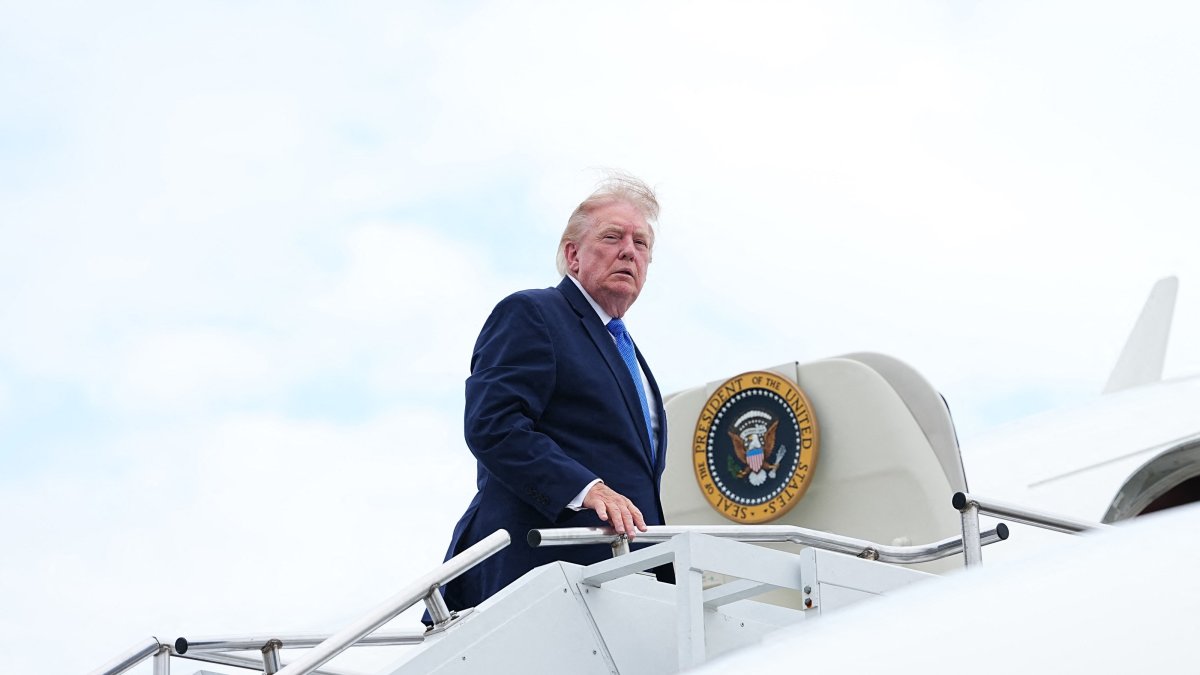
U.S. President Donald Trump accused Iran’s leadership of pursuing a duplicitous strategy regarding international diplomacy, asserting that Tehran has privately reached out to seek negotiations aimed at ending ongoing hostilities while simultaneously denouncing the United States in public forums. Speaking on the diplomatic and security challenges facing his administration, the president urged Iranian authorities to choose between entering serious, substantive talks or facing what he described as total surrender.
The remarks highlight an increasingly complex diplomatic landscape between Washington and Tehran, as international observers monitor potential openings for dialogue amid heightened regional tensions. According to reports tracking high-level foreign policy statements, the administration’s dual-track messaging underscores a persistent struggle over how to engage a government that Washington accuses of projecting vastly different postures behind closed doors compared to its public rhetoric.
Foreign policy analysts point out that public denunciations from Iranian officials routinely reject direct engagement with the current U.S. administration, creating significant political hurdles for any potential de-escalation framework. At the same time, intelligence and diplomatic channels frequently field covert or indirect messages suggesting a willingness by various factions within Tehran to explore terms for ending conflicts that have strained regional stability and crippled the Iranian economy through sweeping international sanctions.
Contrasting Public Rhetoric and Private Channels
The tension between public hostility and private diplomatic overtures is not entirely new in U.S.-Iran relations, but the administration’s decision to publicly air these behind-the-scenes contacts marks a sharp shift in tactical pressure. White House officials argue that exposing Tehran’s internal contradictions forces Iranian leaders to either substantiate their claims of wanting peace through verifiable diplomatic action or drop the pretense altogether.
Publicly, Iranian state media and senior political figures continue to characterize American policy as hostile and imperialistic, vowing resistance against any demands that compromise national sovereignty or the country’s controversial nuclear ambitions. These public statements play heavily to domestic political bases within Iran, where anti-Western rhetoric remains a foundational pillar for hardline factions.
Conversely, regional intermediaries and diplomatic dispatch reports indicate that economic pressures, domestic unrest, and the heavy toll of regional conflicts have driven certain elements within the Iranian apparatus to test the waters for backchannel discussions. These private inquiries typically focus on finding a viable off-ramp to avoid further escalation, though mutual distrust and rigid preconditions from both capitals have continually stymied meaningful progress.
The Demand for a Comprehensive Settlement
By framing the choice as a binary decision between a negotiated settlement and total surrender, the U.S. president is signaling a refusal to accept piecemeal concessions or temporary ceasefires that leave underlying security threats unaddressed. Washington’s stated objectives in any future talks traditionally extend beyond immediate conflict resolution to encompass curbs on regional proxy warfare, ballistic missile development, and nuclear activities.
International allies and European diplomatic missions have repeatedly urged both sides to exercise restraint and explore multilateral frameworks that could bridge the deep chasms separating the two adversaries. However, European efforts to maintain the 2015 Joint Comprehensive Plan of Action (JCPOA) largely stalled following the U.S. withdrawal from the accord and the subsequent implementation of maximum-pressure economic sanctions.
Observers note that achieving a comprehensive deal under the current ultimatum framework remains an uphill battle. Tehran’s leadership faces severe domestic political risks if it appears to capitulate to American demands, while Washington remains deeply skeptical of any agreement that lacks rigorous verification mechanisms and permanent enforcement guarantees.
Next Steps and Diplomatic Outlook
As the standoff continues, attention turns to whether international intermediaries can successfully translate backchannel inquiries into formal diplomatic talks. Neither Washington nor Tehran has announced a confirmed date for direct negotiations, leaving regional stakeholders to watch for any shift in official communiqués from the Iranian Supreme National Security Council or the U.S. Department of State.
We welcome your perspective on these developments. Share your thoughts or join the conversation in the comments section below.
Keep reading
- Todd Blanche Secures Key GOP Support for Attorney General After Anti-Weaponization Fund Deal
- Mayor Zohran Mamdani Extends Deadline for NYC Pied-à-Terre Tax Exemptions
- Henry Pollock Worth £1m-a-Year, Says Eddie Hearn Amid Northampton Contract Talks (archynewsy.com)
- Trump Slams Iran’s Duplicity and Warns Blockade Will Remain Amid Stalled Talks (world-today-news.com)