
Google plans to deploy its suite of Gemini-powered artificial intelligence tools to assist fans during the 2026 FIFA World Cup, focusing on real-time information retrieval and complex query resolution. The company aims to use AI-integrated search and multimodal capabilities to provide immediate answers regarding match statistics, player data, and tournament logistics across the United States, Canada, and Mexico.
The deployment comes as FIFA expands the tournament to 48 teams, a significant increase from the 32-team format used in previous editions. This expansion is expected to drive a surge in search queries related to scheduling, venue navigation, and real-time match updates. According to statements from Google, the company intends to leverage its latest large language models (LLMs) to ensure users can resolve complex questions—such as “What are the historical head-to-head stats between these two teams in knockout stages?”—without navigating multiple websites.
The technical strategy centers on Google’s transition from traditional search results to AI Overviews. By utilizing the Gemini ecosystem, Google’s AI can synthesize data from various sports databases to present a cohesive summary directly at the top of the search results page. This approach is designed to reduce the time users spend searching for specific tournament details during live match windows.
How will Google’s AI tools support the 2026 FIFA World Cup?
Google’s deployment for the tournament is expected to focus on three primary pillars: data synthesis, multilingual support, and logistical assistance. Because the 2026 tournament is hosted across three different nations, the linguistic and logistical complexity is higher than in previous single-host or dual-host tournaments.
Search Generative Experience (SGE) and AI Overviews will serve as the primary interface for fans. Rather than providing a list of links, Google’s AI will attempt to answer specific, conversational queries. For example, if a user asks about the availability of transportation to a specific stadium in Mexico City or Toronto, the AI can pull data from Google Maps and real-time transit updates to provide a summarized response.
The company’s goal, as indicated by its recent focus on AI integration, is to move toward a “problem-solving” search engine. For the World Cup, this means the AI will not just point to a score, but can explain the context of a goal, such as a player’s recent performance trends or the tactical implications of a substitution, provided the data is available through verified sports providers.
What specific AI capabilities is Google deploying?
The core of the deployment relies on Gemini, Google’s most capable multimodal AI model. Multimodality allows the AI to process and reason across different types of information, including text, images, video, and code. This capability is particularly relevant for a visual sport like football (soccer).
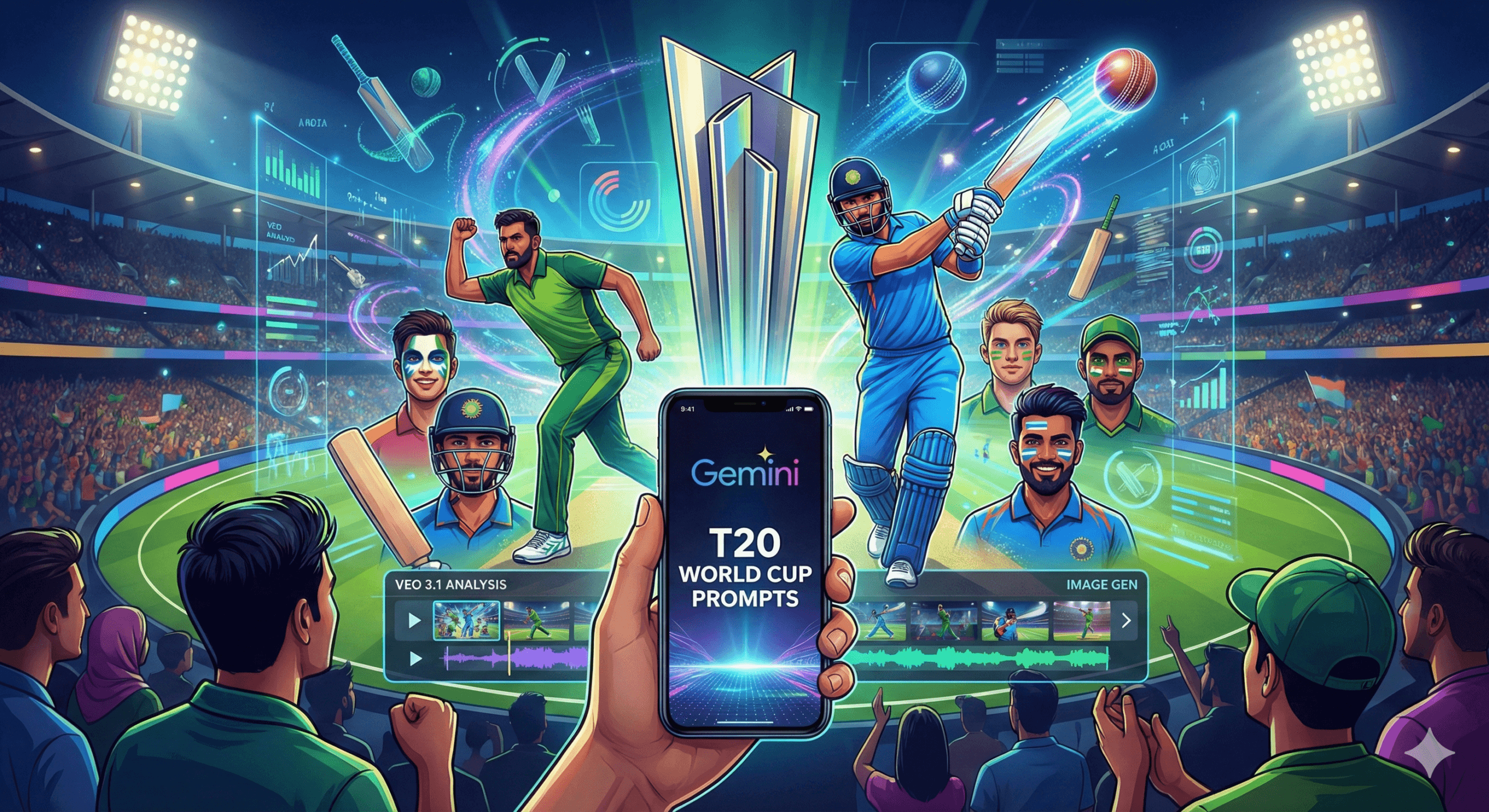
- Real-time Statistical Synthesis: Using AI to aggregate live match data, player heatmaps, and historical statistics to answer deep-dive questions during live broadcasts.
- Multilingual Translation: Leveraging Gemini’s advanced natural language processing to facilitate communication between fans and provide translated content for the diverse international audience.
- Visual Search and Recognition: Enabling users to use Google Lens or similar features to identify players, team kits, or stadium landmarks via their smartphone cameras.
- Complex Query Resolution: Moving beyond “who won” to “how does this result affect the group stage standings” by performing real-time mathematical calculations based on live tournament tables.
By integrating these features, Google aims to create a “companion” experience for the viewer. This shifts the role of the smartphone from a passive information source to an active participant in the viewing experience.
The role of Gemini in real-time match analysis
The integration of Gemini into the Google ecosystem allows for a level of nuance that traditional search algorithms cannot provide. While standard search engines are effective at retrieving specific facts—such as a score or a kickoff time—Gemini is designed to understand context and intent.
During the 2026 World Cup, this could manifest in how Google handles “long-tail” queries. A user might ask, “Which players from the 2022 World Cup are playing in the 2026 tournament and have scored more than five goals?” A traditional search would require the user to find lists of 2022 scorers and compare them to 2026 rosters. An AI-driven search can perform this comparison instantly by accessing and synthesizing disparate datasets.
Furthermore, the ability to process video content through Gemini could eventually allow for more sophisticated interactions. While Google has not officially confirmed specific live-video analysis features for the 2026 tournament, the technical foundation exists to allow AI to “watch” highlights and answer questions about specific plays or player movements.
Navigating a three-nation tournament with AI
The logistical scale of the 2026 FIFA World Cup presents a unique challenge. With matches spread across 16 cities in the United States, Canada, and Mexico, fans will face significant travel and navigation hurdles. Google’s AI-driven ecosystem is expected to play a critical role in managing this complexity.
Google Maps, enhanced by AI, will likely be the primary tool for navigating the tournament’s host cities. AI can provide more predictive information regarding traffic patterns around stadiums, the best walking routes for fans arriving via public transit, and even localized recommendations for dining and lodging that cater to international visitors. This is particularly vital in high-traffic periods when match schedules overlap across different time zones.
Language barriers also represent a significant factor in a tournament spanning three countries with distinct primary languages. Google’s AI models are specifically trained to handle nuances in translation, which will be essential for fans traveling between English-speaking regions and Spanish-speaking regions in Mexico and parts of the U.S. and Canada.
Comparison: Previous Tournament Tech vs. 2026 AI Integration
The evolution of technology during major sporting events shows a clear trajectory from static data retrieval to generative assistance. The following table compares the technological approach of previous major tournaments with the expected AI-centric approach for 2026.
| Feature | Previous Tournaments (Traditional Search) | 2026 World Cup (AI-Integrated) |
|---|---|---|
| Query Type | Keyword-based (e.g., “World Cup scores”) | Conversational (e.g., “How did the score change the standings?”) |
| Data Delivery | List of links and snippets | Synthesized, direct answers (AI Overviews) |
| Contextual Awareness | Low; treats each query as isolated | High; understands tournament context and history |
| Multimodality | Primarily text and static images | Integration of text, video, and real-time visual data |
| Logistics | Manual searching for maps and transit | Predictive, AI-driven travel and navigation assistance |
Frequently Asked Questions
How will I access these Google AI features during the World Cup?
Users will likely access these features through standard Google Search, the Gemini app, and integrated services like Google Maps and YouTube. As the tournament approaches, Google will likely refine how these features are surfaced to match real-time match schedules.
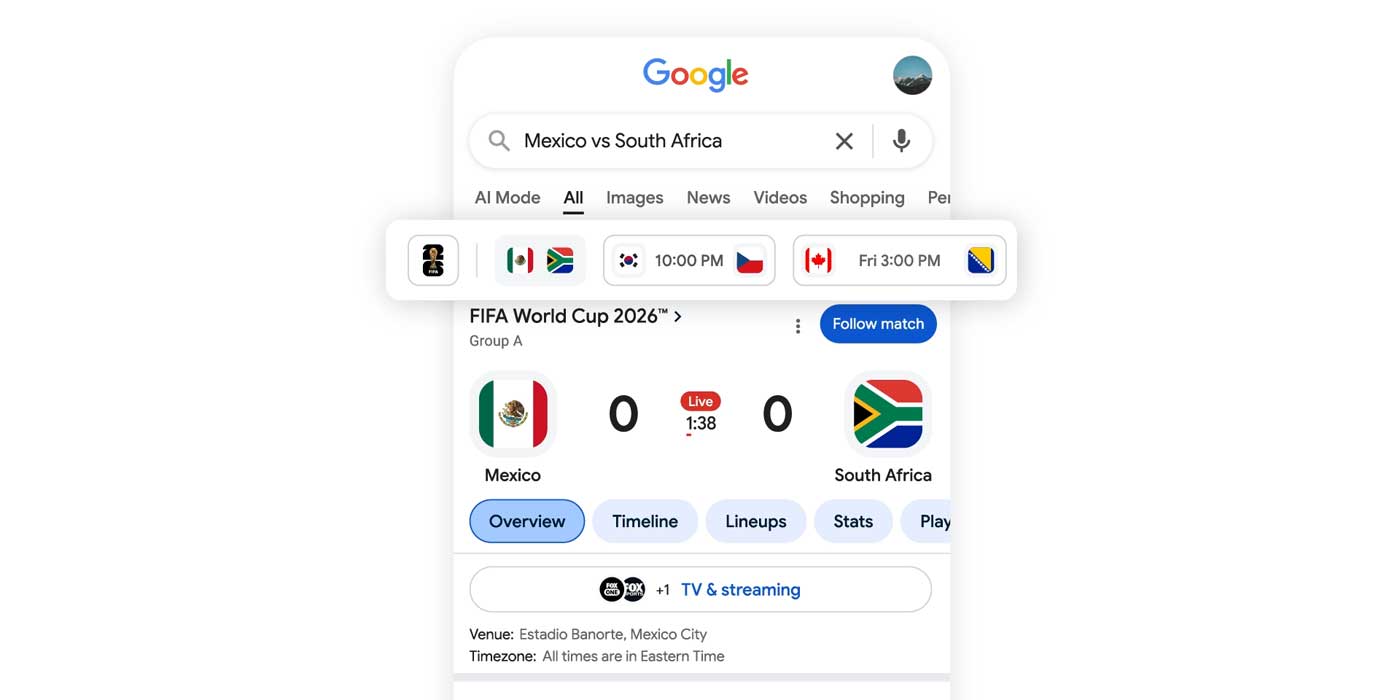
Will the AI provide live match scores?
Yes. Google’s existing sports integration provides live scores, and the addition of Gemini will allow for more detailed, conversational updates regarding those scores and the surrounding match context.
Is the AI information verified?
Google states that its AI Overviews and Gemini models are designed to pull information from authoritative sources. However, users should always cross-reference critical information, such as official match times or venue locations, with official FIFA communications.
Can the AI help with travel between host cities?
While Google is not a travel agency, its AI-enhanced Maps and Search features are designed to assist with logistics, including finding transportation, understanding local geography, and managing time zone differences between the host nations.
The next major milestone regarding tournament technology will be the official unveiling of specific feature integrations as FIFA and Google move closer to the 2026 kickoff. Official technical specifications and deployment timelines are expected to be released in the lead-up to the event.
What are your thoughts on using AI to follow major sporting events? Will it enhance your experience or create too much noise? Let us know in the comments below and share this article with your fellow fans.
Keep reading