
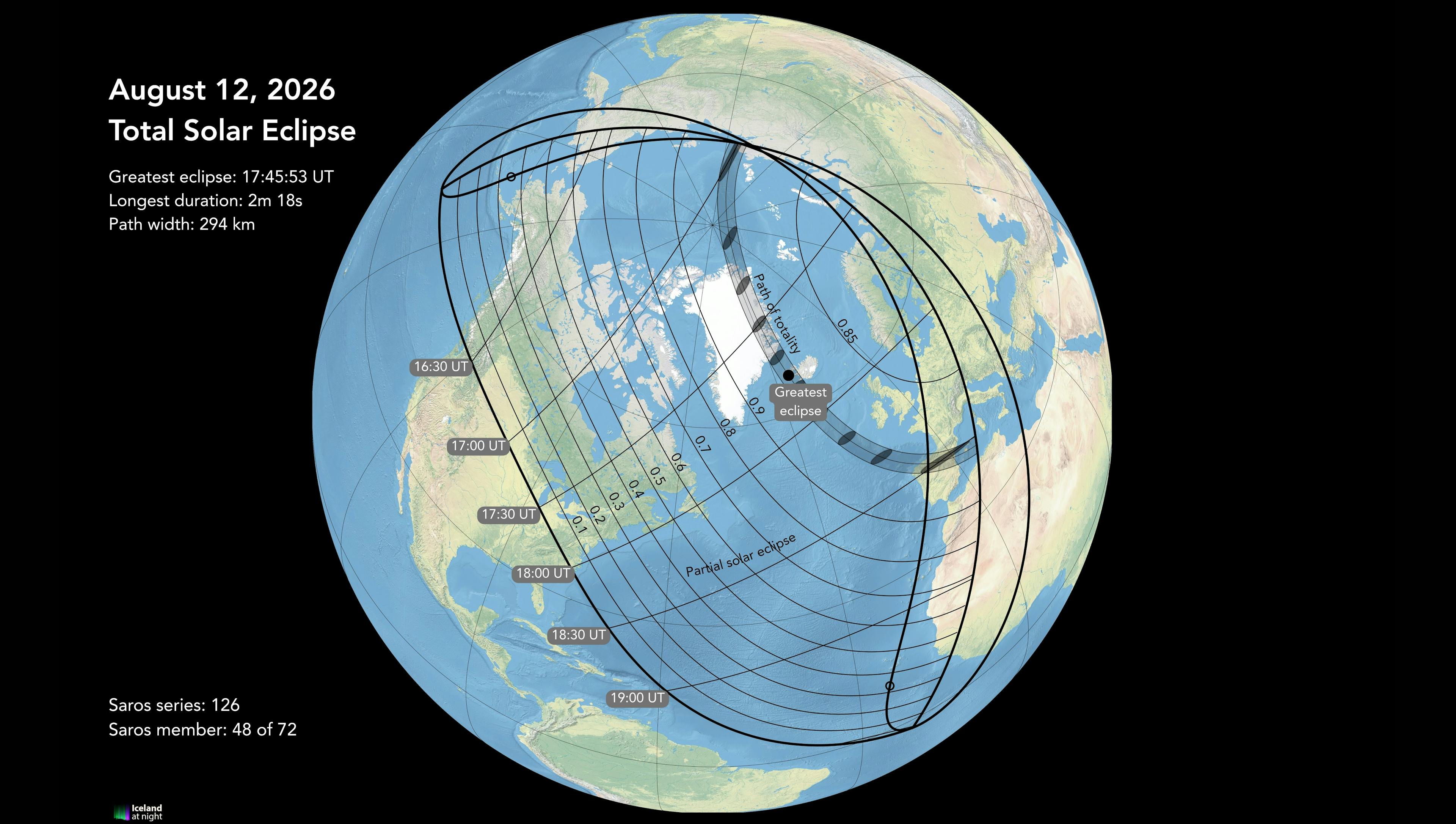
A rare total solar eclipse is scheduled to sweep across parts of Europe and the Mediterranean on August 12, 2026, prompting astronomers and safety officials to issue urgent guidance on protective eyewear. The event, which will see the moon completely block the sun’s disk, marks a significant astronomical occurrence that will be visible from regions including Spain, Iceland, and parts of the Arctic, according to NASA’s solar eclipse tracking data.
Observers planning to view the eclipse must use ISO 12312-2 certified solar filters to prevent permanent retinal damage. The Association française d’astronomie (AFA) has warned that counterfeit glasses lacking this certification are frequently marketed during high-profile celestial events. Experts emphasize that standard sunglasses, even those with dark tints, offer no protection against the intense infrared and ultraviolet radiation emitted during a solar eclipse.
Understanding Solar Eclipse Eye Safety
The primary risk during a solar eclipse is solar retinopathy, a condition where the retina is damaged by intense light exposure. Because the moon does not block all radiation during the partial phases of the eclipse, viewing the sun without specialized equipment can cause irreversible vision loss. According to the American Academy of Ophthalmology, proper eclipse glasses must be thousands of times darker than regular sunglasses and must be inspected for scratches or punctures before each use.
Retailers and kiosks often see a surge in demand as the date approaches. Consumers are advised to purchase protective gear only from reputable scientific suppliers or organizations recognized by national astronomical societies. If a pair of glasses is damaged, wrinkled, or older than three years, authorities recommend discarding them immediately to avoid the risk of light leakage.
The Path of Totality and Viewing Logistics
The path of totality for the August 12, 2026, eclipse will begin in the Arctic, passing over Greenland and Iceland before moving across the northern coast of Spain. In these specific zones, spectators will experience several minutes of darkness as the moon fully obscures the sun. Outside of the path of totality, observers will experience a partial eclipse, where the sun appears as a crescent shape.
For those interested in viewing the event from the water, specialized cruise operators have begun planning expeditions to position passengers directly within the path of totality. These maritime viewing experiences allow for an unobstructed view of the horizon, which is often preferred by amateur and professional astronomers alike. Travelers should confirm that any such excursions include the provision of verified, safety-compliant optical equipment as part of their package.
Preparation for Future Astronomical Events
The 2026 event serves as a reminder of the importance of early planning for celestial observation. Astronomical interest in such events has grown significantly, leading to increased tourism in regions located within the path of totality. Local authorities in host regions often coordinate traffic management and public viewing sites to accommodate the influx of visitors.
To ensure a safe experience, potential viewers should monitor updates from official national science agencies or the International Astronomical Union. These organizations provide the most accurate maps and safety protocols for upcoming eclipses. By verifying equipment against international standards well in advance, members of the public can participate in the event without compromising their long-term eye health.
The next major checkpoint for public information will be the release of updated safety advisories by national health and space agencies as the August 2026 date approaches. Readers are encouraged to share this information with friends and family to ensure widespread awareness of the necessary safety precautions. Please leave a comment below if you are planning to travel to witness this rare astronomical phenomenon.
Keep reading