
Hyundai Motor Group is accelerating its transition to Software-Defined Vehicles (SDVs), aiming to transform its entire vehicle lineup into platforms that evolve through over-the-air (OTA) software updates by 2025. This strategic shift, announced during the company’s Unlock the Software Age event, centers on a unified architecture that decouples hardware and software development cycles. By standardizing its electronic control units (ECUs) and utilizing a proprietary operating system, the automaker intends to provide continuous improvements to vehicle performance, safety, and user experience long after the initial point of sale.
The transition toward Software-Defined Vehicles represents a fundamental change in how automotive manufacturers approach product lifecycles. Traditionally, a vehicle’s capabilities were largely fixed at the time of manufacturing. Under the new paradigm, Hyundai’s vehicles will function more like modern smartphones, receiving periodic feature enhancements and security patches wirelessly. This approach is designed to mitigate the rapid obsolescence of in-car infotainment and driver-assistance systems, ensuring that customer-facing technology remains competitive throughout the vehicle’s operational life.
Establishing a Unified Software Architecture
At the core of Hyundai’s strategy is the implementation of a consistent hardware and software architecture across its global fleet. According to the official company disclosure, this involves migrating from distributed, vehicle-specific electronic systems to a centralized, domain-based architecture. This standardization allows software engineers to develop applications once and deploy them across various models, significantly reducing development time and complexity.
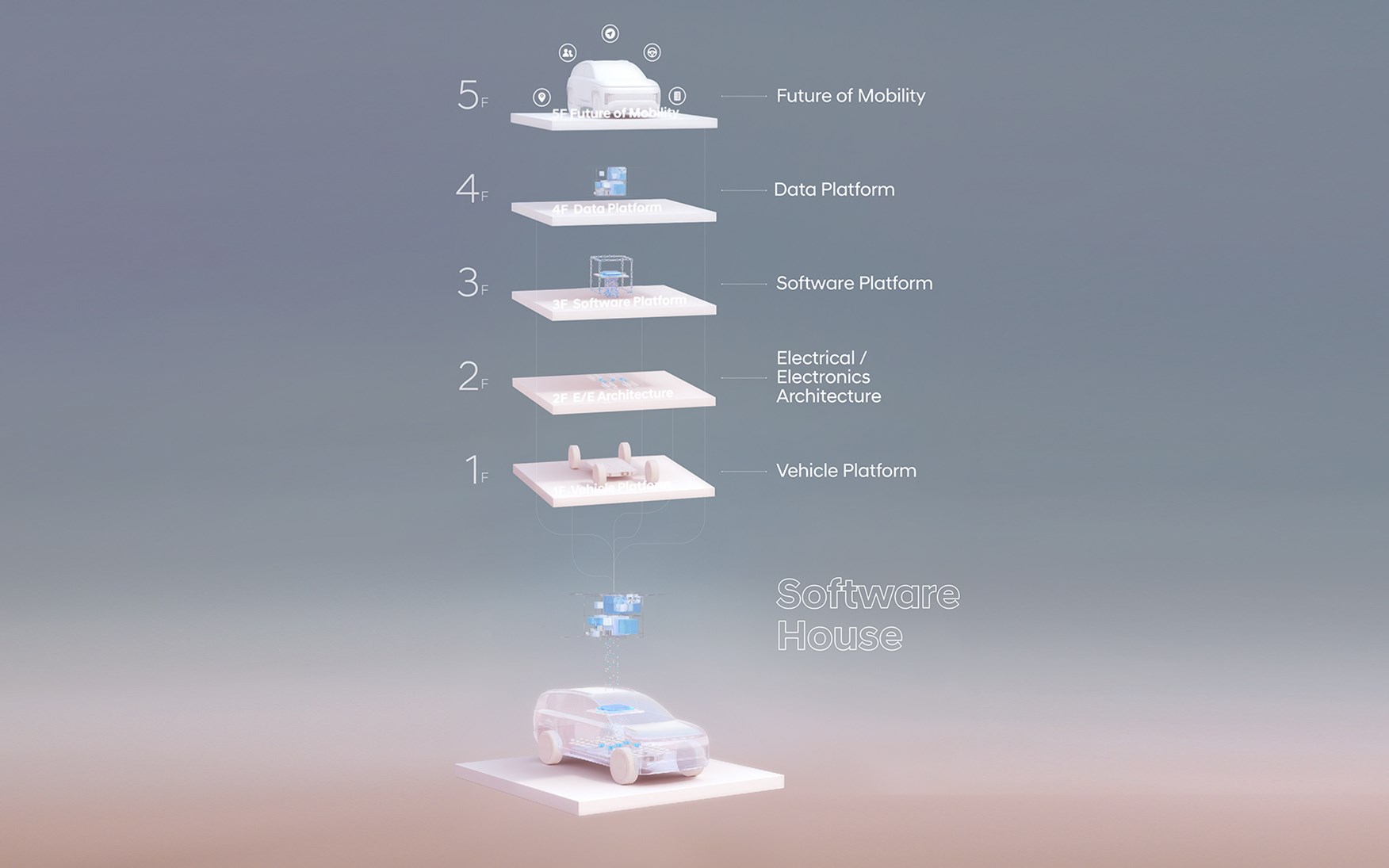
Central to this architecture is the company’s proprietary Connected Car Operating System (ccOS). By controlling the software stack, Hyundai aims to optimize the interaction between vehicle hardware and cloud-based services. This integration is essential for enabling advanced features such as autonomous driving capabilities and sophisticated energy management systems for electric vehicles. The company reported that it plans to invest approximately 18 trillion won—roughly 13.5 billion USD—by 2030 to bolster its software capabilities, including the expansion of its global software centers and the recruitment of specialized engineering talent, as noted in their investment roadmap.
The Impact of OTA Updates on Vehicle Lifecycle
Over-the-air updates are no longer limited to infotainment systems; they now extend to core vehicle performance, including battery management, braking, and suspension systems. The ability to push these updates means that a vehicle can receive efficiency improvements or new safety protocols without requiring a visit to a service center. This capability is a cornerstone of the SDV model, as it creates a direct, ongoing relationship between the manufacturer and the vehicle owner.
For consumers, this evolution promises a vehicle that feels “new” for a longer period. However, it also introduces new challenges regarding data security and system stability. Hyundai has stated that it is implementing end-to-end encryption and robust cybersecurity protocols to protect these connected systems from unauthorized access. As the automotive industry moves toward this model, regulatory bodies such as the United Nations Economic Commission for Europe (UNECE) have introduced specific regulations, such as UN Regulation No. 156, to ensure that software updates are managed safely and transparently by manufacturers.
Strategic Challenges and Industry Competition
Hyundai’s pivot to software-centric development places it in direct competition with technology-native automakers and established legacy brands that are undergoing similar digital transformations. The success of this transition depends on the company’s ability to successfully integrate internal software development with its established manufacturing expertise. Historically, automotive companies have relied on Tier 1 suppliers for electronic components; however, the SDV model necessitates a higher degree of vertical integration to maintain control over the user experience.
Industry analysts have noted that the primary hurdle for traditional manufacturers is the cultural and operational shift required to adopt agile software development methodologies. While tech companies operate on rapid release cycles, the automotive industry traditionally follows multi-year development timelines. Hyundai is attempting to bridge this gap by establishing dedicated software hubs in major tech centers, moving away from the siloed engineering practices of the past. The company’s progress in this area is subject to ongoing review by investors and industry stakeholders who monitor the integration of these new processes into their mass-production lines.
What Happens Next?
The next major checkpoint for Hyundai’s software initiative involves the widespread roll-out of its next-generation modular vehicle platform. The company has committed to launching new vehicle models that are designed specifically to support full OTA functionality by 2025. As these vehicles reach the market, the frequency and depth of software updates will serve as a key metric for evaluating the success of their digital transformation.

Readers interested in the latest developments regarding Hyundai’s software ecosystem can monitor the company’s official global newsroom for updates on new feature releases and platform milestones. As these systems continue to evolve, the distinction between “hardware” and “software” in the automotive sector will likely continue to blur. We encourage our readers to share their thoughts on the evolution of software-defined vehicles in the comments section below.
Related reading