
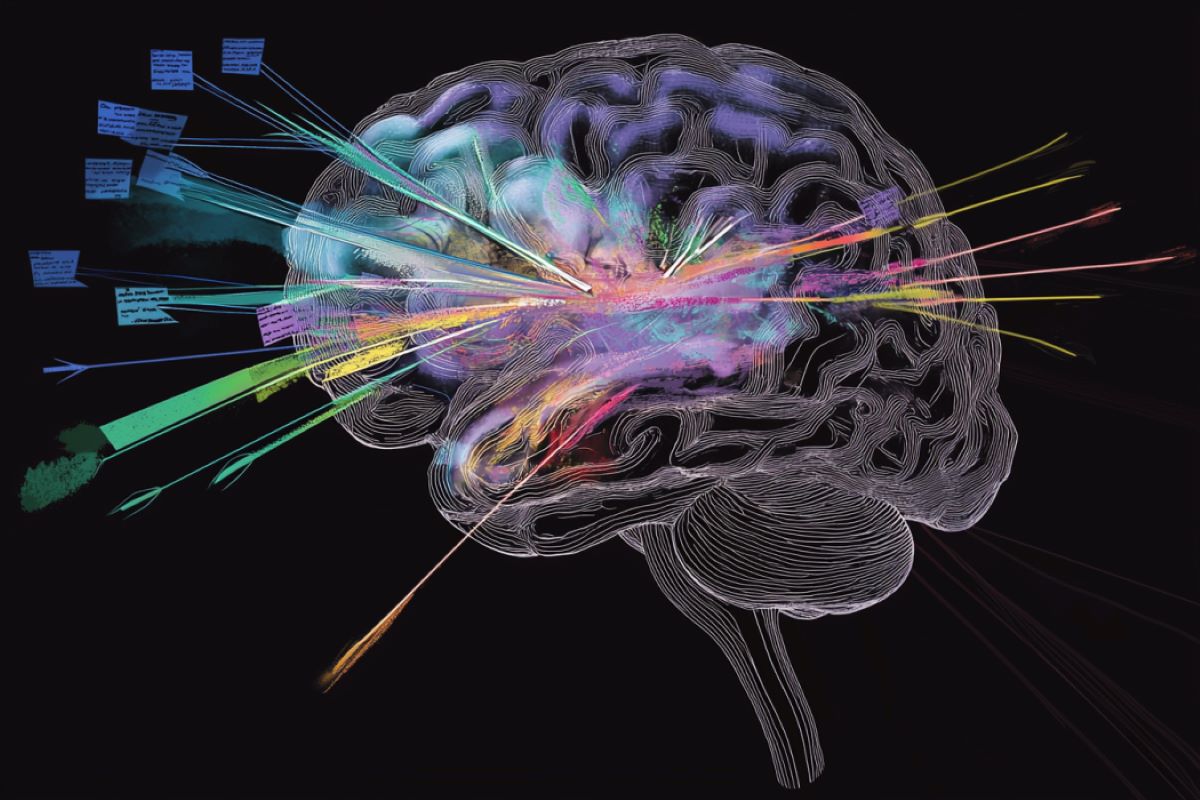
Researchers have identified a specific neural mechanism in the human brain that organizes language into hierarchical structures before speech is produced, a process that mirrors how artificial intelligence models process information. By analyzing brain activity during sentence construction, neuroscientists have determined that the brain does not process words in a linear sequence but rather groups them into abstract, nested blocks to build complex thoughts.
This discovery provides new insight into the biological foundations of human syntax and how the brain manages the rapid-fire demands of communication. According to research published by the Proceedings of the National Academy of Sciences (PNAS), the human brain utilizes a “hierarchical” processing system, which allows speakers to structure sentences by nesting phrases within one another, a capacity that is foundational to human language.
How the Brain Builds Sentences
The study, which utilized magnetoencephalography (MEG) to record brain activity in real-time, reveals that the brain constructs linguistic structures in a way that is strikingly similar to the architecture of large language models. As a person prepares to speak, the brain does not simply retrieve words one after another. Instead, it creates a “tree-like” structure where smaller components, such as noun phrases or verb phrases, are assembled into larger, more complex units before the individual begins to vocalize the sentence.
This hierarchical organization is what enables humans to produce an infinite variety of sentences from a finite set of words. As noted by researchers at the New York University (NYU) Neuroscience of Language Lab, this process occurs in milliseconds, often before the speaker is consciously aware of the full structure of the sentence they are about to utter. The brain maintains these “blocks” of information in working memory until the exact moment of articulation.
Comparison to Artificial Intelligence
The mechanism identified in the study shares functional similarities with the “attention” mechanisms used in modern transformer-based artificial intelligence models, such as those that power contemporary chatbots. Like these AI systems, the human brain must prioritize certain relationships between words—such as the connection between a subject and its corresponding verb—even when they are separated by intervening descriptive phrases.
However, while AI models process data through massive parallel computation, the human brain achieves this through highly specialized, energy-efficient neural pathways. According to findings reported in Science, the brain’s ability to “chunk” information into hierarchical trees is a biological adaptation that significantly reduces the cognitive load required for complex communication. This suggests that our linguistic capacity is deeply rooted in the structural architecture of the human cortex.
Implications for Neurology and Language
Understanding this “hidden mechanism” has significant implications for both neurology and the development of brain-computer interfaces (BCIs). For individuals suffering from speech impairments due to stroke, traumatic brain injury, or neurodegenerative diseases, these findings offer a clearer roadmap for how to decode neural signals into coherent speech.
Current research efforts, such as those supported by the National Institutes of Health (NIH), are already attempting to translate these neural “hierarchies” into text. By mapping the specific patterns of electrical activity that correspond to hierarchical sentence construction, scientists hope to improve the speed and accuracy of communication devices for patients who have lost the ability to speak.
What Happens Next
The next phase of this research involves testing whether this hierarchical processing remains consistent across different languages, including those with fundamentally different grammatical structures than English. Researchers are also investigating how this mechanism changes as children acquire language, as well as how it might be affected by disorders such as aphasia.

Future updates regarding these neural mapping projects will be available through the NIH BRAIN Initiative, which continues to fund large-scale studies on the complexities of human cognition. As we continue to uncover the biological blueprints of our own speech, the line between human cognitive processes and artificial intelligence continues to shift, revealing both the unique complexity of the human mind and the potential for technology to eventually mirror it.
Do you have questions about how these neuroscientific findings might affect future assistive technologies? Share your thoughts in the comments section below.