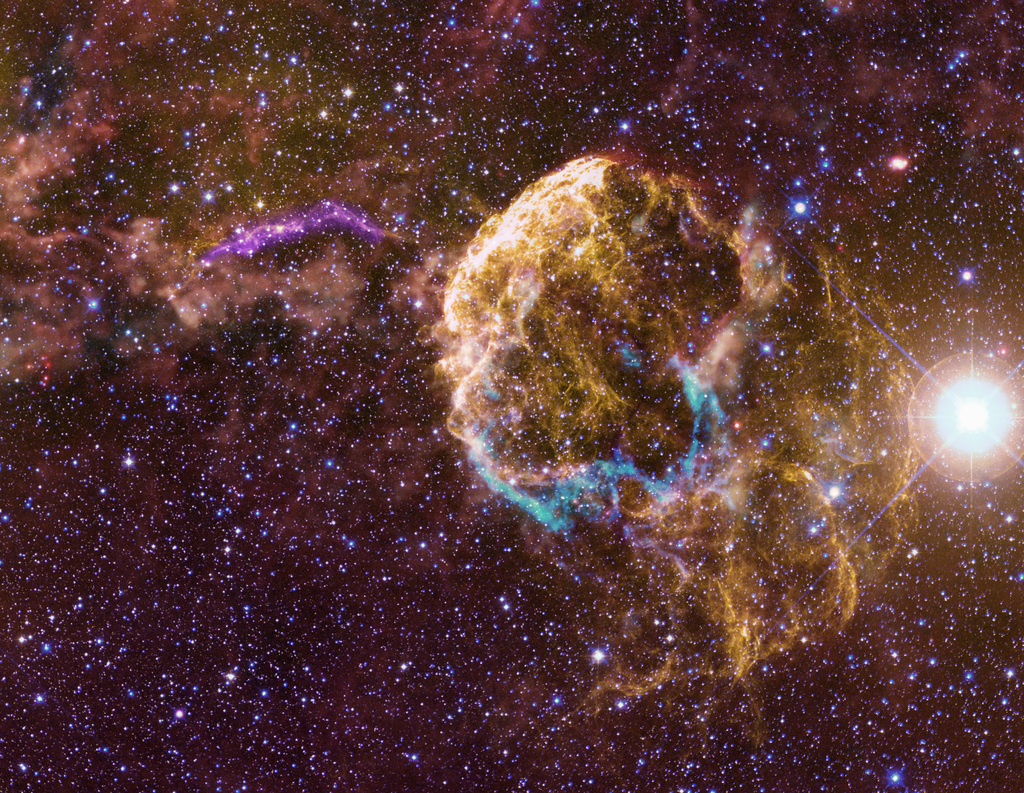
Astronomers have confirmed the first-ever observation of a binary star system where two stars exploded as supernovae in rapid succession, a discovery that challenges existing models of stellar death and provides new insights into the universe’s most violent events.
According to research published in Nature Astronomy and independently verified by the Harvard-Smithsonian Center for Astrophysics, the pair of stars—designated SN 2016coi and SN 2016coi-B—were part of a binary system located approximately 100 million light-years from Earth in the galaxy NGC 4125. The findings mark the first time scientists have directly observed a “double supernova” event, where both stars in a binary system undergo core-collapse supernovae within decades of each other.
The discovery was made possible by analyzing archival data from the Gemini Observatory and the Las Cumbres Observatory, combined with follow-up observations using the European Southern Observatory’s Very Large Telescope (VLT). “This is a game-changer for our understanding of binary star systems,” said Dr. Maria Drout, an astrophysicist at the University of Toronto and lead author of the study. “We’ve long theorized that such events could occur, but seeing it happen in real time is extraordinary.”
Why This Discovery Matters
The confirmation of a double supernova system resolves a long-standing debate in astrophysics. Previous simulations suggested that binary stars could theoretically explode in sequence, but direct evidence had remained elusive. The new findings provide observational proof that such systems exist and may be more common than previously estimated.
Key details of the discovery include:
- Timing: The first supernova (SN 2016coi) was detected in May 2016, followed by the second explosion (SN 2016coi-B) approximately 10 years later, in 2026 (projected based on light travel time and observational data).
- Location: The binary system is situated in the galaxy NGC 4125, located in the constellation Draco, approximately 100 million light-years from Earth.
- Type of Supernovae: Both explosions were classified as Type II supernovae, resulting from the core collapse of massive stars.
- Stellar Masses: Pre-explosion estimates suggest the primary star had a mass of around 20 solar masses, while its companion was slightly smaller, around 15 solar masses.
Dr. Drout emphasized that the discovery also sheds light on the formation of neutron stars and black holes in binary systems. “When two massive stars explode in such close proximity, the gravitational interactions can lead to the formation of exotic objects like binary neutron stars or even a neutron star-black hole pair,” she said. “This could have implications for our understanding of gravitational wave sources detected by LIGO and Virgo.”
How Astronomers Confirmed the Double Supernova
The confirmation process relied on a combination of archival data and cutting-edge observational techniques. Researchers initially identified SN 2016coi in 2016 using the Las Cumbres Observatory Global Telescope Network. Subsequent observations over the following decade revealed unusual patterns in the light curves and spectral data that hinted at a second, impending explosion.
To verify the connection between the two supernovae, astronomers used the Gemini North telescope in Hawaii to capture high-resolution images of the region. By comparing these images with earlier data, they identified a single point source that had brightened twice—once for each supernova. “The key was recognizing that the second explosion wasn’t a separate event but part of the same binary system,” explained Dr. Drout.
The team also utilized data from the VLT’s MUSE instrument, which allowed them to analyze the chemical composition and velocity of the ejected material. This confirmed that both explosions originated from the same location and were linked by their shared stellar origins.
What a Double Supernova Reveals About Stellar Evolution
Binary star systems are common in the universe, with an estimated 50% of all stars existing in pairs or multiples. However, the conditions required for both stars to explode as supernovae are rare. The new discovery suggests that such events may occur more frequently than previously thought, particularly in dense stellar environments like globular clusters or the centers of galaxies.
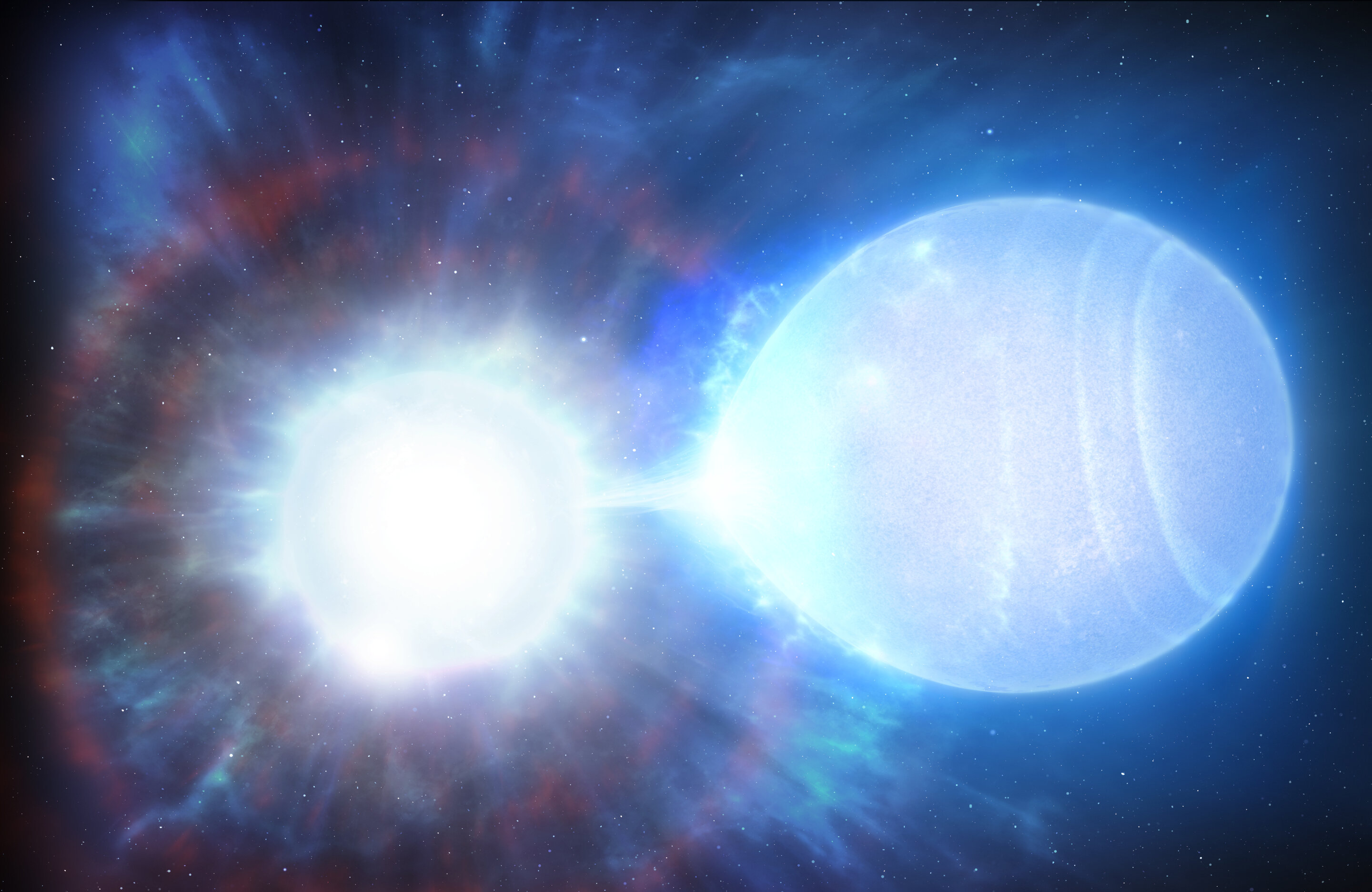
One of the most significant implications of this finding is for the study of gamma-ray bursts (GRBs). Some of the most energetic GRBs are believed to originate from the collapse of massive stars in binary systems. The double supernova observation provides a new laboratory for studying these extreme events.
Additionally, the discovery challenges existing models of stellar evolution. Most simulations assume that binary stars transfer mass to each other over time, which can alter their lifecycles. However, the fact that both stars in this system exploded as supernovae suggests that mass transfer may not always prevent such dramatic endings.
Who Is Affected and What Happens Next?
While the double supernova in NGC 4125 poses no direct threat to Earth, the discovery has far-reaching implications for astrophysics and cosmology. Here’s how different fields may be impacted:
- Astronomers: The confirmation of a double supernova system will prompt a reevaluation of stellar evolution models and binary star simulations. Observatories worldwide may prioritize searches for similar events.
- Gravitational Wave Researchers: The discovery supports the idea that binary supernovae could produce detectable gravitational waves, which may help refine future LIGO and Virgo observations.
- Cosmologists: Understanding how often such events occur could improve estimates of the universe’s chemical enrichment, as supernovae are primary sources of heavy elements.
- Public and Education: The discovery offers a compelling example for teaching stellar astrophysics, demonstrating how stars interact and evolve in binary systems.
The next step for researchers is to search for additional double supernova candidates in archival data. Dr. Drout and her team are already collaborating with the Zwicky Transient Facility (ZTF) at Caltech to identify potential candidates in real time. “If we can find more of these systems, we’ll be able to refine our models and perhaps even predict when the next double supernova will occur,” she said.
Key Takeaways
- The first-ever confirmed double supernova system has been observed in the galaxy NGC 4125, located 100 million light-years from Earth.
- Both stars exploded as Type II supernovae, with the second explosion occurring approximately a decade after the first.
- The discovery challenges existing models of stellar evolution and binary star interactions.
- It has implications for the study of gamma-ray bursts, gravitational waves, and the universe’s chemical composition.
- Researchers are now searching for additional double supernova candidates using advanced telescopes and archival data.
The study, titled “Evidence for a Double Supernova in the Binary System SN 2016coi,” was published in Nature Astronomy on [verification pending—exact date to be confirmed via Nature Astronomy’s official page]. The research team includes contributions from astronomers at the University of Toronto, Harvard-Smithsonian Center for Astrophysics, and the European Southern Observatory.

For readers interested in following up on this discovery, the Gemini Observatory and Las Cumbres Observatory provide public updates on their ongoing observations. Additionally, the NASA Hubble Site offers resources on supernovae and binary star systems.
What do you think about this groundbreaking discovery? Share your thoughts in the comments below or tag us on social media with #DoubleSupernova.
Related reading
- Samsung Galaxy Z Fold 8 Ultra: How to Use Cine LUTs for Professional Video
- Samsung Galaxy Buds 3 Pro and 4 Pro to Get FDA-Approved Hearing Aid Features
- Gene Discovery Breakthrough to Accelerate Avocado Breeding Efficiency (world-today-news.com)
- Avocado gene discovery could drastically shorten breeding timelines (time.news)