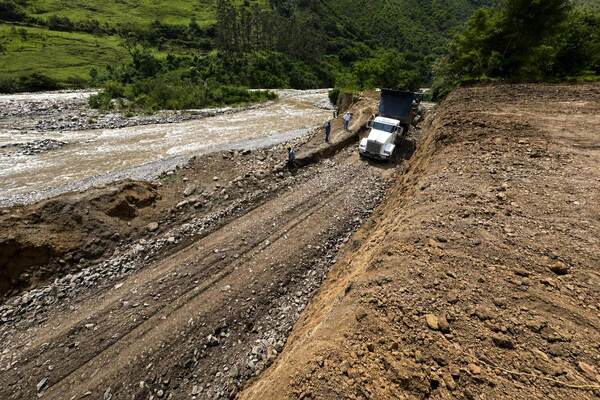
Colombia’s National Roads Institute, known as Invías, has officially restored transit at kilometer 25 of the La Lejía – Saravena corridor in the department of Norte de Santander. Following the completion of emergency stabilization and recovery works, the agency confirmed that single-lane traffic is now permitted for motorists navigating this essential link between the Boyacá and Arauca regions, according to an official statement released by Invías.
The restoration of this route comes as a critical relief for the region’s logistics and passenger transit, which had been hampered by structural instability at the site. The La Lejía – Saravena road serves as a vital economic artery, facilitating the movement of agricultural goods and essential supplies between the eastern plains and the Colombian interior. The reopening of the passage follows a series of technical interventions aimed at securing the slope and preventing further geological degradation that previously threatened the integrity of the road surface.
Infrastructure Challenges and Regional Connectivity
The La Lejía – Saravena highway is frequently subject to geological volatility, particularly during periods of intense rainfall that characterize the Andean-Orinoquía transition zone. According to reports from the National Unit for Disaster Risk Management (UNGRD), mountainous corridors in Norte de Santander and Arauca remain high-risk areas for landslides and erosion. The work at kilometer 25 was prioritized by Invías to ensure that transport operators and local residents maintain access to essential services.
Regional authorities have emphasized that while the road is now passable, it remains restricted to a single lane. This operational constraint means that drivers must exercise caution and adhere to the traffic management protocols established by onsite personnel. The use of single-lane traffic is a standard safety measure during the recovery phase of infrastructure projects to minimize the load on recently stabilized soil and to allow for ongoing monitoring of the terrain.
What Motorists Need to Know
For those planning to travel through the La Lejía – Saravena corridor, staying updated on real-time road conditions is essential. Invías maintains a digital platform, #767, which provides travelers with current alerts regarding road closures, construction zones, and weather-related disruptions across the national road network. Official updates are available via the official Invías social media channels, where the agency publishes daily notices concerning traffic restrictions.
The stabilization of this segment is part of a broader maintenance initiative overseen by the Ministry of Transport to improve the resilience of secondary and tertiary road networks. By securing key points like kilometer 25, the government aims to reduce the frequency of prolonged closures that historically isolate communities in the Arauca department. Travelers are advised to check these resources before departure, as sudden weather shifts in the mountainous terrain can necessitate temporary adjustments to traffic flow.
Future Monitoring and Road Safety
The long-term stability of the La Lejía – Saravena route remains a subject of ongoing engineering assessment. Invías engineers typically conduct periodic inspections following major interventions to ensure that drainage systems and slope reinforcements are performing as designed. These assessments are critical for identifying potential early warning signs of movement before they escalate into full road closures.

Local commerce relies heavily on the predictability of these transit times. For farmers and logistics companies in Saravena, the ability to transport livestock and agricultural products to markets in the interior is a financial imperative. As the current single-lane operation continues, local authorities continue to coordinate with transport unions to manage traffic density, particularly for heavy-duty vehicles that are more susceptible to delays in narrow, single-lane zones.
Official progress reports and further updates on the full reopening of the corridor will be disseminated through the Ministry of Transport’s regional offices. Drivers are encouraged to monitor the official Ministry of Transport portal for any changes in traffic status or potential future maintenance schedules. For those navigating the area, exercising patience and following the instructions of traffic controllers at the site remains the most effective way to ensure safe passage through the affected sector.
Related reading