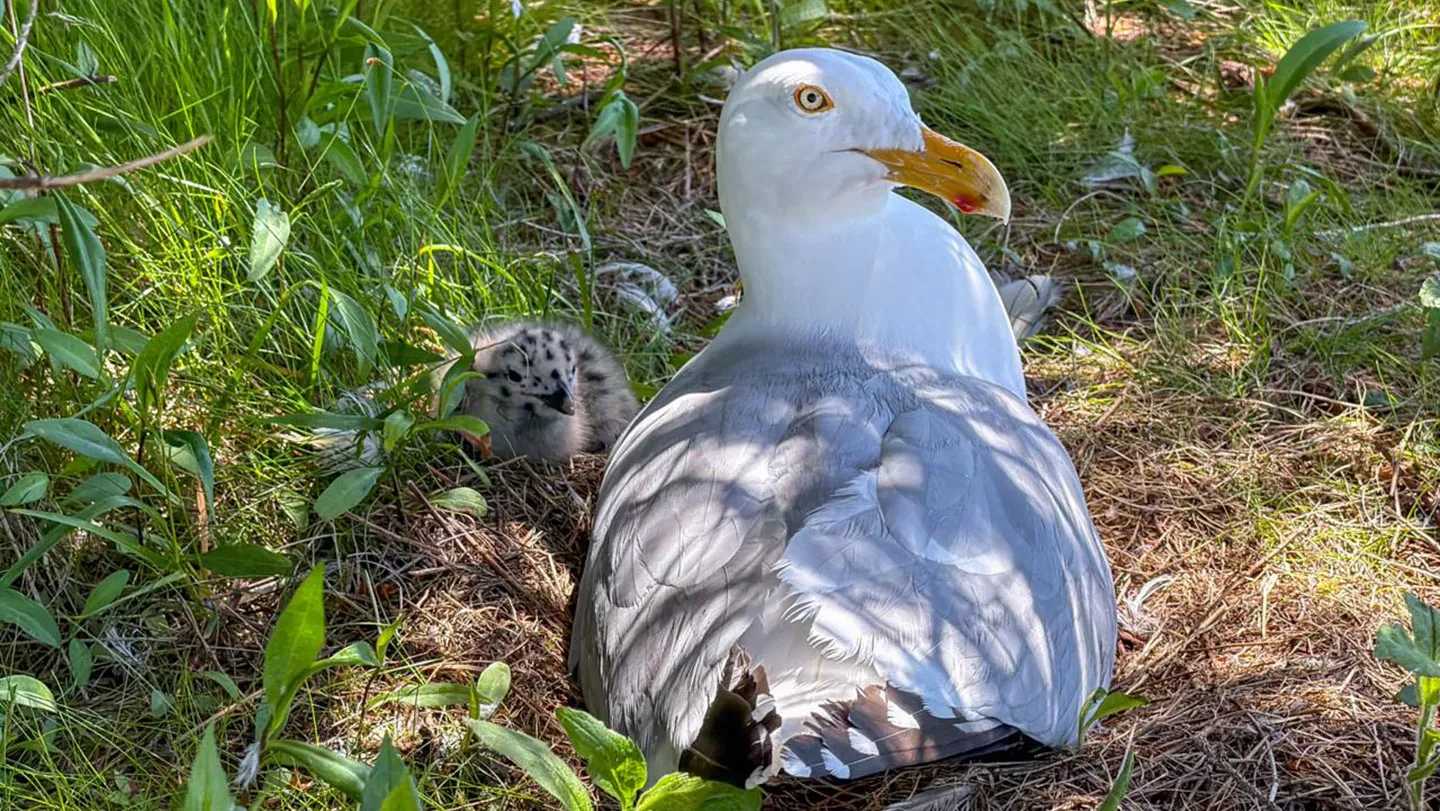
Research conducted using life-sized, painted decoys suggests that the drab, mottled plumage of juvenile gulls functions as a social signal that reduces aggression from territorial adults. By manipulating the visual appearance of these models, biologists have observed that adult gulls—specifically the Lesser Black-backed Gull (Larus fuscus)—exhibit significantly lower levels of hostility toward decoys painted to mimic the brown, speckled appearance of juveniles compared to those painted in the starker, high-contrast patterns of mature birds.
This findings, published in the journal Ethology, offer a new perspective on why many avian species undergo prolonged periods of immature plumage before reaching sexual maturity. According to the research, this “sub-adult” appearance may serve as a functional communication tool, essentially acting as a visual “badge” that signals non-competitor status to established, territorial adults.
The Role of Visual Signaling in Gull Social Dynamics
In many gull species, the transition from juvenile brown feathers to the clean white and grey plumage of an adult occurs over several years. For decades, ornithologists debated whether this delay was merely a byproduct of physiological development or a strategy with evolutionary benefits. The recent study, led by researchers at the University of Exeter, sought to test the latter hypothesis by deploying 3D-printed decoys into active breeding colonies.

To isolate the effect of color, the team created models that were identical in shape and size but varied in their paint schemes. The decoys were placed within the nesting territories of adult Lesser Black-backed Gulls. The team recorded the frequency and intensity of aggressive behaviors, such as lunging, pecking, and vocalized threats, directed toward the models by the territorial owners. The results demonstrated a clear trend: decoys displaying juvenile-like, mottled brown plumage were attacked significantly less often than those painted with adult-like markings.
This suggests that the plumage acts as a form of “social camouflage.” By appearing distinct from a mature, breeding adult, the juvenile avoids being perceived as a threat to the nest site or a competitor for resources. This visual signal effectively “tells” the adult that the visitor is not a rival, thereby lowering the likelihood of a violent territorial defense.
Understanding Aggression and Territoriality
Territorial defense is a costly endeavor for adult gulls. Engaging in physical altercations consumes energy and increases the risk of injury. Therefore, the ability to quickly assess the threat level of an intruder is a significant survival advantage for the nesting pair. The study indicates that adult gulls utilize the plumage of an intruder as a heuristic—a mental shortcut—to categorize the threat level without needing to engage in prolonged observation.

The research aligns with the broader biological concept of “status signaling,” where an animal’s physical appearance provides honest information about its age, sex, or social standing. Because a juvenile gull is physically incapable of holding a territory or competing for a mate, its drab plumage provides an honest signal of its subordinate status. The territorial adult, in turn, saves energy by withholding aggression, as there is no fitness benefit to attacking a non-competitor.
This mechanism may also explain why many species of seabirds and raptors maintain “immature” coloring for extended periods. In environments where nesting space is limited and competition is fierce, the ability to navigate a colony without triggering an immediate attack is essential for the survival of younger birds as they learn to forage and navigate social hierarchies.
Broader Implications for Avian Biology
The study provides empirical evidence for a theory that has long been discussed in behavioral ecology. By using artificial decoys, the researchers were able to control variables that would be impossible to manipulate with wild, free-roaming birds. This methodology allows scientists to parse out which specific visual cues trigger aggressive responses and which serve to de-escalate social tension.
While the study focused on the Lesser Black-backed Gull, the principles of status signaling are observed across the avian world. From the duller colors of young raptors to the muted tones of juvenile songbirds, the evolutionary pressure to avoid unnecessary conflict appears to be a powerful driver of plumage evolution. These findings contribute to a deeper understanding of how social signals shape the interactions between individuals within a population.

As research continues, scientists aim to explore whether these signals are universal across different species of gulls or if they are specifically adapted to the nesting density of particular environments. Understanding these social cues is critical for conservationists and ornithologists alike, as it highlights the complex ways in which birds communicate and manage social stability in often crowded, high-stakes breeding colonies.
Future research will likely focus on whether these visual signals remain effective in different light conditions or if they vary during different stages of the breeding season. Readers interested in the ongoing monitoring of these colonies can find updates via the University of Exeter’s research portal, which tracks developments in behavioral ecology and avian conservation. Please share your thoughts or observations on local bird behavior in the comments section below.