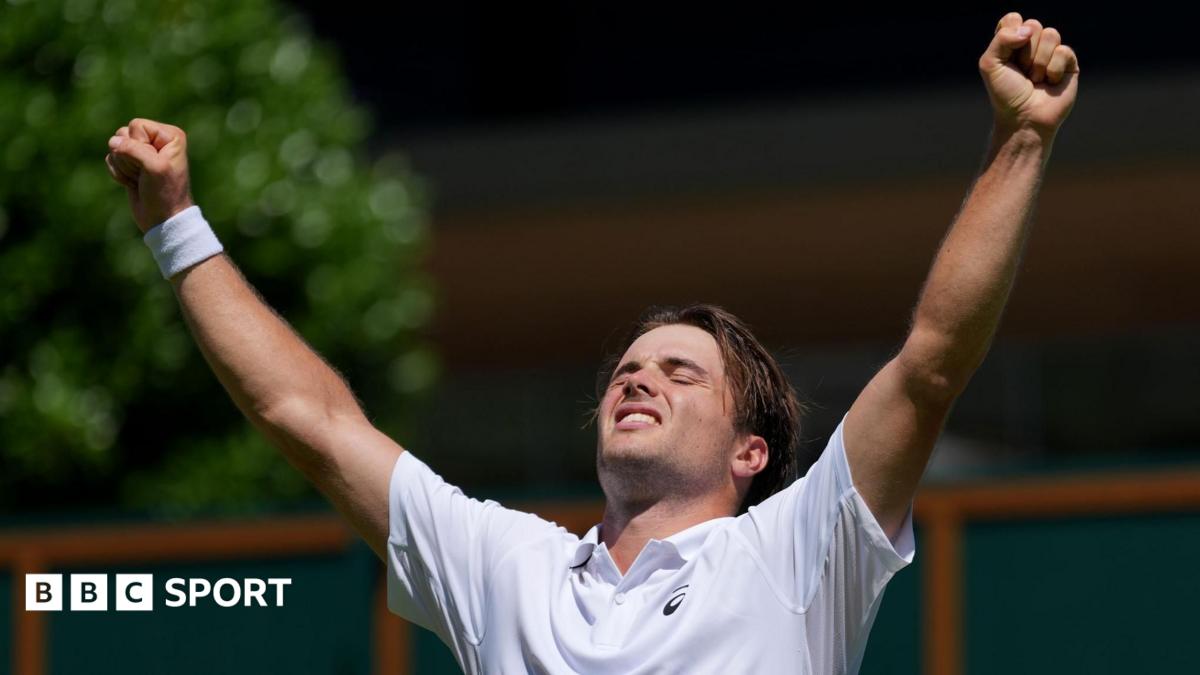
British tennis player Arthur Fery has emerged as a focal point for home supporters at Wimbledon, currently representing the final British hope in the men’s singles draw. Following a series of competitive performances at the All England Club, Fery is set to challenge Belgian opponent Zizou Bergs in a match that carries significant weight for the 21-year-old’s professional trajectory. Standing at approximately 5-foot-9, Fery has frequently addressed his physical stature in media appearances, emphasizing that his confidence and technical execution on the court remain his primary assets in a sport often dominated by taller players.
The progression of Arthur Fery into the later stages of the tournament follows his transition from the collegiate circuit in the United States to the professional tour. According to the Association of Tennis Professionals (ATP), Fery spent significant time competing for Stanford University, where he balanced elite-level tennis with academic pursuits before turning professional. This background has been cited by analysts as a grounding factor, providing him with the mental fortitude necessary to manage the pressures of playing in front of a partisan home crowd at SW19.
The Road to the Third Round
Fery’s path to the current stage of the tournament has been marked by tactical discipline. His game relies heavily on court coverage, baseline consistency, and the ability to dictate points through placement rather than raw power. This approach has allowed him to neutralize opponents who favor a more aggressive, high-velocity style of play. The upcoming match against Zizou Bergs is viewed by experts as a test of his endurance and tactical maturity.
Zizou Bergs, currently ranked within the top 100 players globally according to the International Tennis Federation (ITF), represents a formidable obstacle. Bergs is known for his intensity and speed, traits that mirror some of the challenges Fery has already overcome during his qualifying and early-round matches. The contest is expected to be a test of defensive resilience for the Briton, who must maintain his composure against a player known for high-energy rallies.
Physicality and Perception in Modern Tennis
In interviews, Fery has frequently been asked about the advantages and disadvantages of his height relative to the modern baseline game. While the men’s professional tour has seen an increase in the number of players exceeding 6-foot-4, Fery has maintained a consistent stance: his focus remains on optimizing his own movement and shot selection. He has noted that the tactical nuances of grass-court tennis—specifically the low bounce of the ball—can often favor players with his specific movement profile.

The professional landscape for younger players often involves a rapid adjustment to the pace and physicality of the ATP Tour. Data from the official Wimbledon tournament archives highlights that Fery’s ability to sustain high-intensity play throughout long matches has improved significantly over the past 18 months. This improvement is credited to his rigorous training schedule and his transition to full-time professional status.
What Happens Next for the Briton
The match between Arthur Fery and Zizou Bergs is scheduled to take place at the All England Lawn Tennis and Croquet Club. As the sole remaining British representative in the singles draw, Fery carries the expectations of the home crowd into the third round. The winner of this encounter will advance to face a higher-seeded opponent, marking a potential career-best performance for either player in a Grand Slam tournament.

Fans and followers can monitor the official progress of the match through the Wimbledon live scoring portal, which provides real-time updates on game scores, set totals, and match statistics. As the tournament continues, Fery’s performance will be evaluated by officials and analysts to determine his standing for upcoming ATP events and potential rankings movement. Readers are encouraged to share their thoughts on the match and follow our ongoing coverage as the tournament moves toward its final stages.