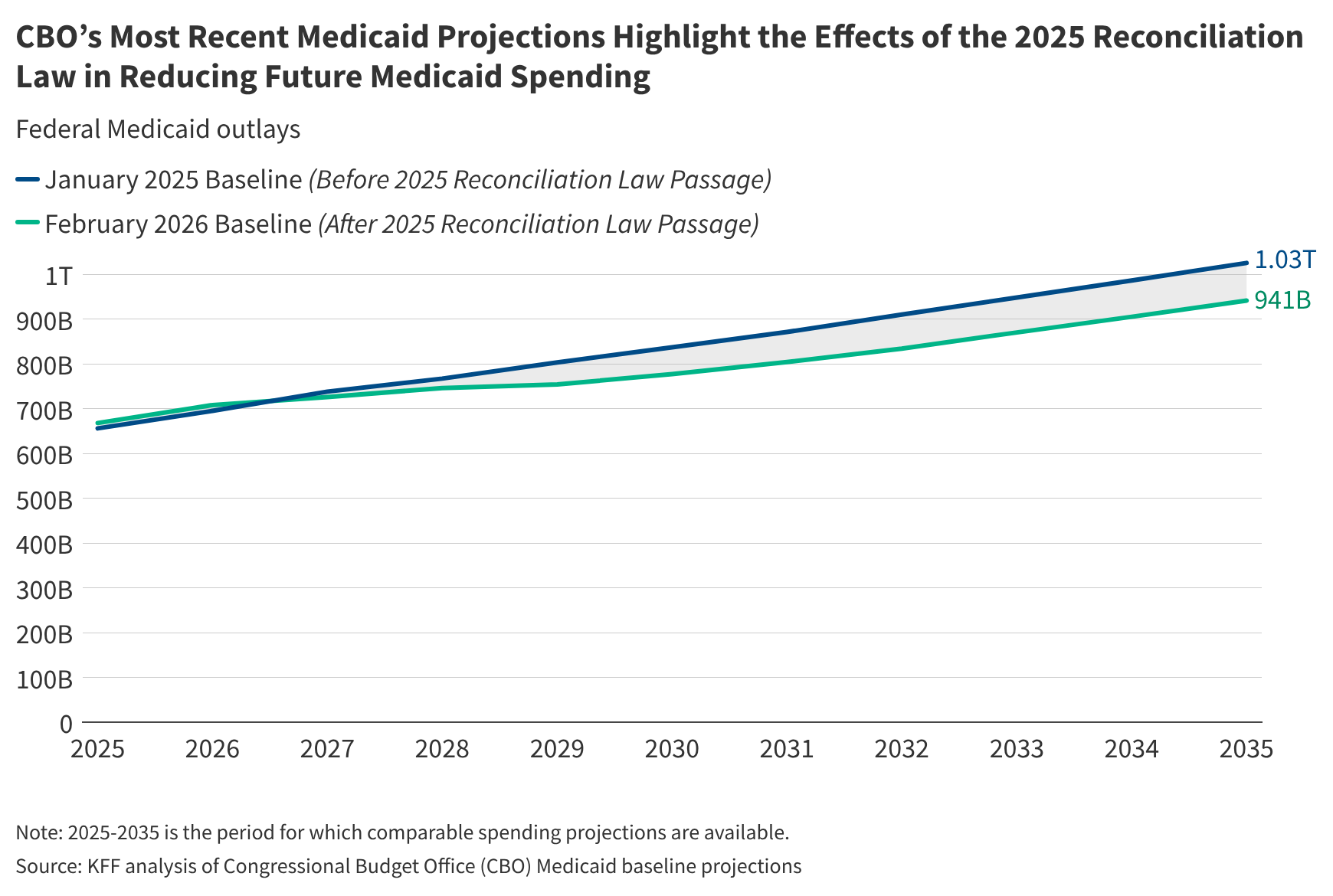
The Congressional Budget Office (CBO) released updated projections in February 2026 indicating significant shifts in Medicaid spending and enrollment over the coming decade, largely driven by the implementation of the 2025 Reconciliation Law. Federal outlays for the program are now expected to track differently than previous estimates, as the agency incorporates both the legislative changes and evolving economic conditions into its long-term outlook. These projections provide the primary benchmark for understanding how the federal government expects to manage healthcare coverage for low-income populations through 2036.
As a physician and health journalist, I have followed the intersection of federal policy and clinical access for over a decade. The latest data from the Congressional Budget Office serves as a vital tool for policymakers, healthcare administrators, and patients alike. By comparing the February 2026 baseline to earlier forecasts, we can identify exactly how the 2025 legislative framework is altering the fiscal trajectory of one of the world’s largest public health programs.
Understanding the 2025 Reconciliation Law Impact
The 2025 Reconciliation Law introduced structural changes to Medicaid that the CBO now accounts for in its decadal spending projections. According to the CBO’s February 2026 baseline report, these legislative adjustments are intended to moderate the growth of federal Medicaid expenditures. The law includes specific provisions regarding eligibility verification and federal matching rate adjustments, which represent a departure from the spending patterns observed during the post-pandemic period.
When analyzing these figures, the CBO accounts for “technical changes”—a term used to describe adjustments in enrollment participation rates, healthcare inflation, and the shifting demographics of the Medicaid-eligible population. Because the 2025 law mandates more rigorous oversight of eligibility, the projected enrollment numbers reflect a lower ceiling than what would have been expected under prior statutes. For readers tracking these trends, the Centers for Medicare & Medicaid Services (CMS) remains the ultimate authority for state-level implementation and enrollment data.
Comparing Current Projections to Historical Baselines
A central feature of the February 2026 outlook is the stark contrast it presents when compared to projections issued before the reconciliation package was enacted. Previous models often relied on assumptions of continuous, high-volume enrollment that were hallmarks of the 2020–2024 era. The current data shows a more constrained growth trajectory, with federal spending now expected to rise at a slower rate than the historical average of the last five years.

The CBO’s methodology relies on a combination of macroeconomic variables—such as the projected unemployment rate and the Consumer Price Index for medical services—and the specific legislative constraints of the 2025 law. By synthesizing these elements, the CBO provides a clearer picture of federal liability. While some policy analysts argue these projections may underestimate the impact of future economic volatility, the CBO maintains that its current baseline is the most accurate reflection of existing law as of February 2026.
Who Is Affected by These Projections?
The impact of these federal fiscal shifts is felt most acutely at the state level. Because Medicaid is a joint federal-state program, any reduction in federal matching funds or changes in eligibility criteria forces state legislatures to re-evaluate their own budget allocations. Patients currently enrolled in Medicaid or those seeking coverage should monitor their state’s Health Insurance Marketplace and local Medicaid office for updates on eligibility requirements, as states may adjust their programs in response to the federal funding environment.
Healthcare providers, particularly those in rural or underserved areas, are also closely tracking these numbers. A change in the federal funding pipeline often correlates with shifts in reimbursement rates for specific services. As the CBO continues to refine its projections throughout the fiscal year, transparency regarding these changes is essential to maintaining the stability of the healthcare safety net.
Next Steps and Future Reporting
The Congressional Budget Office is scheduled to release its next comprehensive budget and economic outlook later this year. These updates will further clarify whether the trends identified in February 2026 are holding steady or if additional economic factors—such as unexpected shifts in medical technology costs or labor shortages in the healthcare sector—are exerting new pressures on the Medicaid budget.

For those interested in the granular details of these projections, the full datasets and supporting technical documentation are available on the CBO’s official data portal. I will continue to monitor these developments as they unfold, providing analysis on how these fiscal policy decisions affect clinical practice and patient outcomes across the globe. Please share your thoughts or questions in the comments section below, and stay tuned for further updates as new legislative hearings are scheduled.