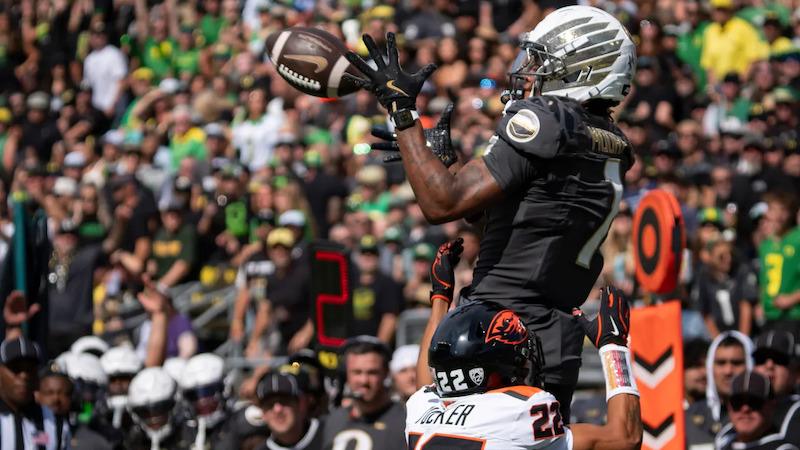
The University of Oregon football program has established itself as a dominant force in the Western United States, maintaining a high winning percentage against regional rivals throughout the modern era of college football. As the Ducks transition into the Big Ten Conference, their historical performance against traditional West Coast programs remains a primary metric for evaluating their competitive standing in the landscape of collegiate athletics. According to official records from the University of Oregon Athletics department, the program’s ability to secure victories against long-standing regional opponents has been a cornerstone of its rise to national prominence.
For decades, Oregon’s rivalry games against institutions such as the University of Washington, Oregon State University, and the University of Southern California have defined its regional identity. Data provided by NCAA official statistics confirms that the Ducks have successfully navigated these high-stakes matchups with a consistency that separates them from many of their peers. This winning percentage is not merely a reflection of individual seasons but represents a sustained period of success that has attracted significant attention from both analysts and recruits.
Historical Performance Against Regional Rivals
The rivalry between the University of Oregon and Oregon State University, known as the Civil War, serves as one of the most significant indicators of the Ducks’ regional dominance. Since the inception of the series, the Ducks have held a distinct advantage in total wins. Official archives maintained by the Oregon State University Athletics department confirm that Oregon leads the all-time series, a testament to the program’s long-term success against its in-state counterpart. These games are frequently cited as the most important fixtures on the annual calendar for fans in the Pacific Northwest.

Beyond the in-state rivalry, Oregon has maintained a competitive, often volatile, series against the University of Washington. The “Northwest Championship” has fluctuated in favor of both programs over the last century; however, Oregon’s performance in the 21st century has significantly bolstered its overall winning percentage in the series. According to the University of Washington football historical database, the series remains one of the most closely contested in the region, reflecting the high level of parity that has historically existed among the top programs in the Western United States.
Impact of Conference Realignment on Regional Matchups
The landscape of Western football underwent a major shift with the dissolution of the Pac-12 Conference and the subsequent move of the University of Oregon to the Big Ten, which became official in August 2024 as reported by Big Ten Conference officials. This move has fundamentally changed how the program approaches its schedule, moving away from annual matchups with traditional regional foes. While the Ducks have historically maintained a high win rate against West Coast teams, the shift to a national conference schedule presents a new set of variables for the coaching staff and athletic department.

Despite the change in conference affiliation, the demand for regional games remains high. Institutional leaders at the University of Oregon have noted that maintaining these traditional rivalries is a priority for preserving the program’s heritage. The University of Oregon Athletics strategic planning division has confirmed that future non-conference schedules will continue to feature prominent West Coast programs, ensuring that the historical winning percentage against regional foes remains a point of focus for the athletic program.
Statistical Analysis of Regional Dominance
When evaluating Oregon’s winning percentage against the “Big Four” of the West—Washington, Oregon State, USC, and UCLA—the data shows a trend of improvement over the last twenty years. The program’s success rate in these contests climbed significantly during the tenures of coaches like Chip Kelly and Mario Cristobal, and has continued under the leadership of Dan Lanning. According to analysis from Sports Reference, the Ducks have maintained a winning record against the majority of these programs since the year 2000, a stark contrast to the program’s performance in the mid-20th century.
This sustained success is attributed to several factors, including state-of-the-art training facilities and a robust recruitment strategy that focuses on talent from across the country, not just the Pacific Northwest. As noted by the NCAA official reporting on recruiting trends, the University of Oregon has leveraged its brand identity to maintain an elite roster, which directly correlates to the program’s ability to sustain a high winning percentage against regional rivals even as the competitive landscape evolves.
Future Checkpoints and Program Developments
The next major checkpoint for the program regarding its regional standing will be the release of the 2026 non-conference schedule, which is expected to be finalized by the Big Ten Conference office later this year. Fans and analysts are looking for continued inclusion of regional opponents to maintain the historical significance of the Ducks’ Western identity. For the latest official updates on scheduling, roster changes, and game statistics, supporters are encouraged to monitor the official University of Oregon Athletics portal.

As the Ducks continue their tenure in the Big Ten, the focus remains on leveraging their historical successes against regional foes to build a national championship-caliber program. The legacy of these past games provides the foundation for the team’s current ambitions. We invite readers to share their thoughts on the evolution of these rivalries in the comments section below.
Related reading