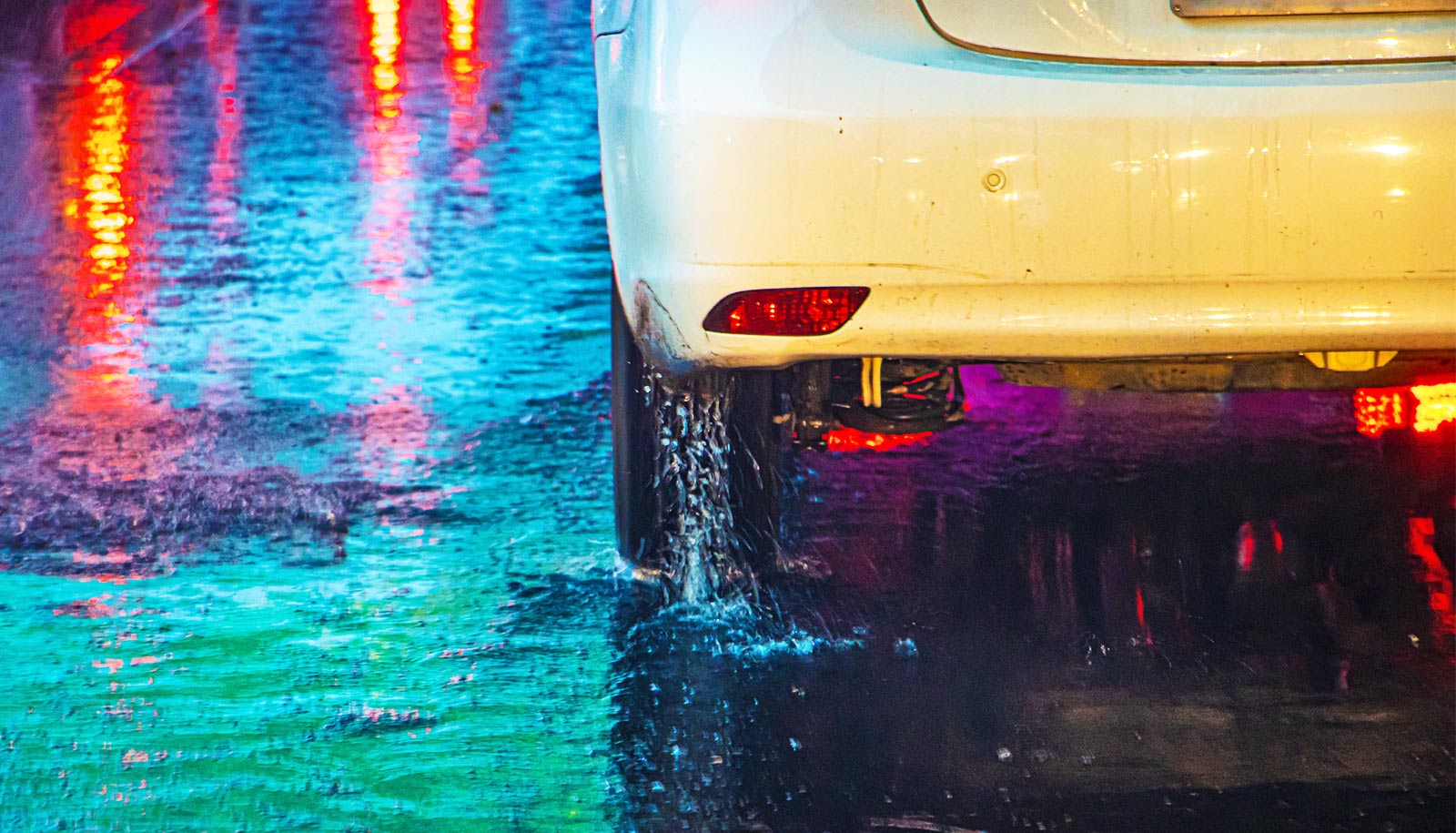
Hydroplaning occurs when a vehicle’s tires lose contact with the road surface due to a layer of water, significantly reducing steering and braking control. According to research published in the journal Applied Sciences, this safety hazard is primarily driven by vehicle speed, water depth, and tire condition. The Federal Highway Administration reports that wet pavement and severe weather conditions are linked to approximately 500,000 traffic injuries and 6,000 fatalities annually, underscoring the critical importance of understanding and mitigating these risks.
Hydroplaning is a mechanical failure that can lead to high-velocity collisions, making the physics of tire-to-road contact a matter of personal and public safety.
The Physics of Loss of Traction
When a vehicle travels over a water-covered road, the tires must displace the liquid to maintain contact with the pavement. If the vehicle moves too quickly, the tire tread cannot clear the water fast enough, causing the tire to ride on top of the water film rather than the road surface. This phenomenon is often compared to the lift generated by an airplane wing; as speed increases, the water exerts upward pressure on the tire, effectively lifting the vehicle.
Linbing Wang, a professor in the University of Georgia College of Engineering and a corresponding author of the study, notes that understanding these factors is essential for improving both vehicle design and road infrastructure. The research team utilized a combination of computer modeling and live simulations to measure the forces acting on tires in rainy conditions. Their findings indicate that while risk generally increases with water depth, there is a complex threshold—specifically around 10 millimeters—where the behavior of the water and tire interaction shifts, sometimes leading to a decrease in the risk of sustained hydroplaning as the water layer becomes more difficult for the tire to penetrate.
Key Variables Influencing Hydroplaning Risk
Several factors determine whether a driver will maintain control or experience a loss of traction. Drivers have direct control over some of these variables, while others are determined by infrastructure and maintenance.
- Vehicle Speed: This is a significant factor under a driver’s control. Reducing speed in rain allows tires more time to displace water.
- Tire Health: Tread patterns are engineered to channel water away from the contact patch. As tires wear down, their ability to disperse water diminishes, increasing the risk of hydroplaning.
- Tire Pressure: Properly inflated tires maintain the intended shape and footprint, which is critical for water dispersion.
- Road Surface Texture: The design of the pavement significantly impacts drainage. Some states, such as Georgia, utilize specialized pavement layers that allow water to drain through the asphalt, reducing pooling.
“Speed is something that drivers can control. The pavement texture and raining thickness you cannot control,” Wang explained, emphasizing that human behavior remains the most immediate variable in accident prevention. When a vehicle first hits a patch of deep water, the risk is highest because the tires have not yet begun to disperse the liquid. As the vehicle moves through the water, the tires push the fluid away, which can lower the risk if the driver maintains a steady, reduced speed.
Infrastructure and Safety Improvements
Beyond individual driving habits, the design of our road networks plays a silent but essential role in accident reduction. Infrastructure improvements, such as ensuring proper road drainage and using high-friction, permeable surface materials, are strategies currently employed by civil engineers to mitigate the effects of heavy rainfall. These efforts aim to prevent the accumulation of water, which is the necessary precursor for hydroplaning.
Drivers are encouraged to monitor their tire tread depth regularly and adjust their driving speed significantly during heavy downpours to compensate for reduced visibility and lower surface friction.
While the study in Applied Sciences provides new insights into the mechanics of tire-water interaction, the fundamental safety advice remains consistent: caution is required when roads are wet. Please share your own experiences with driving in severe weather or any safety tips you find effective in the comments section below.
Keep reading