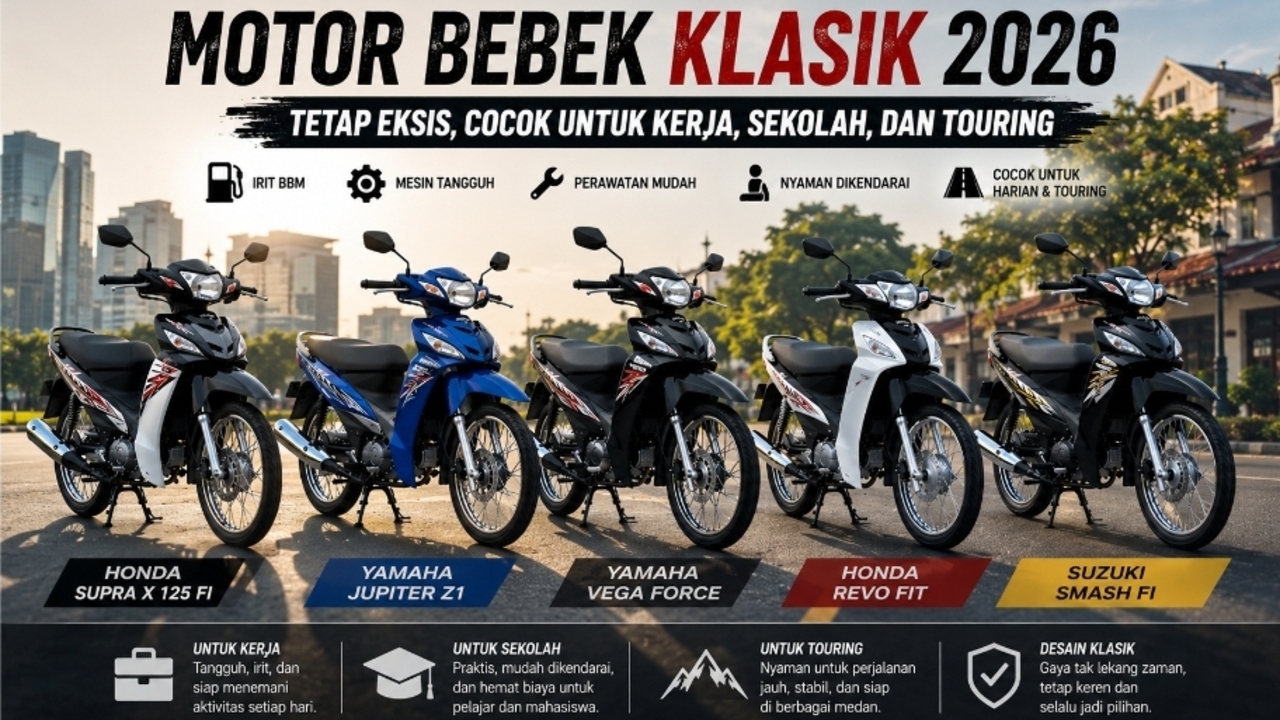
The enduring popularity of classic-styled underbone motorcycles, commonly known as motor bebek, continues to shape commuter trends across Southeast Asia as riders balance retro aesthetics with practical daily utility. Industry data and market analysis highlight how these traditional step-through machines retain a dedicated following for daily commuting, school transportation, and long-distance touring, even as modern automatic scooters dominate showroom floors.
According to regional automotive reviews and pricing trackers published in mid-2026, entry-level underbone models remain a cost-effective alternative for budget-conscious buyers, with base prices starting around Rp14 million. This segment bridges the gap between vintage styling and modern mechanical reliability, appealing to both seasoned riders seeking nostalgia and younger demographics looking for affordable, fuel-efficient transport.
Market analysts note that while automatic scooters such as classic-styled skutik models draw significant consumer interest for urban riding, the traditional underbone configuration holds specific advantages. The manual or semi-automatic gearboxes, lightweight frames, and large-diameter wire or cast wheels provide stability on rough terrain, making them a preferred choice for regional touring and rural infrastructure where paved roads vary in quality.
Market Positioning and Pricing Trends for 2026
Recent market updates from automotive portals track competitive pricing across top underbone models, highlighting brands like Honda and Yamaha as primary category drivers. For instance, comparisons between fuel-efficient benchmarks like the Yamaha Jupiter Z1 and the Honda Revo Fit illustrate ongoing consumer demand for high mileage and low maintenance costs. According to market trackers published in July 2026, baseline underbone options begin near the Rp14 million threshold, scaling upward depending on features, displacement, and graphic styling packages.
This pricing structure positions the motor bebek well below many hybrid and electric two-wheelers, which often command higher initial investments despite growing government promotion of alternative-fuel vehicles. For daily wage earners, small business operators, and student commuters, the low initial outlay and high parts availability ensure that the underbone format remains financially viable.
Furthermore, manufacturers have updated classic-styled variants with retro color palettes, chrome accents, and striping reminiscent of commuter machines from past decades. This design approach captures the aesthetic appeal traditionally associated with European scooters while retaining the durable backbone frame and leg-shield architecture characteristic of classic Asian utility bikes.
Practical Utility for Commuting, Education, and Touring
The functional design of classic underbone motorcycles dictates their versatility across multiple use cases. For daily work commutes, the narrow profile allows riders to maneuver efficiently through congested traffic in dense urban centers. The step-through frame design also facilitates easy mounting and dismounting, an ergonomic benefit valued by delivery couriers and office workers alike.
For educational institutions, students favor these motorcycles due to their straightforward operation and minimal fuel consumption. Semi-automatic centrifugal clutch systems eliminate the need for a manual hand lever, easing the learning curve for novice riders while still offering gear selection control for climbing inclines or managing engine braking.
Touring enthusiasts modify classic underbones with luggage racks, auxiliary lighting, and wind shields to handle extended cross-country trips. The horizontal single-cylinder engines powering these machines are known for mechanical simplicity, allowing local mechanics in remote areas to service them easily. This reliability factor supports long-distance touring without the specialized diagnostic tools often required for modern fuel-injected maxi-scooters or electric motorcycles.
Future Outlook for the Underbone Segment
Industry observers monitor shifting consumer preferences as manufacturers introduce diverse lineups ranging from Vespa-styled automatics to electric conversions. While electric scooters gain traction in metropolitan areas, the enduring infrastructure gaps in rural regions ensure that internal combustion underbones maintain steady sales volumes.
Official sales figures and forthcoming manufacturer disclosures from major producers are expected later in the year, which will clarify how classic-styled utility models fare against rising electrification mandates. Stakeholders tracking regional automotive sectors encourage consumers to consult authorized dealership networks and official brand portals for the most up-to-date specifications, warranty details, and financing options before making a purchase.
Readers are invited to share their experiences with classic underbone motorcycles or join the discussion in the comments section below regarding the balance between modern efficiency and retro styling.
Keep reading