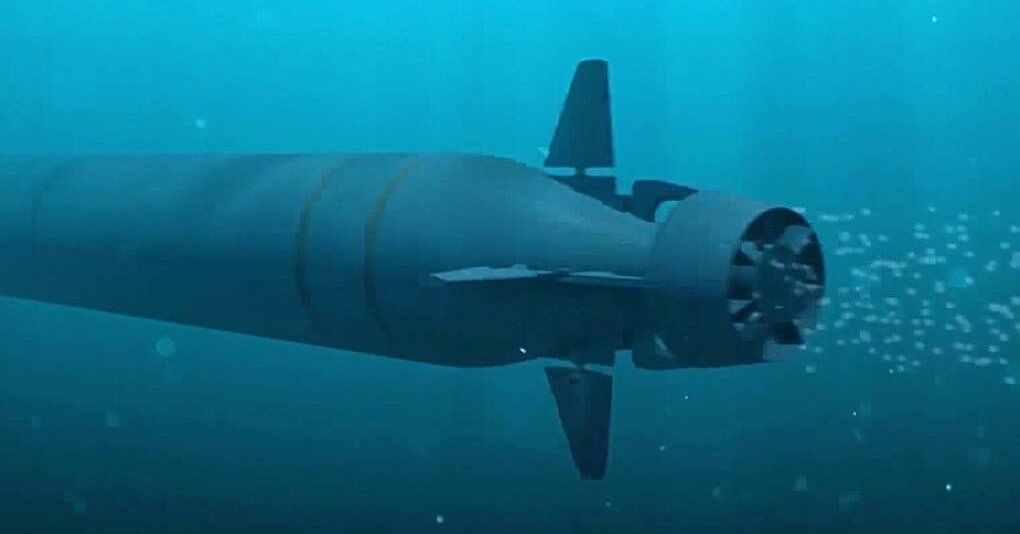
Russian President Vladimir Putin recently addressed the development of new strategic weapons systems, prompting sharp international pushback and accusations of financial mismanagement from defense analysts and regional critics. Speaking during a high-level military meeting, the Russian leader outlined advancements in what state media and official briefings characterize as advanced superweapons designed to counter shifting global security dynamics. The remarks immediately drew scrutiny from foreign observers who questioned the strategic utility and economic sustainability of deploying costly hardware amid ongoing domestic economic pressures.
The latest disclosures arrive as defense experts pore over Moscow’s long-term military spending projections. According to reports published by international security monitors and verified through state broadcast transcripts, the announcements center on next-generation delivery systems and strategic deterrents intended to modernize Russia’s nuclear and conventional triad. While official statements from the Kremlin emphasize technological superiority and the necessity of maintaining strategic parity, independent analysts point out that such programs require immense capital outlays that could otherwise address domestic infrastructure and social spending.
Critics wasted little time labeling the high-profile military venture an inefficient use of state resources. Several geopolitical commentators and regional policy institutes described the capital commitments as a heavy drain on public funds, characterizing the overarching strategy as an expensive misallocation during a period of sustained economic tightening. Financial analysts tracking Russian federal expenditures note that maintaining advanced military research and development pipelines places a significant strain on the national budget, raising questions about how these programs will be funded over the next decade.
Strategic Context and Modernization Goals
Russia’s pursuit of advanced military capabilities is not entirely new, but recent official framing places renewed emphasis on high-tech deterrents. Defense officials in Moscow have consistently maintained that developing non-standard strategic systems is vital for neutralizing perceived threats from NATO expansion and Western missile defense initiatives. According to briefings released by the Russian Ministry of Defense, engineers have focused heavily on hypersonic velocities, autonomous guidance, and enhanced maneuverability to bypass modern interception networks.
Military planners argue that these innovations provide asymmetric advantages that compensate for conventional force imbalances. However, Western intelligence agencies and independent think tanks, including the London-based International Institute for Strategic Studies (IISS), have repeatedly questioned the operational readiness and actual deployment scale of these purported superweapons. In previous assessments, defense researchers noted that while research prototypes often feature prominently in state rhetoric, mass production and reliable deployment face severe technological bottlenecks, particularly regarding specialized microelectronics and advanced materials.
Furthermore, economic sanctions imposed by the United States, the European Union, and allied nations have restricted Russia’s access to critical dual-use technologies. Financial tracking groups suggest that import restrictions on high-precision machine tools and semiconductor components have inflated production costs and extended development timelines for major defense projects. Consequently, independent observers argue that the financial gap between announcing advanced weapons and fielding them operationally has widened significantly.
Economic Impact and Domestic Scrutiny
The debate over military spending highlights a broader tension within the Russian economy between defense prioritization and civilian needs. Federal budget allocations for national defense and security have reached historic highs as a percentage of total government spending, crowding out investments in healthcare, education, and regional development. Economic analysts tracking the Russian ruble and sovereign bond markets emphasize that sustaining elevated military production levels requires diverting substantial revenues from energy exports and sovereign reserves.
Public opinion within Russia regarding these expenditures remains complex, shaped by state-controlled media narratives that frame military modernization as an existential necessity for national sovereignty. At the same time, regional authorities across various federal subjects have frequently reported shortfalls in local budgets for municipal repairs and public services. Critics of the administration’s fiscal policy argue that sinking billions into specialized weaponry yields minimal return for the average citizen, whose purchasing power has been eroded by inflation and currency fluctuations.
International financial institutions, including the International Monetary Fund (IMF), have adjusted their growth forecasts for the Russian economy downward, citing structural imbalances driven by wartime mobilization and heavy state subsidies to the defense-industrial complex. While short-term industrial output has ticked upward due to state procurement orders, economists warn of long-term stagnation as productive capital is funneled away from innovative commercial sectors.
International Reactions and Security Implications
Foreign governments and military alliances have monitored Moscow’s announcements with a mixture of concern and skepticism. NATO officials have reiterated that the alliance maintains robust deterrent capabilities of its own and remains unswayed by rhetoric concerning breakthrough weapons systems. Diplomats in Brussels and Washington emphasize that transparency and arms control agreements—many of which have deteriorated in recent years—remain the most effective tools for maintaining global strategic stability.
The breakdown of bilateral arms control frameworks, including the suspension of participation in the New START treaty, has left fewer mechanisms in place to verify the claims surrounding new strategic armaments. Without mutual inspections or verified data exchanges, military planners on all sides are forced to rely on worst-case estimates, which can inadvertently fuel arms races and increase the risk of miscalculation. Security analysts stress that public posturing over advanced weaponry often serves domestic political messaging rather than signaling a genuine shift in the global balance of power.
As diplomatic channels remain largely deadlocked, the focus shifts toward how these competing priorities will manifest in upcoming federal budget cycles. Observers will watch for any official updates from the Russian finance ministry regarding adjustments to defense spending caps and public investment strategies. Readers seeking further documentation on international defense expenditures and arms control negotiations can consult public reports issued by the Stockholm International Peace Research Institute (SIPRI) or official transcripts provided by the UN Office for Disarmament Affairs.
We welcome your perspective on these developments. Please share your thoughts and join the discussion in the comments section below.
Related reading