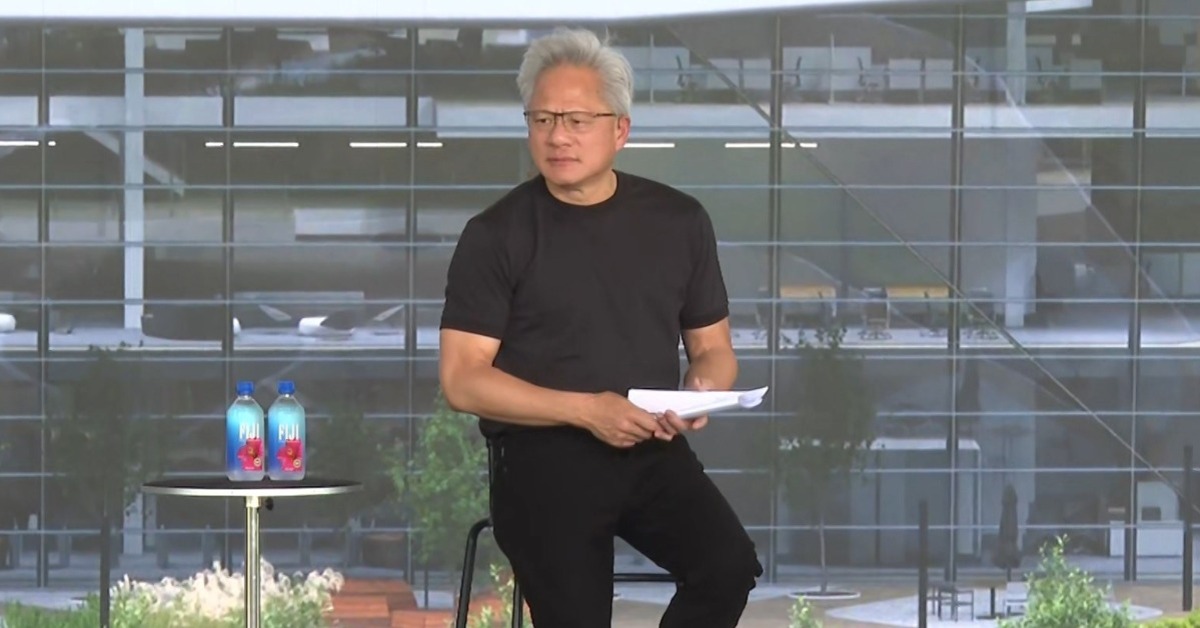
Nvidia CEO Jensen Huang joined Wistron Chairman Simon Lin on July 21, 2026, to open Wistron’s first U.S. facility in Dallas, Texas.
The opening of the Dallas D1 plant marks a significant shift in the AI hardware supply chain, moving critical production of the GB300 Grace Blackwell Ultra Superchip to North American soil.
Wistron’s Dallas Expansion and the GB300 Record
The new facility is not merely a capacity expansion but a technical milestone. According to reporting from news.ebc.net.tw, the plant is the first in the United States to successfully mass-produce the GB300 computing board. This level of integration allows Wistron to deepen its North American footprint and respond more quickly to the accelerating demand for AI infrastructure.
Wistron Chairman Simon Lin indicated that the company will not stop at the current phase. Beyond the GB300 and Vera Rubin products, the company is targeting next-generation hardware and planning further investments in a D2 plant.
Jensen Huang emphasized the importance of the local environment in Texas, noting that the community, government, and local employees are friendly toward corporate investment. He suggested that the demand for AI chips will continue to climb, with an estimated annual growth of 25% and a potential requirement for ten times the current number of chips.
The trillion-dollar Projection for Marvell Technology
While Wistron handles the physical assembly of servers, the underlying silicon architecture is seeing a massive shift toward custom designs. Jensen Huang recently highlighted Marvell Technology as a potential candidate for the trillion-dollar market cap club, according to fool.com.
This projection is grounded in the rise of application-specific integrated circuits (ASICs). Unlike general-purpose GPUs, ASICs are designed for specific tasks, making them more efficient for AI inference workloads. The demand is so high that Goldman Sachs estimates custom ASIC shipments could equal GPU sales by next year.
- Custom ASICs: Marvell noted in May that revenue from custom chips could more than double in the next fiscal year.
- Optical Networking: This technology prevents GPUs and ASICs from sitting idle by transporting large data sets across clusters. Goldman Sachs expects a 9x increase in sales of optical networking components within two years.
Financial Projections and Market Addressable Totals
The financial stakes for the AI infrastructure layer are scaling rapidly. Marvell expects its data center total addressable market (TAM) to reach $94 billion in 2028. If the company captures 20% of that market, it would translate to nearly $19 billion in data center revenue—more than triple its fiscal 2026 revenue of $6.1 billion.
| Metric/Market | Projected Value/Target | Source/Timeline |
|---|---|---|
| Custom AI Market Revenue | $600 billion | Oplexa Insights (2033) |
| Optical Networking Market | $154 billion | Goldman Sachs |
| Marvell Switching Revenue | $1 billion | Fiscal 2028 |
| Marvell Current Market Cap | $143B | fool.com (July 2026) |
Despite these projections, the stock has seen a 129% surge over the last three months, leading to a trailing earnings multiple of 94. Huang’s prediction suggests the stock could potentially jump almost 5x from its current levels, based on its market cap as of this writing.
Tariff Risks and the Shift to U.S. Manufacturing
The push to build in Texas is happening against a backdrop of geopolitical uncertainty. There are reports that Taiwan could face a 10% tariff as the U.S. government considers new measures against 60 trade partners over concerns regarding forced labor. Economic Minister Kung Ming-hsin stated that the government is maintaining contact with U.S. officials to secure favorable conditions for Taiwan.
Wistron is not the only Taiwanese entity pivoting toward the U.S.
- TSMC: Announced that its U.S. investment scale increased 22-fold over a period of more than six years.
By establishing a complete manufacturing ecosystem within the U.S., companies are attempting to balance the high cost of domestic production with the necessity of avoiding tariffs and ensuring supply chain stability for high-priority AI hardware.
Keep reading
- Why Minnesota’s AI Nudification Ban Is Unconstitutional (And Why Elon Musk Is Right to Sue)
- Warhammer 40,000: Dawn of War IV Focuses on Necrons in Latest Preview
- New Residential Scheme with Cinema Room and Terrace Opens in Berlin Prenzlau (newsdirectory3.com)
- Dell Technologies Joins Nvidia Led AI Cybersecurity Open Source Alliance (world-today-news.com)