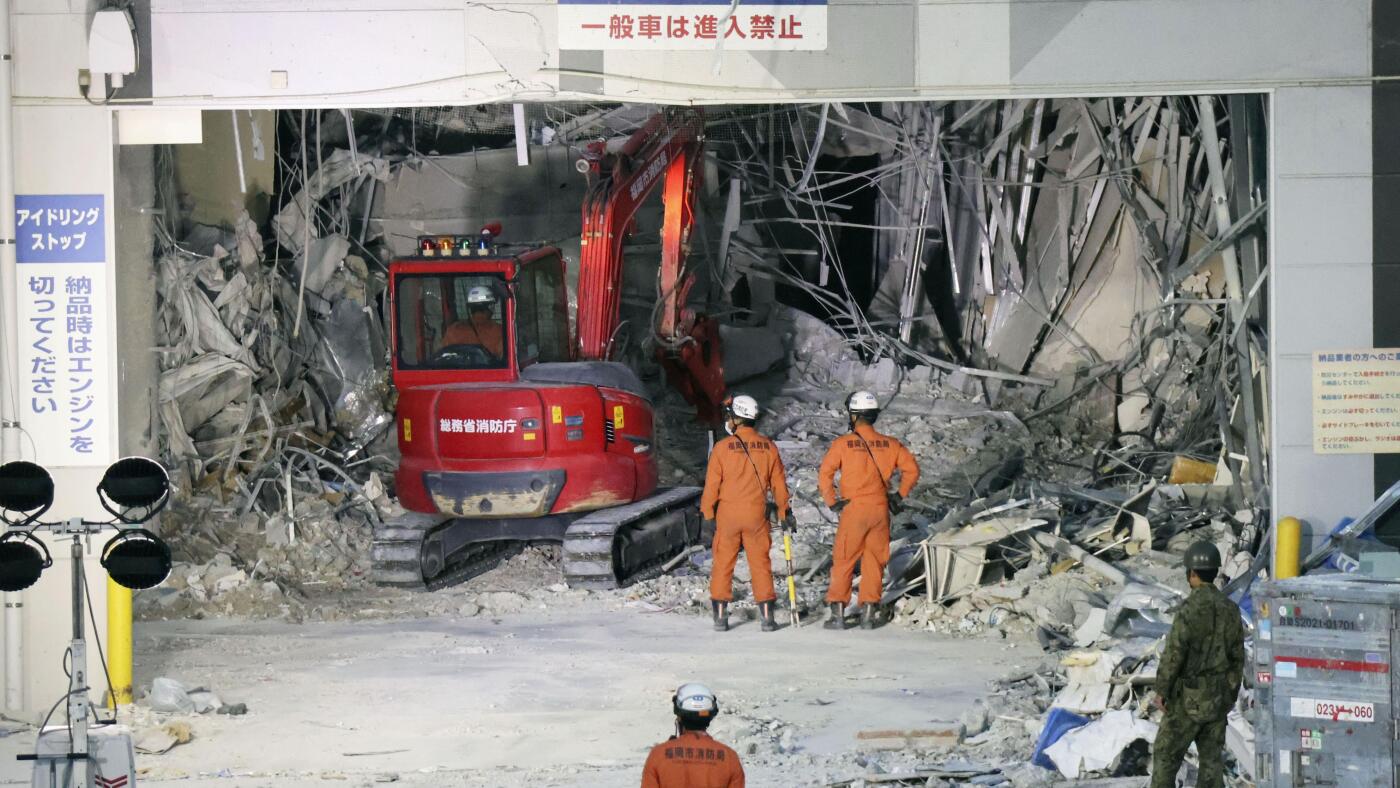
The death toll climbed to 34 following a magnitude 7.1 earthquake that struck Japan’s southern main island of Kyushu on Tuesday, according to the Kumamoto prefectural government reported by Apnews. The disaster triggered an explosion at a shopping center, toppled a factory chimney, and flattened homes across southwestern Japan.
Death Toll Reaches 34 Following Powerful Kyushu Earthquake
As search operations entered a fourth day, authorities stated that one more death and its connection to the quake remained under investigation. Preliminary assessments by Kumamoto officials indicated that more than 1,500 buildings were damaged, including 179 that were completely destroyed, while at least 96 people sustained injuries, with six listed in serious condition.
Survivors Face Extreme Heat and Critical Utility Shortages
Thousands of survivors spent Friday in crowded shelters or sleeping in vehicles amid shortages of water and fuel, compounding fears of heat-related illness. Japan’s weather agency and the Ministry of the Environment issued an extreme heat alert for Kumamoto city as temperatures peaked at 36 C (97 F) on Friday following a high of 35 C (95 F) on Thursday.
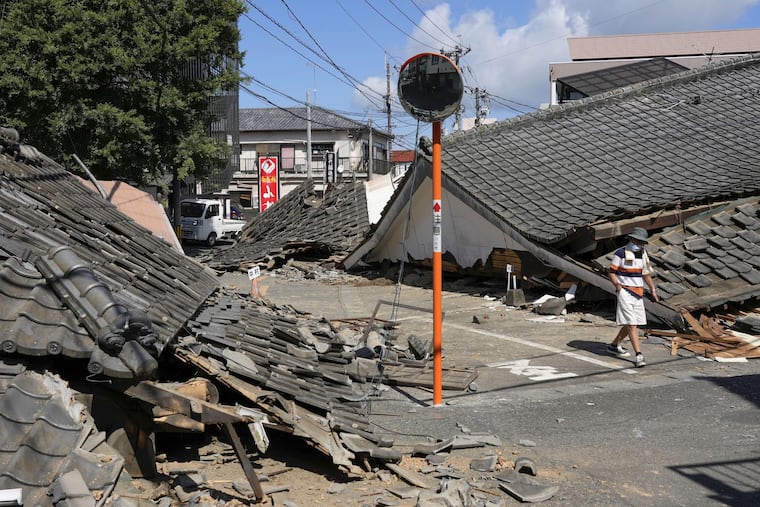
Kumamoto authorities reported that over 79,000 homes remained without water. More than 9,000 people sought refuge in shelters, where power sources were actively added to operate air conditioning units. Meanwhile, fuel scarcity worsened as power outages disabled gas stations and earthquake damage disrupted transport deliveries from other regions, leaving evacuees struggling to keep air conditioning running inside their cars.
Japanese Prime Minister Sanae Takaichi emphasized that authorities must secure water supplies by doing whatever it takes
and urged close coordination with the military and relevant agencies, as reported by NPR. While the earthquake initially left thousands of homes without power, electricity was fully restored by Friday evening, according to the local power company and government statements.
Intense Search Operations at Collapsed Sites
Rescue teams continued focused operations at several severely damaged locations across the region. At the collapsed Aeon Mall shopping center in the town of Kashima—where the complex was bustling with thousands of customers when the quake struck—company officials stated that about 3,000 shoppers had successfully evacuated to a parking lot before an explosion occurred in another part of the building where staff remained working.
Japanese Chief Cabinet Secretary Minoru Kihara told reporters in Tokyo on Friday that seven people were confirmed dead and 11 had been rescued at the mall site, where the second floor collapsed and trapped individuals. Separately, Kihara noted that a search operation had concluded at a Nippon Paper Industries factory in the Yatsushiro area following a chimney collapse, where searchers rescued 11 people and confirmed nine deaths.
Infrastructure Damage and Housing Concerns
In the town of Hikawa, identified as one of the worst-hit areas in Kumamoto, officials reported that more than 800 of the town’s 4,500 homes were destroyed or damaged, prompting many residents to sleep inside vehicles in parks, at town hall parking lots, or outside their homes out of fear of aftershocks. Ayako Sudo, a resident in her 70s sleeping in her car with her husband, noted that the intense shaking of traditional wooden houses brings back a deep feeling of fear from past disasters.
Transportation networks experienced partial recovery as Shinkansen bullet trains resumed operations between Kumamoto and Fukuoka to the north with reduced schedules, according to Kyushu Railway Co., reported by Inquirer. However, bullet trains connecting southern cities to Kagoshima and local trains across quake-hit areas remained suspended due to ongoing track and infrastructure damage.
Keep reading