
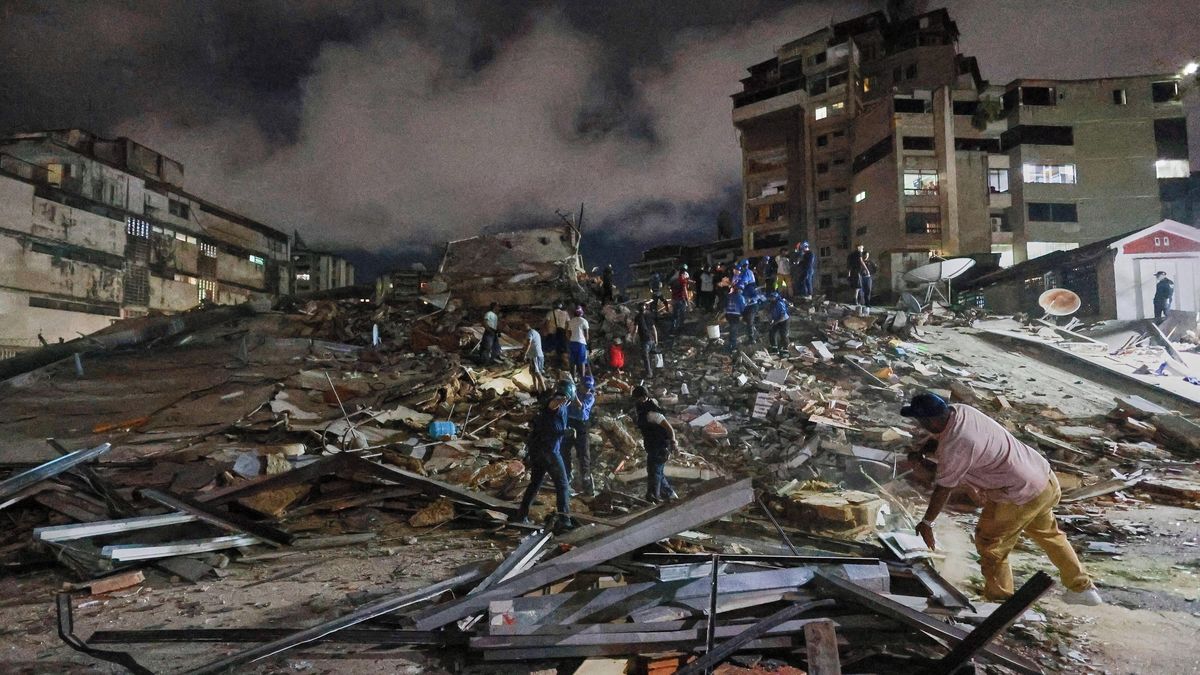
Recent reports circulating online regarding massive earthquakes in Venezuela and potential casualty figures reaching 100,000 have not been verified by any official seismic monitoring agency or international news organization. As of current reporting, the United States Geological Survey (USGS) and Venezuela’s Fundacióon Venezolana de Investigaciones Sismológicas (FUNVISIS) have recorded no major seismic events in the region that would substantiate claims of widespread building collapses in Caracas or a national state of emergency due to natural disaster.
The claims, which suggest that two significant tremors have struck the country, lack corroboration from the Venezuelan government or international humanitarian organizations. While digital reports have alluded to a massive loss of life and significant structural damage in the capital, no visual evidence or official death tolls have been released by credible authorities. In the absence of data from established geological institutions, these reports remain unconfirmed.
Discrepancies Between Online Claims and Seismic Data
The reports currently circulating on various social media platforms and low-authority news aggregators suggest a catastrophe of unprecedented proportions. Specifically, these claims allege that multiple buildings in Caracas have collapsed and that the Venezuelan administration has declared a state of emergency in response to the tremors. Furthermore, some sources have cited estimates of up to 100,000 victims.
However, a review of real-time seismic data reveals a significant discrepancy. According to the United States Geological Survey (USGS), which monitors global seismic activity, there has been no high-magnitude earthquake recorded in the Venezuelan territory in recent days. Similarly, FUNVISIS, the primary authority for seismic monitoring in Venezuela, has not issued any alerts or reports regarding large-scale tectonic activity or catastrophic structural failures in the capital city.
Additionally, the claim regarding a “female president” declaring a state of emergency is inconsistent with the current political reality in Venezuela. The country is led by President Nicolás Maduro, and no official decree regarding a natural disaster-induced state of emergency has been published through the official gazette or verified by major international news agencies such as Reuters or the Associated Press.
The Seismic Profile of the Venezuelan Region
To understand why such a massive earthquake would be a global news event, it is necessary to examine the geological context of the region. Venezuela is situated near the boundary of the Caribbean and South American tectonic plates. This area is characterized by moderate seismic activity, primarily caused by the movement of the San Sebastian fault and the El Pilar fault system.

While these fault lines can produce significant tremors, the frequency and magnitude of earthquakes in Venezuela are generally lower than those found in the “Ring of Fire” regions, such as Chile or Japan. A seismic event capable of causing 100,000 deaths would typically require a magnitude 8.5 or higher, an event that would be immediately and indisputably detected by every seismic station globally. The geological structure of the Venezuelan mainland, while capable of tremors, is not historically associated with the type of mega-thrust events that produce such extreme casualty counts.
Comparative Analysis of Reported vs. Verified Seismic Events
To provide context on the scale of the unverified claims, the following table compares the reported figures in the recent rumors against documented major seismic events in recent history.
| Event Location | Reported/Actual Magnitude | Documented/Claimed Deaths | Status |
|---|---|---|---|
| Venezuela (Unverified Claims) | Unknown | 100,000 (Claimed) | Unsubstantiated |
| Turkey/Syria (2023) | 7.8 | ~53,000+ | Verified |
| Japan (2024 Noto Peninsula) | 7.5 | ~240+ | Verified |
| Haiti (2010) | 7.0 | ~200,000–300,000 | Verified |
The claim of 100,000 deaths in Venezuela would represent one of the deadliest natural disasters in modern history, comparable in scale to the 2010 Haiti earthquake. The lack of such a massive humanitarian response or international aid mobilization further suggests that the figures are inaccurate.
The Impact of Misinformation in Crisis Reporting
The spread of unverified disaster reports poses a significant challenge to global news integrity. In regions experiencing political or economic volatility, misinformation regarding natural disasters can exacerbate public anxiety and cause social instability. The use of extreme numbers, such as “100,000 deaths,” is a common characteristic of “clickbait” journalism designed to drive engagement through fear.

Journalistic best practices require that such claims be treated with extreme skepticism until they are confirmed by:
- National geological institutes (e.g., FUNVISIS).
- International monitoring bodies (e.g., USGS).
- On-the-ground reporting from established, high-authority news agencies.
- Official government communiqués.
When news breaks regarding seismic activity, readers are encouraged to check the USGS Earthquake Hazards Program for real-time, scientifically verified data. Relying on social media threads or unverified news aggregators during potential crises can lead to the dissemination of false information that hinders actual emergency response efforts.
The situation regarding seismic activity in Venezuela is being monitored by international geological agencies. The next confirmed checkpoint will be the next scheduled update from FUNVISIS or the USGS regarding regional tectonic stability.
Do you have information or updates regarding this story? Please share your thoughts in the comments below and share this article to help combat misinformation.