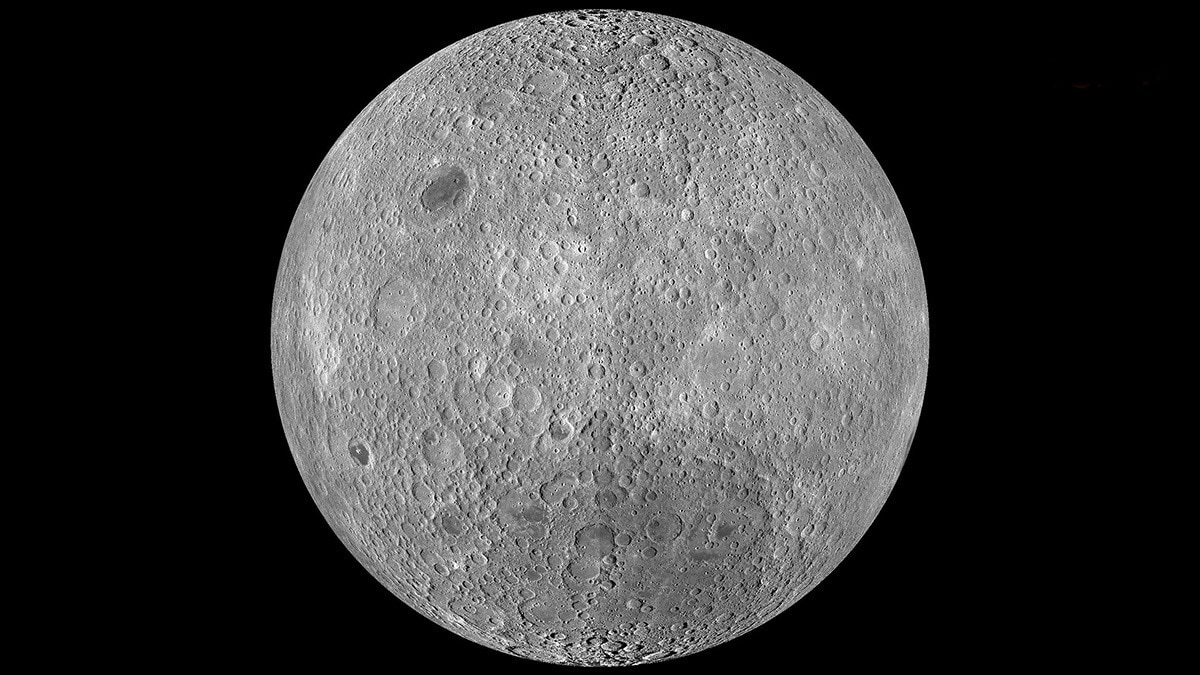
A discarded SpaceX Falcon 9 rocket stage is set to collide with the Moon on August 5, 2026, traveling at roughly 8,700 kph. While posing no danger to Earth, the impact will carve a fresh crater near Einstein crater and offer astronomers a rare opportunity to study lunar ejecta-plume dynamics.
An abandoned piece of deep-space hardware is on a direct collision course with the lunar surface. On August 5, 2026, the upper stage of a SpaceX Falcon 9 rocket will slam into the Moon, concluding an erratic journey that began more than a year prior when the vehicle launched from Florida.
The object is the spent second stage of a Falcon 9 rocket that lifted off from the Kennedy Space Center on January 15, 2025. That mission carried two privately operated lunar landers: the Blue Ghost spacecraft built by U.S.-based Firefly, and the Resilience lander operated by Japan’s ispace. Once those payloads separated, the massive metal cylinder drifted into a high, unstable orbit influenced by the gravity of Earth, the Moon, and the Sun.
Trajectory Tracking and the Physics of the Lunar Impact
Monitoring deep-space debris near the Moon presents severe technical hurdles. While radar networks easily track tens of thousands of objects in low-Earth orbit, targets near the Moon operate roughly 400 times farther away, forcing astronomers to rely instead on powerful optical telescopes to chart their paths. Space experts first realized the rocket stage was on a collision course during May observations.
Calculations show the object will strike the lunar surface near Einstein crater on the side of the Moon facing Earth. The rocket stage measures roughly 12 meters long—comparable to the height of a five-story building—with a four-meter diameter and an estimated mass of four tons.
Because the kinetic energy conversion creates an explosion equivalent to roughly three tons of TNT, the event will shatter the metal structure and excavate a fresh depression. Researchers estimate the resulting cavity will measure 20 to 30 meters wide and about five meters deep, leaving a permanent mark on the lunar landscape.
Observing the Ejecta Plume and Dust Dynamics
The initial impact flash will likely be brief and faint, lasting less than a second. Because the collision occurs on an illuminated lunar area, reflected surface sunlight could obscure the flash from casual observers, making it invisible to the naked eye or standard amateur setups without specialized equipment.

Scientists emphasize that the flash is secondary to the debris cloud that forms immediately afterward.
Scientists say the event offers a rare opportunity to study how impacts shape the Moon.
Because the Moon possesses an extremely weak gravity field and lacks an atmosphere or wind, displaced dust and rock fragments will remain suspended for several minutes. Computer simulations indicate the main curtain of debris could reach altitudes between 15 and 20 kilometers, while optimistic projections suggest a narrower jet of fast-moving particles might touch 75 to 100 kilometers high.
Orbital Fleet Responses and Debris Concerns
Professional astronomers intend to deploy high-speed cameras connected to telescopes to document the aftermath. Visibility from Earth will favor the eastern United States, Canada, and large parts of South America, where the collision happens during nighttime hours. However, researchers caution that visibility remains uncertain and depends entirely on particle size, impact angle, and surface composition.
Orbital assets will also join the observation campaign. NASA’s Lunar Reconnaissance Orbiter and South Korea’s Danuri spacecraft are positioned to review pre- and post-impact imagery. In fact, Danuri is expected to pass within several kilometers of the rocket stage merely two minutes before the collision.
This event marks only the second known instance of accidental rocket debris striking the Moon. As commercial and governmental space agencies plan increasingly frequent lunar missions, analysts point out that managing hardware disposal beyond Earth orbit remains an escalating challenge for long-term space exploration safety.
Worth a look