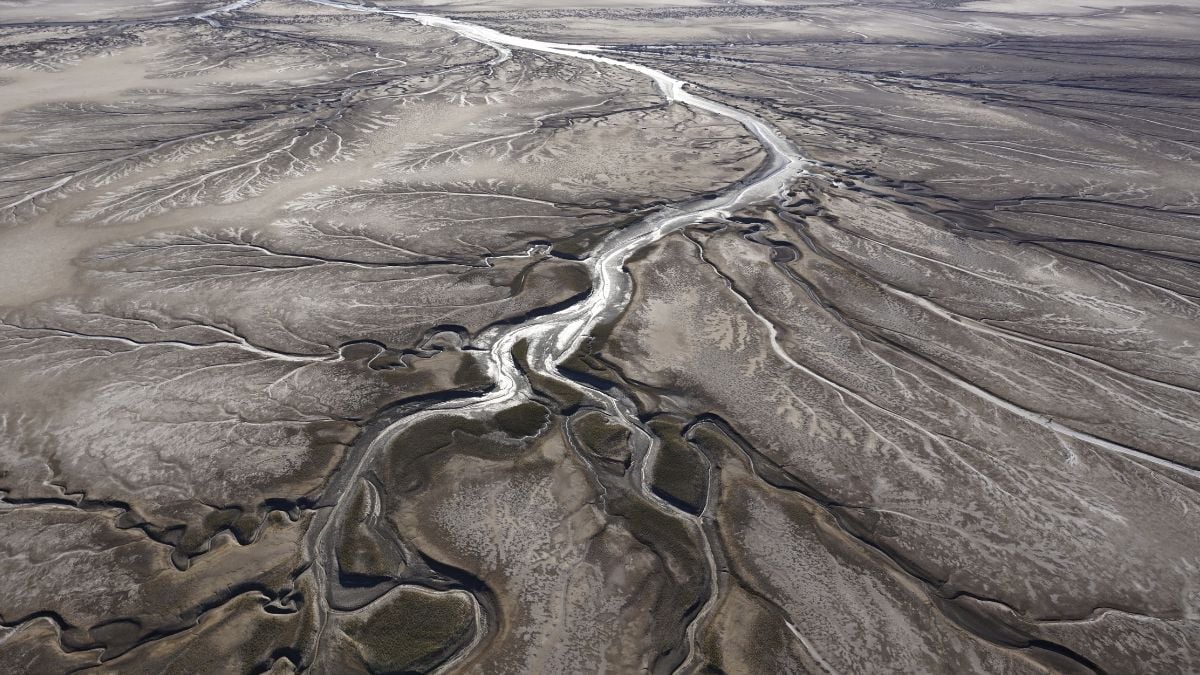
Global demand for river sand and gravel has surged to unsustainable levels, driven by an international construction boom that outpaces natural replenishment. A newly published scientific review reveals that overextraction is severely damaging ecosystems and threatening communities worldwide.
Industrial sand mining has emerged as one of the planet’s most pressing yet overlooked environmental crises. While sand is widely viewed as an inexhaustible resource, experts warn that extracting it from rivers faster than Earth’s natural cycles can replenish it is destabilizing critical ecosystems. The material serves as the literal foundation for modern development, yet the scale of consumption is carrying profound ecological and social costs.
Global Consumption Patterns and the Construction Boom
Sand and gravel are the world’s most heavily extracted solid materials. According to a massive scientific review examining 411 studies published since 1974, annual demand for river aggregates has grown drastically over the past two decades (ScienceAlert).
This immense volume feeds an international construction boom requiring raw materials for concrete, asphalt, roads, buildings, and foundations.
“Together, they account for more than 70 percent of concrete by volume and are widely used in concrete, asphalt, roads, buildings, and foundations. River sand is particularly valued for construction because its grains commonly provide suitable friction and because it is generally non-saline.”
Edward Park, geographer at NTU Singapore, via ScienceAlert
Park also noted that interlocking river sand provides ideal stability for land reclamation because it lacks the shifting nature of desert sand and the corrosive salt content of marine sand. However, he cautioned that while construction companies and property developers benefit from accessing this essential raw material, the economic gains often mask severe imbalances (ScienceAlert).
“However, these benefits must be weighed against environmental and social costs, and in poorly governed areas, illegal operators and corrupt officials may capture a disproportionate share of the profits while river-dependent communities bear the damage.”
Edward Park, geographer at NTU Singapore, via ScienceAlert
Severe Riverbed Incision and Erosion in the Mekong Delta
Nowhere is the toll of overextraction more visible than along the Mekong Delta, which winds through Cambodia and Laos before emptying across southern Vietnam. Industrial dredging boats and crane-equipped barges pull enormous volumes of sediment from the water. In the Cambodian capital of Phnom Penh, a dredging boat pumps sand directly from the river, while across the border, crane barges can harvest 300 cubic meters equivalent to 79,250 US gallons in just three hours (ScienceAlert).
In Vietnam’s section of the Mekong, current extraction rates run approximately 11.8 times higher than natural sediment replacement, which sits at about 6.18 megatons per year.
“Between 2015 and 2022, approximately 366 million cubic meters of sand was extracted there, causing a massive sediment deficit that resulted in a total mean riverbed incision of 0.48 meters (or 0.053 meters per year).”
Dung Duc Tran, hydrologist and study author at NTU Singapore, via ScienceAlert
That nearly half-meter loss in depth has triggered widespread structural instability. Between 2018 and 2020, more than 1,800 houses collapsed into the Mekong as a direct result of riverbank erosion. By 2023, the Vietnamese sector featured 585 major erosion hotspots spanning 741 kilometers (460 miles) of river (ScienceAlert).
These drastic alterations amplify the backwater effect, allowing salty water to creep progressively further upstream. Experts warn that if current mining rates persist, the Vietnamese Mekong could be entirely depleted of sand by 2035 (ScienceAlert).
Ecosystem Destruction and Community Impacts
Beyond river systems, sand extraction is causing environmental damage. In various regions, the removal of sediment affects the way water flows and the health of river systems.
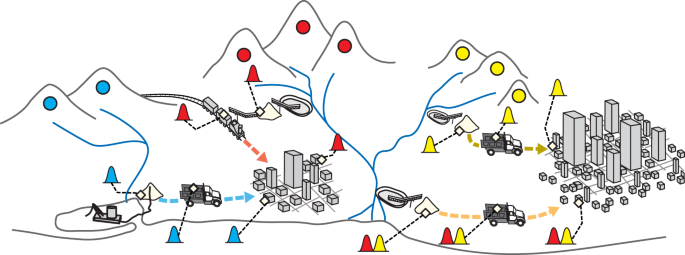
- Waterways across India including the Mayurakshi, Kollidam, Subarnarekha, and Ajay Rivers, alongside China’s Poyang Lake and sections of the Amazon Basin’s Paraná and Tocantins Rivers, have experienced radical morphological changes driven by intense mining (ScienceAlert).
Governance Overhauls and Regulatory Needs
Addressing the global sand crisis requires substantial reforms in oversight and management. The scientific review underscores that many nations lack basic data regarding sediment budgets, preventing them from effectively weighing economic demands against environmental consequences (ScienceAlert).
Researchers argue that governance frameworks must be overhauled to prioritize monitoring and compliance with environmental protections.
“Extraction should be restricted to carefully selected locations and volumes based on river sediment budgets and natural replenishment rates.”
Dung Duc Tran, hydrologist and study author at NTU Singapore, via ScienceAlert
Worth a look