
Spain is preparing for a total solar eclipse on August 12, 2026, marking the first time such an event will be seen in the country in over 120 years thelocal.es. The rare astronomical phenomenon will travel across the Iberian Peninsula, beginning in northern regions such as Galicia, Asturias, and Cantabria, passing through parts of Castilla y León, La Rioja, the Basque Country, Castilla-La Mancha, Aragón, southern Catalonia, and northern Valencia, before concluding in the Balearic Islands just before sunset.
Spain Prepares for Rare Total Solar Eclipse
The campaign, titled «Una vista única. Cuídala», involves ONCE distributing 1.7 million glasses through its street vendors, kiosks, and regular sales points starting from the week of August 3. The remaining 300,000 units are managed by the Spanish Foundation for Science and Technology (FECYT) for distribution through museums, science centers, and educational institutions.
Regional Distribution Networks and Free Access Points
In addition to the national campaign led by the Ministry and ONCE, several regional governments and local entities are organizing their own distribution efforts to provide viewing equipment to the public.
- Asturias: The regional government has distributed more than 50,000 free, certified eclipse glasses through town halls and tourist offices, with major cities like Gijón and Avilés receiving 5,000 units each and smaller municipalities receiving 500 units. Oviedo’s main municipal tourist office offered eclipse packs starting July 27 and 28, with an additional shipment of nearly 52,000 pairs expected in August.
- Madrid: The City Council is distributing glasses through August 12 at locations including the Madrid Planetarium, Madrid History Museum, San Isidro Museum, and Conde Duque local municipal libraries.
- Valencia: València Sostenible is distributing one free pair of safety glasses per person to visitors at Energy Offices in the Aiora, Parc de l’Oest, and Torrefiel neighbourhoods, as well as the Climate Change Observatory on Doctor Lluch Street.
- Science Centers: FECYT-allocated glasses are available at participating venues such as the Museo Interactivo de la Música de Málaga, Parque de las Ciencias de Andalucía in Granada, Museo Aragonés de Paleontología in Teruel, Bioparc Acuario de Gijón, Museo de la Ciencia y el Cosmos in Tenerife, and Museo Elder in Las Palmas.
Safety Standards and Eye Protection Requirements
Astronomers and public health officials emphasize that viewers must never look directly at the Sun without proper protection. According to Space, failing to use adequate eye protection can result in permanent and irreparable damage to the retinas. Unprotected viewing of ultraviolet radiation can damage photoreceptors like cones and rods, while infrared energy can cause thermal effects on the retina known as solar retinopathy.

To be considered safe for direct solar observation, glasses must comply with the international standard designated as EN ISO 12312-2:2015. Certified filters must restrict visible sunlight transmittance to no more than 0.00032% and ensure that the material is free of defects such as scratches, bubbles, or dents. Additionally, products sold in the European Union must display the CE mark.
Guidelines for Safe Observation
Experts recommend specific handling procedures during the eclipse. Users should inspect their glasses for damage before use and discard any compromised units. The Ministry of Science advises putting the glasses on before looking at the Sun, observing briefly, and looking away to take pauses. Glasses must not be removed until the observer has completely stopped looking at the Sun.
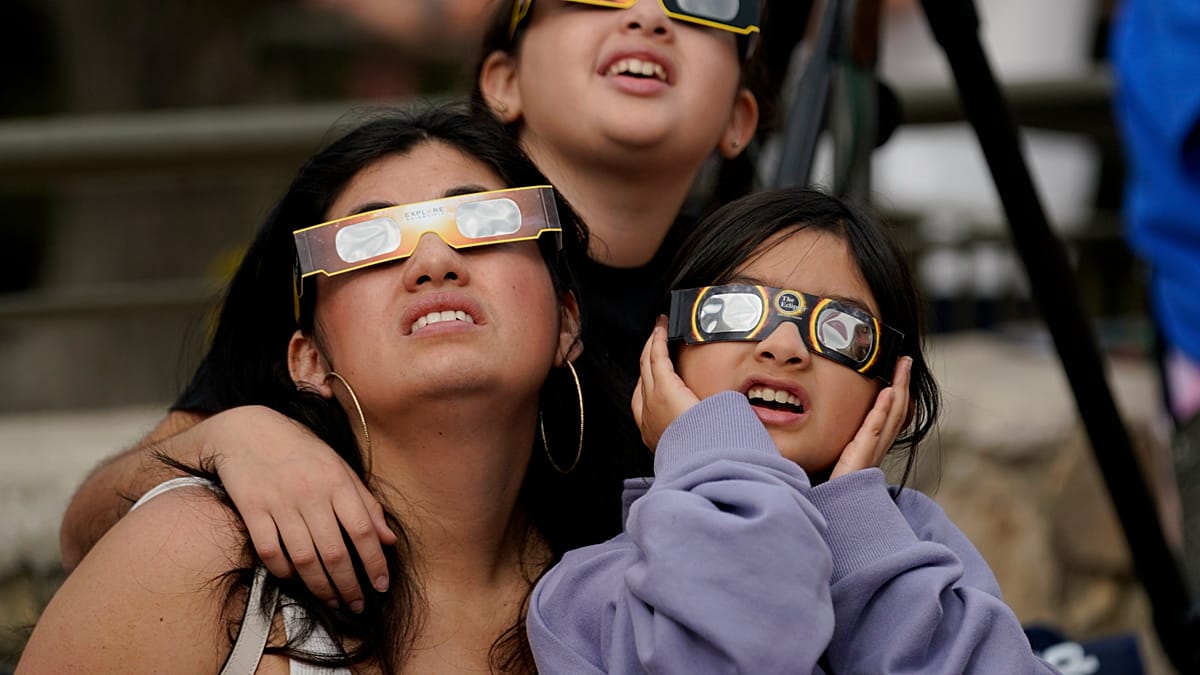
The total phase of the eclipse will last no longer than one minute and 48 seconds along its path across Spain. Only during this brief period of totality, when the Moon completely obscures the Sun, may observers safely remove their certified glasses. Improvised materials such as regular sunglasses, CDs, or X-rays are unsafe, and optical devices such as cameras, binoculars, and telescopes require dedicated solar filters fitted to their front apertures.
Related reading
- AMD Q2 2026 Financials: Record $11.5B Revenue Driven by Data Centers as Gaming Drops
- James Webb Telescope Reveals How Triton Destroyed Ancient Worlds to Create Neptune’s Moons
- Speed Drawing Brings Legendary Argentina and Spain Football Stars to Life (world-today-news.com)
- College Teams Gather for Event in Nashville, Tennessee (newsdirectory3.com)