Global oil and gold prices climbed on Wednesday, August 12, as escalating geopolitical tensions across the Middle East and Asia stoked market anxiety ahead of crucial U.S. inflation data that could shape upcoming Federal Reserve interest rate decisions.
Financial markets faced a tense Wednesday as mounting geopolitical flashpoints converged with anticipation over upcoming U.S. consumer price index data. Oil and gold prices both moved upward while regional equities traded cautiously, reflecting an environment where traders weighed physical supply risks against monetary policy shifts according to reporting by Reuters.
Escalating Middle East Conflict and Shipping Attacks Push Energy Prices Higher
Crude oil futures climbed on Wednesday following a series of violent incidents along vital maritime trade routes. U.S. crude rose 0.89% to settle at $83.94 a barrel, while Brent advanced 0.78% to reach $89.60 per barrel as tracked in market figures. Both benchmarks had already jumped more than $1 on Tuesday to mark their highest closing levels since July 31, extending a roughly 5% rally from Monday.
The upward pressure on energy stems from ongoing maritime attacks and stalled diplomatic talks. Yemen’s transport ministry reported that four crew members of an Egyptian-owned ship were killed in a Houthi attack on Tuesday. These fatalities mark the first deaths resulting from a Houthi strike on commercial shipping since the Iran war began on February 28. Simultaneously, the U.S. military reported carrying out a strike against a container ship attempting to sail toward an Iranian port.
Geopolitical analysts note that despite frequent assertions from U.S. President Donald Trump regarding an imminent resolution, the conflict shows no signs of abating. Iran has doubled down on its commitment to govern the Strait of Hormuz, leaving traders on edge.
“The lack of substantial news or progress in talks, with Iran doubling down on its commitment to govern the Strait of Hormuz, is keeping the risk for oil prices skewed to the upside and U.S. indices on hold,”
Kyle Rodda, senior financial market analyst at Capital.com
Asian Missile Tests and Regional Security Friction
The nervous tone in global markets was reinforced by security developments in East Asia. North Korea launched an early-morning ballistic missile off its east coast on Wednesday. The launch occurred just days before major joint military exercises by Seoul and Washington—drills that Pyongyang has consistently condemned.
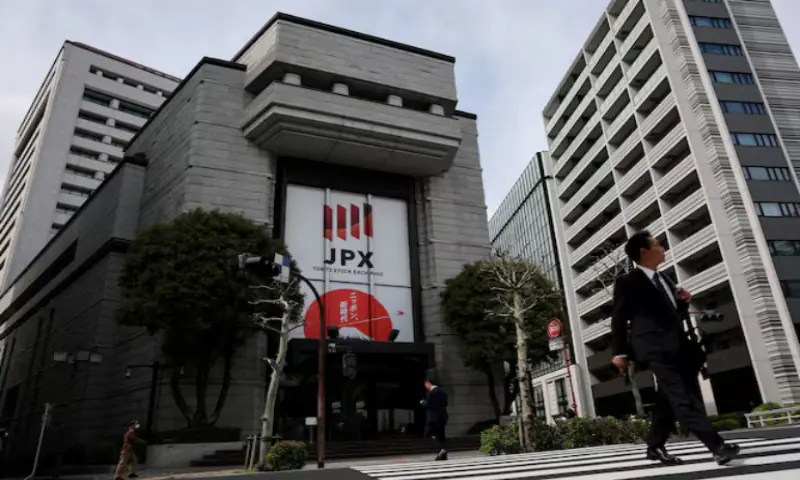
Further compounding regional tensions, Taiwan formally condemned planned naval drills scheduled between China and an Indonesian warship off the island’s eastern coast. Amid these overlapping security strains, MSCI’s broadest index of Asia-Pacific shares outside Japan managed a modest 0.5% gain, while Japan’s Nikkei share gauge traded flat as markets reopened following a holiday.
Traders Focus on U.S. Inflation Data and Federal Reserve Rate Expectations
Beyond immediate geopolitical risks, market participants directed their attention toward the upcoming U.S. consumer price index release. Economists surveyed by Reuters expect July consumer prices to edge up 0.1% following a 0.4% decline in June, with annual inflation forecast to ease slightly to 3.4% from 3.5% the prior month.

While Wednesday’s inflation figures will not reflect the most recent uptick in energy costs, they remain pivotal for shaping expectations ahead of the Federal Reserve’s policy meeting next month. Money markets currently indicate an even split regarding whether the central bank will implement a rate hike.
“Everyone’s got their eyes on the CPI report,”
Skye Masters, head of markets research at National Australia Bank
Masters added that a cooler-than-expected inflation print could trigger a notable rally in Treasuries as investors unwind expectations for further monetary tightening. Reflecting this cautious backdrop, spot gold gained 0.46% to reach $4,387.03 an ounce as detailed in economic coverage.
Bond Yields and Currency Movements in Japan and Beyond
In currency and fixed-income markets, traders are increasingly pricing in an early interest rate hike in Japan, placing substantial upward pressure on Japanese government bonds. The yield on five-year Japanese government bonds climbed to a record high of 2.1%, while the two-year yield reached a 31-year peak of 1.63%.
Meanwhile, the Japanese yen traded mostly flat, weakening slightly by 0.03% to 159.31 per dollar. The currency remained well off its recent high of 155.20, which was achieved following rare coordinated and suspected rounds of currency market intervention by Japanese and U.S. authorities. The dollar index edged up 0.04% to 99.85, the euro slipped 0.02% to $1.1538, and sterling weakened 0.01% to $1.3501.
Keep reading
- Cristiano Ronaldo and Georgina Rodriguez Are Married After a Decade Together
- Oil Prices Rise Amid US Inflation Watch and Middle East Tensions
- US and Iran Nearing Hormuz Understandings Amid Regional Tensions (newsdirectory3.com)
- Detroit Lions Hold Shortened Practice Ahead of Preseason Opener vs. Bengals (news-usa.today)