An oil spill from a grounded tanker carrying roughly 800,000 barrels of crude oil has spread across the Arabian Sea, threatening endangered seabirds and turtles near Oman. According to satellite data and the United Nations shipping agency, pollution from the vessel has reached mainland beaches following weeks of monsoon delays.
An environmental threat is unfolding along the Omani coastline after a disabled crude oil carrier began discharging its cargo into the Arabian Sea. While pollution initially remained offshore, recent satellite data and government statements confirm that the slick has expanded significantly. The International Maritime Organization told Anadolu it is closely monitoring the leakage from the crude oil tanker Caroline Bezengi, noting that the vessel is currently around 22 nautical miles (41 kilometers) offshore of Sharbithat.
Ecological Impact on Omani Reserves and Mainland Beaches
The spill has encircled the rocky cliffs of Jazirat al Qibliyah, an Omani island that provides a vital habitat for endangered seabirds. Oman’s environmental agency said Wednesday in a statement carried by the state news agency that the spill has spread to a 25-mile stretch of beach on the mainland, called Ras Madrakah. Earlier tracking by Oman’s Environment Authority estimated that the slick covered approximately 390 square kilometers (150 square miles) northeast of the Al Hallaniyat Islands and was advancing toward the mainland. At the time, the pollution was estimated to be around 7 kilometers (4.3 miles) from the coast.
The affected waters lie directly within a protected marine reserve supporting fragile ecosystems. Conservation areas in the region provide critical habitats for wildlife, including the endangered Arabian Sea humpback whale and Socotra cormorants.
Vessel Background and Monsoon Weather Complicate Response
The International Maritime Organization stated that the vessel was carrying approximately 130,000 tons of crude oil—equivalent to about 800,000 barrels—at the time of the incident. The United Nations shipping agency noted that oil had been leaking from the vessel for some time, and explained that seasonal monsoon conditions had restricted access to the tanker and delayed salvage operations. A satellite image provided by Planet Labs shows an oil slick extending from the tanker Caroline Bezengi off the Oman coast on July 28.
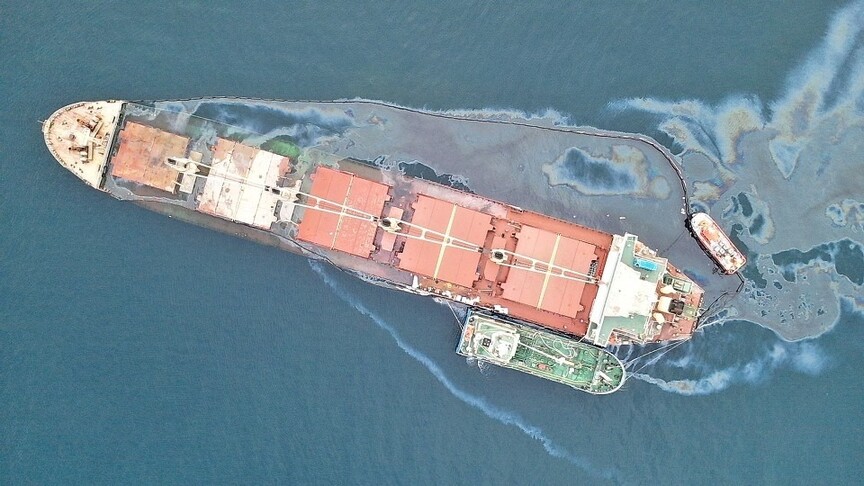
Built in 2001, the Caroline Bezengi is a roughly 274-meter (899-foot) Suezmax tanker. The vessel has previously faced sanctions from the UK and the EU over its involvement in transporting Russian-origin oil, and it is also believed to be part of Russia’s so-called shadow fleet of older tankers used to move crude outside Western shipping and insurance networks.
Ongoing Monitoring and Mitigation Efforts
Despite the spreading pollution reaching mainland shores, authorities noted earlier that nearby desalination plants and tourism facilities faced no immediate threat. Officials confirmed that oil-spill contingency planning was in place to respond to the incident and limit its environmental impact. The International Maritime Organization stated that it had been in contact with the Omani government since the tanker grounded and would continue supporting the ongoing response efforts.
Related reading