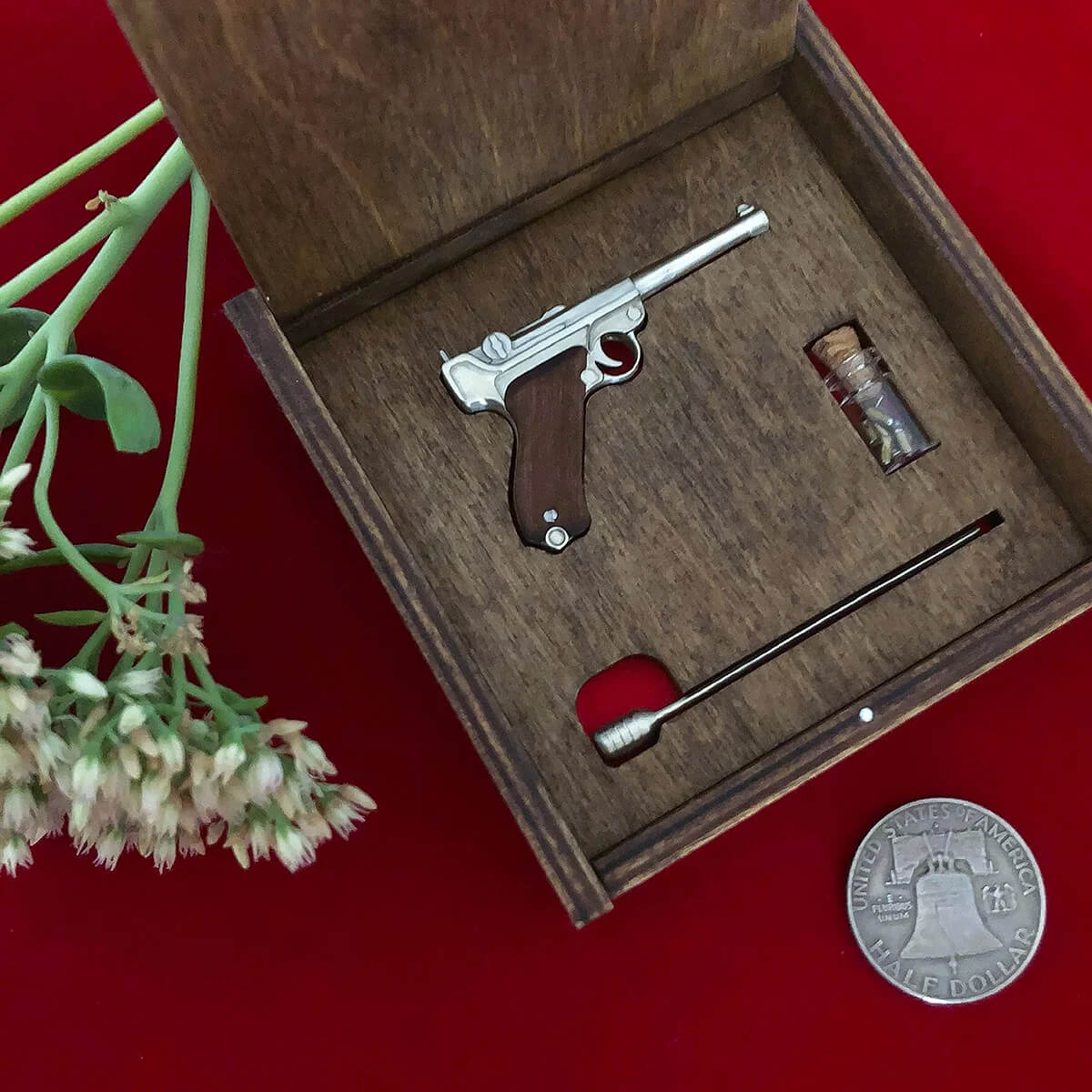
When exploring the world of miniature firearms for collecting, display, or historical appreciation, enthusiasts quickly discover that selecting the right model involves more than just aesthetic appeal. The market offers a vast array of options ranging from authentic historical replicas to modern tactical interpretations, each serving different purposes for collectors, hobbyists, and educators. Understanding the nuances between these categories helps buyers make informed decisions that align with their specific interests and intended use.
The miniature gun collecting community spans diverse motivations, from those seeking precise historical accuracy for educational displays to hobbyists interested in mechanical craftsmanship or thematic collections. Before making a purchase, it’s essential to clarify whether the priority lies in historical authenticity, mechanical functionality, display quality, or a combination of these factors. This self-assessment guides the selection process toward models that genuinely satisfy the collector’s objectives rather than impulse purchases based solely on visual appeal.
Research indicates that successful miniature firearm collecting begins with establishing clear parameters around scale, historical period, and mechanical complexity. According to industry discussions among experienced collectors, 1:6 scale remains the most popular for balancing detail with display practicality, even as 1:4 and 1:12 scales cater to specialized interests in either extreme detail or compact diorama building. These scales directly influence both the level of achievable detail and the practical considerations for storage and presentation.
Understanding Scale and Historical Context in Miniature Firearms
Scale selection fundamentally affects what details can be realistically reproduced in miniature form. At 1:6 scale (approximately one inch representing six inches of the original), artisans can capture intricate markings, texturing, and small components that would be lost in smaller scales. This scale has grow favored for military and law enforcement historical replicas where authenticity of engravings, proof marks, and manufacturer stamps is paramount to serious collectors.
Historical period specialization represents another critical decision point. Collectors focusing on specific eras—such as American Civil War firearms, World War II small arms, or Old West revolvers—benefit from narrowing their focus to develop expertise in period-specific markings, finishes, and mechanical variations. This specialization often leads to more meaningful collections that tell coherent historical stories rather than assembling disparate pieces without contextual connection.
Verification through multiple authoritative sources confirms that mechanical functionality in miniature firearms varies significantly between models. Some are designed as static displays only, featuring solid barrels and non-functional actions, while others incorporate working mechanisms that allow dry firing, magazine cycling, or even blank-firing capabilities in compliant jurisdictions. The presence of moving parts typically increases both cost and maintenance requirements but adds dimensionality to the collecting experience for those interested in operational understanding.
Materials, Craftsmanship, and Authenticity Markers
The choice of materials significantly impacts both the appearance and longevity of miniature firearms. High-quality replicas often use materials that mirror the originals—steel for barrels and critical components, brass for fittings, and appropriate wood or synthetic stocks. Lower-cost alternatives may use zinc alloys or pot metal, which can affect durability and authenticity of feel, particularly in handling characteristics that experienced collectors use to assess quality.
Surface finishing techniques serve as key indicators of craftsmanship quality. Authentic replication of historical finishes—whether blued, parkerized, case-colored, or nickel-plated—requires specialized processes that affect both appearance and corrosion resistance. Experienced collectors examine factors like finish consistency, edge sharpness, and the presence of appropriate wear patterns in artificially aged pieces to judge authenticity and attention to detail.
Maker’s marks and authenticity indicators play a crucial role in establishing provenance and quality. Reputable manufacturers include specific markings that identify their work, often incorporating logos, scale indicators, and sometimes limited edition numbers. These marks help distinguish between mass-produced items and those crafted by individual artisans or small workshops known for particular specializations, such as German military replicas or American frontier firearms.
Practical Considerations for Display and Maintenance
Display methodology significantly influences long-term preservation and visual impact. UV-protective cases help prevent fading of stocks and finishes, while proper humidity control prevents corrosion on metal components—particularly important for replicas with functional mechanisms or those made from susceptible materials. Many serious collectors invest in display solutions that balance visibility with environmental protection, recognizing that even indoor display can expose pieces to damaging light fluctuations and atmospheric changes over time.
Maintenance requirements vary based on the model’s functionality and materials. Static display pieces generally require only periodic dusting and environmental monitoring, while models with moving parts may benefit from appropriate lubrication schedules and function checks. Understanding the specific care requirements before purchase prevents unexpected deterioration and ensures the collection remains in optimal condition for years of enjoyment.
Storage considerations extend beyond display to include transportation and handling protocols. Properly fitted cases or foam inserts prevent movement that could cause wear or damage, while documentation of each piece—including manufacturer, scale, historical notes, and any certificates of authenticity—adds both organizational value and potential provenance tracking for serious collectors.
Budget Planning and Value Assessment
Establishing a realistic budget involves recognizing that quality in miniature firearms often correlates with price, particularly when considering historical accuracy and craftsmanship. Entry-level models suitable for beginners or decorative purposes typically range from $50 to $150, while mid-range options offering better detail and materials fall between $150 and $400. High-end replicas from specialized artisans or those featuring exceptional historical accuracy can exceed $400, with some limited editions or museum-quality pieces reaching significantly higher values.
Value assessment goes beyond initial cost to include factors like potential appreciation, replacement part availability, and community support. Models from established manufacturers with ongoing production often benefit from better access to replacement components and community knowledge sharing, while limited-run artisan pieces may offer uniqueness but present challenges for long-term maintenance. Collectors frequently report that investing in quality upfront reduces long-term costs associated with repairs, replacements, or dissatisfaction with inferior products.
The secondary market for miniature firearms shows varied dynamics depending on specificity and condition. Highly specialized historical replicas in excellent condition with documentation often retain value well, particularly when tied to significant historical periods or rare variants. Conversely, mass-produced decorative models typically show less resilience in secondary markets, reinforcing the importance of aligning purchases with genuine collecting interests rather than short-term trends.
Legal and Safety Considerations
While miniature firearms are generally exempt from firearms regulations due to their non-functional nature and small scale, responsible collectors remain aware of jurisdictional variations that could affect ownership, display, or transportation. Some regions have specific regulations regarding replica firearms that may apply based on appearance rather than functionality, particularly concerning models that closely resemble contemporary firearms in ways that could cause public alarm if viewed out of context.
Safety practices in handling and display contribute to responsible collecting. Treating all replica firearms with the same respect as functional firearms—never pointing them at people, maintaining trigger discipline awareness, and using appropriate safety cues in educational contexts—helps normalize safe behaviors and demonstrates respect for the seriousness with which firearms should be regarded, even in miniature form.
Community engagement through collector forums, specialty shows, and historical organizations provides valuable resources for learning about specific models, identifying reputable sellers, and staying informed about best practices in collecting. These connections often prove invaluable for newcomers seeking guidance on authentication, historical research, and display techniques that enhance both the enjoyment and educational value of miniature firearm collections.
Related reading