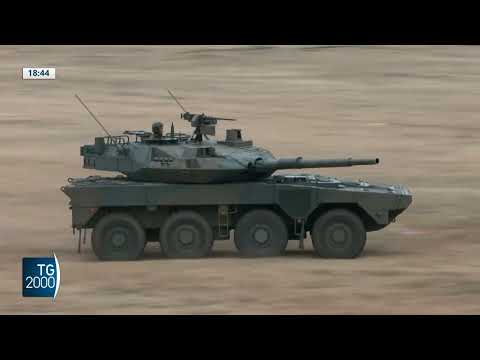
Japan has announced a historic shift in its defense policy, lifting decades-old restrictions on the export of lethal weapons. The move, confirmed by government officials on April 21, 2026, marks the end of a ban that had been in place since the 1970s and opens the door for Tokyo to play a more active role in the global arms market. The decision has drawn sharp criticism from China, which has warned of increased militarization in the region and pledged to monitor the situation closely.
According to Japanese government spokesperson Minoru Kihara, the reform effectively ends the prohibition on selling lethal weapons that had persisted since the 1970s. He stated that the change aims to position Japan as a key player in the international defense industry while contributing to regional and global peace and stability. “These decisions were made in response to accelerating shifts in the security environment surrounding our country,” Kihara said during a press briefing. “They are intended to ensure Japan’s security and, at the same time, make an even greater contribution to peace and stability in the region and the international community.”
The policy change builds on a 2014 law that had already eased some restrictions, allowing exports limited to five specific sectors: search and rescue, transportation, alert systems, surveillance, and mine clearance. Under the new framework, Prime Minister Sanae Takaichi confirmed via social media that, in principle, all defense equipment could now be transferred abroad. “With this amendment, in principle, it will be possible to transfer all defense equipment,” she posted on X, formerly Twitter.
China’s reaction was swift and condemnatory. Beijing denounced the move as a “reckless militarization” and warned it would remain vigilant against what it views as a destabilizing development in the Indo-Pacific. The Chinese government has long opposed any expansion of Japan’s military capabilities, citing historical sensitivities and regional security concerns.
Domestically, the announcement has sparked debate within Japan. While supporters argue the change is necessary for national security in an increasingly uncertain geopolitical climate, critics warn it risks undermining Japan’s postwar pacifist identity. The country’s post-World War II Constitution, drafted under U.S. Occupation, renounces war as a sovereign right and limits the military to self-defense forces prohibited from overseas deployment. Recent years have seen growing pressure from conservative factions, particularly within the ruling Liberal Democratic Party, to reinterpret or revise these constraints.
Analysts note that Japan’s evolving defense posture reflects broader regional tensions, including China’s assertive actions in the South China Sea and East China Sea, as well as ongoing threats from North Korea. The United States, Japan’s key ally, has encouraged greater burden-sharing among its partners, which may have influenced Tokyo’s decision to expand its defense cooperation and industrial capacity.
As of now, no specific arms deals have been announced under the new policy. Government officials emphasize that any future exports will be subject to strict end-use controls and aligned with Japan’s national security interests. The Ministry of Defense has stated it will establish clear guidelines to prevent diversion or misuse of exported weapons.
The next key development to watch is the upcoming session of Japan’s National Diet, where lawmakers are expected to debate further legislation related to defense exports and security policy. No formal vote has been scheduled, but officials indicate discussions will continue in the coming weeks.
For ongoing updates on Japan’s defense policy shifts and regional security developments, readers can refer to official statements from the Japanese Ministry of Foreign Affairs and the Ministry of Defense.
What do you think about Japan’s changing role in global defense markets? Share your thoughts in the comments below and facilitate spread the conversation by sharing this article.
Related reading