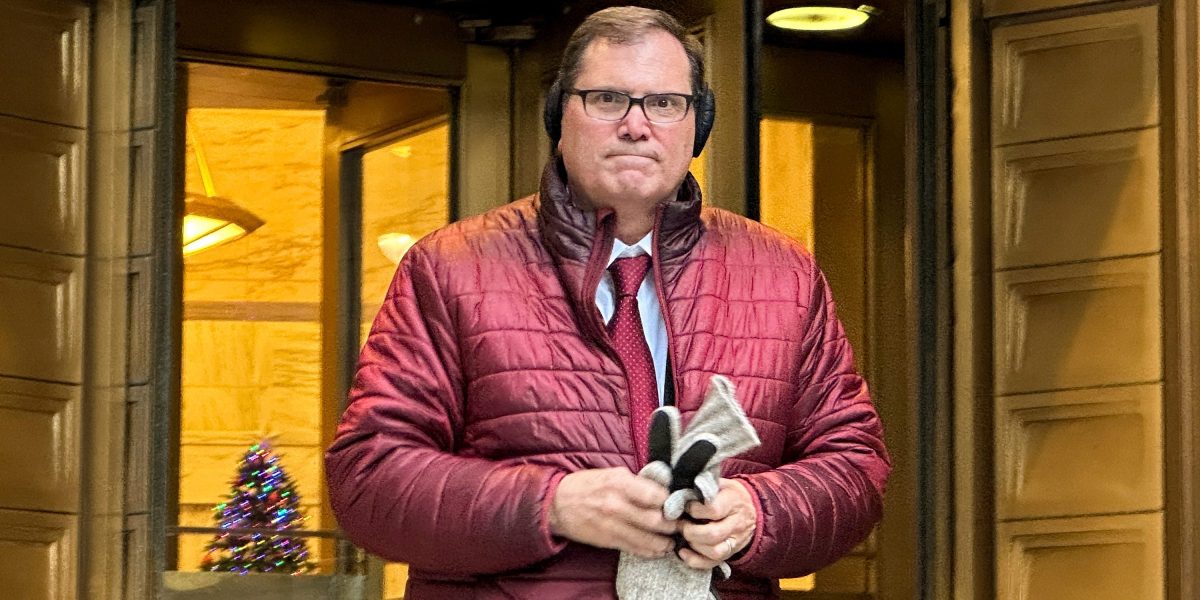
A high-ranking federal prosecutor in New York has been found to have committed professional misconduct, but the details of the sanction are being shielded from public view. The decision to keep the findings “private and confidential” has sparked a confrontation between legal ethics watchdogs and the state’s disciplinary panels, raising fundamental questions about transparency and accountability for officials in the justice system.
The professional misconduct finding against John Sarcone, a Trump administration appointee leading the U.S. Attorney’s Office for the Northern District of New York, comes after allegations that he retaliated against a local news organization. While the Attorney Grievance Committee for the Appellate Division, Third Department, has acknowledged that there was “sufficient basis” for the misconduct finding, it has refused to disclose the specific nature of the actions taken or the exact details of the violation.
For a prosecutor whose tenure has already been marked by legal disputes over his eligibility to hold office, this latest development adds a layer of controversy to his leadership in Albany. The lack of transparency has drawn sharp criticism from press freedom advocates, who argue that the public has a right to know how a federal officer—tasked with upholding the law—was disciplined for his own breach of professional ethics.
The “Private and Confidential” Shield
The controversy centers on a letter dated April 1 and delivered via email on May 8, in which the Attorney Grievance Committee notified nonprofit groups of its conclusion. The committee stated that after deliberation, it determined there was a sufficient basis for a finding of professional misconduct and took “appropriate action.” However, the committee has remained tight-lipped about what that action entails, noting that the matter is now closed.
The committee’s justification for the secrecy rests on state law. According to chief committee attorney Monica Duffy, records concerning the investigation and disposition of grievance complaints remain sealed and confidential until charges of professional misconduct are sustained in a public order of the New York State Supreme Court, Appellate Division. Because the action taken against Sarcone did not result in a public order, the committee maintains that the records must remain hidden as per state disciplinary protocols.
This stance has been met with fierce opposition from the groups that filed the original complaints, including the Freedom of the Press Foundation, Reinvent Albany, and the Demand Progress Education Fund. The Freedom of the Press Foundation expressed alarm that the committee attempted to suggest that the complainants themselves should not disclose the fact that misconduct had been found.
“No complainant, but especially a press freedom organization, should be told to keep quiet about something so plainly newsworthy and important to New Yorkers and Americans,” said Seth Stern, chief of advocacy at the foundation. Stern argued that attempting to enforce silence upon the complainants regarding the outcome of their own grievance is unconstitutional.
Retaliation and the Press List Controversy
The misconduct finding stems from a complaint filed on August 11, which alleged that Sarcone violated multiple state rules of professional conduct. At the heart of the allegation was Sarcone’s treatment of an Albany-based newspaper. The conflict began after the publication reported that Sarcone had allegedly attempted to claim a boarded-up apartment building within the district as his primary residence to satisfy residency requirements for his position.

In response to the negative coverage, Sarcone reportedly removed the newspaper from his office’s official press list, effectively cutting off the outlet’s access to official updates and communications. The Freedom of the Press Foundation argued that this action constituted a violation of the First Amendment, asserting that a government prosecutor cannot use his official power to punish a news outlet for reporting on his personal and professional conduct.
The Campaign for Accountability, which also filed a complaint, described the committee’s confidential resolution as a “secret slap on the wrist.” Michelle Kuppersmith, the organization’s executive director, emphasized that Sarcone’s conduct reflects on his credibility as an officer of the court. She argued that any court in which Sarcone appears, as well as the general public, deserves to know the specific nature of his sanctions.
A Contentious Path to Power
The misconduct finding is the latest chapter in a turbulent tenure for Sarcone, who had no prior prosecutorial experience when he was tapped by the Trump administration to lead the Northern District of New York. His appointment has been the subject of a prolonged legal battle over whether he lawfully holds the office.
Sarcone has never been confirmed by the U.S. Senate. Following the expiration of his temporary appointment, judges appointed a veteran prosecutor to the role, but that replacement was fired within hours. This sparked a legal conflict involving Justice Department lawyers and New York State Attorney General Letitia James over the legality of Sarcone’s continued oversight of the office according to reports on the appointment saga.
The stakes of this leadership battle are high. The Albany prosecutor’s office holds jurisdiction over various New York state politicians, including Attorney General James, who has been a prominent critic of the administration. This has led to concerns that the installation of a loyalist in the office could be used for political leverage.
Currently, Sarcone continues to lead the office, though he does so under the title of first assistant. Despite the finding of professional misconduct, there are no records of public discipline listed in the state attorney directory, suggesting that the “appropriate action” taken by the committee may have been a private letter of reprimand or a similar non-public sanction.
The Broader Pattern of Prosecutorial Secrecy
The Sarcone case highlights a systemic tension in New York’s legal ethics system regarding the balance between attorney privacy and public accountability. Advocates for judicial reform argue that the state frequently shrouds prosecutorial misconduct investigations in secrecy, making it difficult for the public to gauge the integrity of the people wielding the power of the state.

This is not the first time the state’s grievance committees have faced legal challenges over confidentiality. In a previous instance, law professors who shared details about complaints they filed against local prosecutors—specifically regarding the failure to turn over excul payout evidence or lying in court—were targeted by a grievance committee. That attempt to enforce silence ended in a federal district court ruling in favor of the professors, establishing a precedent that some information regarding prosecutorial misconduct is too important to remain secret.
The current dispute over John Sarcone’s records mirrors this struggle. While the committee maintains it is following the letter of the law, critics argue that the law is being used to protect a politically connected official from the consequences of his actions.
Key Context: The Role of the U.S. Attorney’s Office
To understand why this case matters, it is essential to recognize the power of a U.S. Attorney. These officials are the chief federal law enforcement officers within their respective judicial districts. They decide which cases to prosecute, which plea deals to offer, and how to allocate federal resources. When a U.S. Attorney is found to have engaged in misconduct—particularly retaliation against the press—it raises concerns about the impartial administration of justice.
The “First Assistant” role Sarcone currently holds is typically the second-in-command, but in this instance, it serves as the mechanism allowing him to remain in control of the office while his permanent status remains legally contested.
As the legal arguments over his appointment continue to play out in court, the pressure on the New York judicial system to release the details of the misconduct finding is expected to grow. For the Freedom of the Press Foundation and other watchdogs, the goal is not merely the sanction of one individual, but the end of a culture of silence that they believe protects the powerful at the expense of the public interest.
The next critical checkpoint in this saga will be the ongoing litigation regarding Sarcone’s legal authority to lead the U.S. Attorney’s office and any potential appeals or lawsuits filed by the nonprofit groups to force the public disclosure of the grievance committee’s findings.
World Today Journal encourages readers to share this story and join the conversation in the comments below regarding transparency in the legal profession.