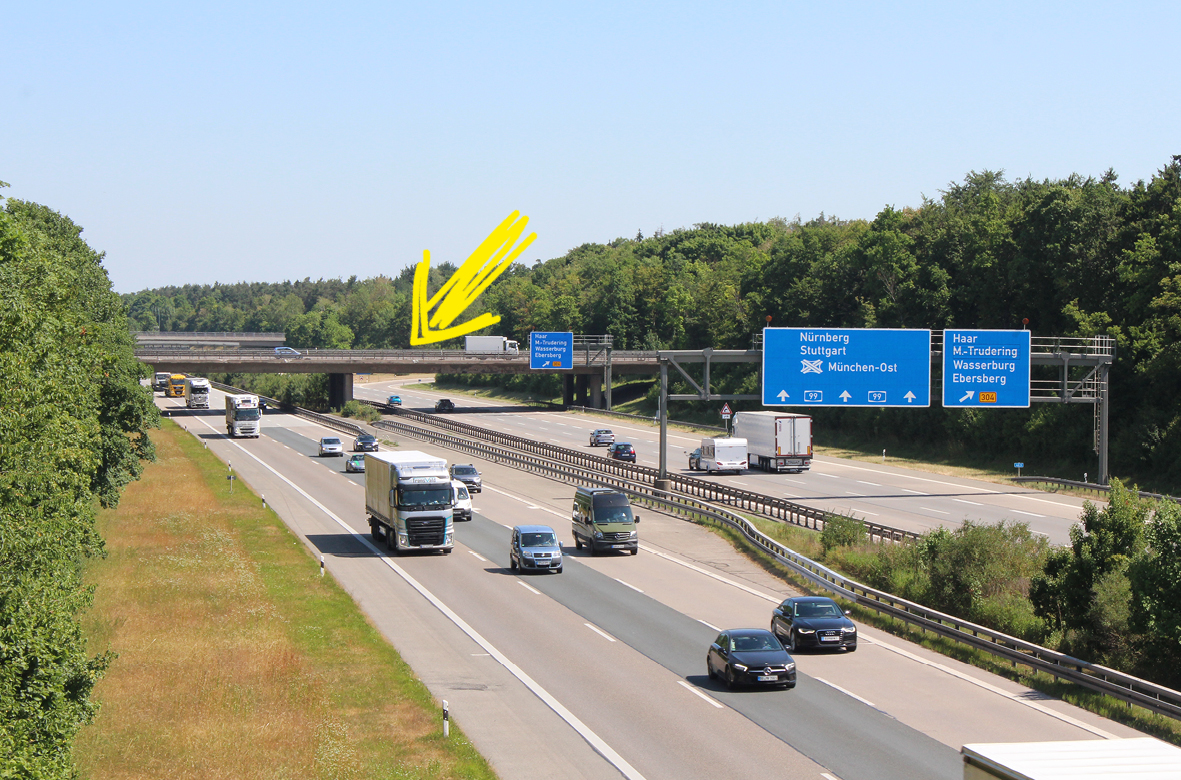
Temporary Bridge Installation Begins on A99 Near Munich Amid Major Traffic Disruptions
Function has commenced on the replacement of the Bundesstraße 304 bridge over the A99 Autobahnring at the Haar interchange, with the first phase of a temporary bridge being lifted into place using a 50-ton crane. According to official announcements from the Autobahn GmbH des Bundes – Niederlassung Südbayern, the operation began on Friday, April 24, 2026, at 8:00 PM and continued until Monday, April 27, 2026, at 5:00 AM. During this period, traffic in the Salzburg direction was diverted onto the opposite carriageway normally used for Nuremberg-bound vehicles, reducing available lanes to two in each direction.

The temporary structure, referred to as a Behelfsbrücke in German engineering contexts, is a critical component of the broader project to replace the aging B304 overpass. Officials confirmed that the entrance ramp to the A99 toward Salzburg at the Haar interchange remains fully closed during the works, with traffic rerouted via the designated U20 detour route to the Hohenbrunn interchange. These measures are part of a two-weekend schedule designed to minimize prolonged disruption although ensuring worker safety and structural precision during the heavy lifting operations.
Following the initial bridge segment installation, additional maintenance work was carried out in the night from Sunday, April 27 to Monday, April 28, 2026. During this time, the Salzburg-bound entrance ramp at Haar was closed again briefly to allow for urgent resurfacing of the approach road, which authorities described as being in a severely deteriorated condition requiring immediate renewal. This supplementary work underscores the extent of infrastructure upgrades being undertaken alongside the main bridge replacement.
Second Phase Scheduled for Early May with Continued Traffic Impacts
The second phase of the temporary bridge installation is set for the weekend of May 8 to May 11, 2026. During this period, the lifting of the second half of the Behelfsbrücke will occur over the Nuremberg-bound carriageway, following the same procedure as the first phase. Once again, all traffic will be directed onto the Salzburg-bound side, maintaining the two-lane configuration in each direction. However, unlike the first weekend, it is the exit ramp toward Salzburg at the Haar interchange that will be affected by closures during this stage.
Access to and from the Hohenbrunn interchange is also expected to undergo upgrades in parallel, with authorities noting that entrance and exit ramps in the Salzburg direction will be renewed during subsequent nights, potentially leading to additional short-term closures and detours. The Autobahn GmbH has emphasized that these coordinated efforts are necessary to ensure long-term durability and safety of the corridor, which serves as a key route for regional commuters and cross-border traffic toward Austria.
Official Communications Advise Public to Monitor Updates
Travelers are encouraged to consult real-time traffic information through official channels, including the Autobahn GmbH’s traffic management portal and local radio broadcasts, for the latest details on lane restrictions, diversion routes and expected completion times. The use of the U20 detour via Bundesstraße 471 to Hohenbrunn has been clearly signposted, though delays remain likely during peak hours.

As of the current date, no further changes to the schedule have been announced. The project remains on track for completion following the second lifting weekend in May, after which the temporary structure will facilitate the safe demolition of the aged bridge and eventual installation of the permanent replacement. Updates will continue to be issued by the Autobahn GmbH des Bundes as work progresses.
For ongoing developments related to infrastructure projects in the Munich metropolitan area, readers are invited to share their experiences and observations in the comments section below. Your insights help foster a more informed community dialogue on public works and mobility challenges.
Keep reading