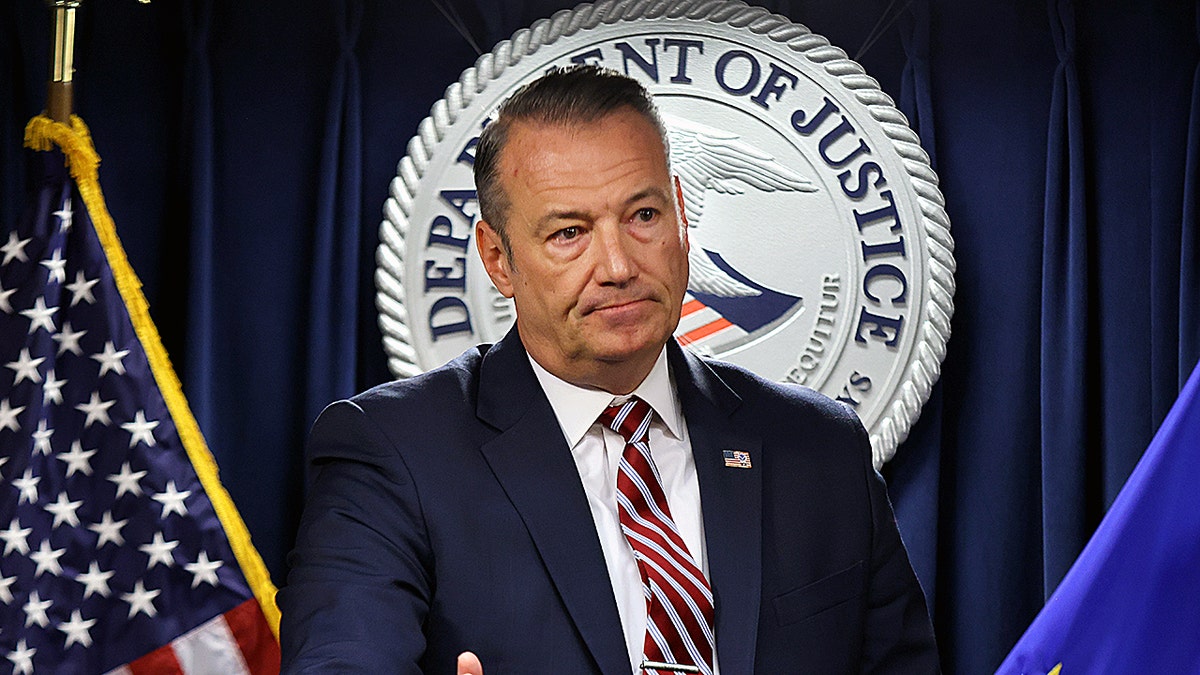
Acting ICE director Todd Lyons will resign at the complete of May, federal officials announced Thursday, marking his departure roughly one year into his tenure overseeing U.S. Immigration and Customs Enforcement during President Donald Trump’s intensified deportation campaign.
Homeland Security Secretary Markwayne Mullin confirmed Lyons’ resignation in a statement, saying the acting director’s last day will be May 31. Mullin praised Lyons as “a great leader of ICE who helped to make American communities safer” and wished him luck in his next opportunity in the private sector. The Department of Homeland Security did not immediately respond to a request for comment on the reasons behind Lyons’ decision to step down.
Lyons, who was named acting director in March 2025, has been a central figure in executing the administration’s immigration enforcement agenda. His resignation comes amid ongoing scrutiny of ICE operations, including reports of increased arrests and detentions under policies aimed at expanding interior enforcement and expediting removals.
According to multiple verified reports, Lyons cited personal reasons for his departure, including a desire to spend more time with his family. He has also previously spoken publicly about the heightened threats faced by ICE officers in the line of duty, noting that he had experienced such concerns firsthand during his time leading the agency.
The announcement follows a period of heightened public and legislative attention on immigration enforcement, with ICE arrest numbers remaining elevated throughout fiscal year 2025. Even as the agency does not release real-time detention statistics, periodic reports have shown sustained activity in both border and interior enforcement operations.
Lyons’ departure raises questions about the continuity of leadership at ICE as the administration continues to pursue its stated goals of increasing deportations and expanding detention capacity. As the senior official performing the duties of the director, Lyons had overseen day-to-day operations and served as the public face of the agency in congressional hearings and media appearances.
In February 2026, Lyons testified before the Senate Homeland Security and Governmental Affairs Committee, where he defended ICE’s enforcement tactics and emphasized the agency’s focus on public safety threats. During that hearing, he acknowledged challenges related to officer morale and safety, particularly in response to what he described as a surge in threats against personnel.
Despite his impending resignation, Lyons remains in office through the end of May, ensuring a transition period for the agency. The White House has not yet announced a nominee to replace him, and We see unclear whether the next acting director will be selected from within ICE leadership or appointed externally.
Immigration advocates and legal experts have long criticized certain ICE practices, particularly regarding due process protections for individuals in custody and the use of expedited removal procedures. Meanwhile, supporters of stricter enforcement argue that agencies like ICE are essential to upholding immigration laws and protecting national security.
The timing of Lyons’ exit—coming after approximately 14 months in the acting director role—falls within a broader pattern of turnover in key immigration-related positions during the Trump administration. Several former officials have departed amid policy disagreements, personal considerations, or shifts in administrative priorities.
As of April 2026, ICE continues to operate under a series of executive orders aimed at strengthening interior enforcement, expanding collaboration with local law enforcement, and increasing penalties for immigration violations. These policies have contributed to ongoing debates about the balance between enforcement authority and civil liberties.
Lyons’ resignation does not appear to be connected to any ongoing investigations or legal proceedings, based on currently available public records. No federal agency has announced inquiries into his conduct or management of ICE operations during his tenure.
Moving forward, the agency will need to maintain operational stability while awaiting permanent leadership. Career officials within ICE are expected to manage routine functions in the interim, though major policy decisions may remain pending until a novel director is confirmed or appointed.
For updates on ICE leadership changes and immigration enforcement developments, readers can refer to official announcements from the Department of Homeland Security, public congressional hearing schedules, and reputable news outlets covering federal agency activities.
We welcome your thoughts on this development. Share your perspective in the comments below and aid inform the conversation by sharing this article with others who are following immigration policy and federal leadership changes.
Keep reading
- Prince Harry Admits Harry Styles is the UK’s Most Famous Harry
- US Navy’s $275 Billion “Trump-Class” Battleship Plan Faces Major Cost and Yard Capacity Hurdles, CBO Reports
- Trump Confronts Jeanine Pirro in Explosive Oval Office Showdown Over Reflecting Pool Case (news-usa.today)
- GSK US Real World Evidence Director Job Philadelphia (archyde.com)