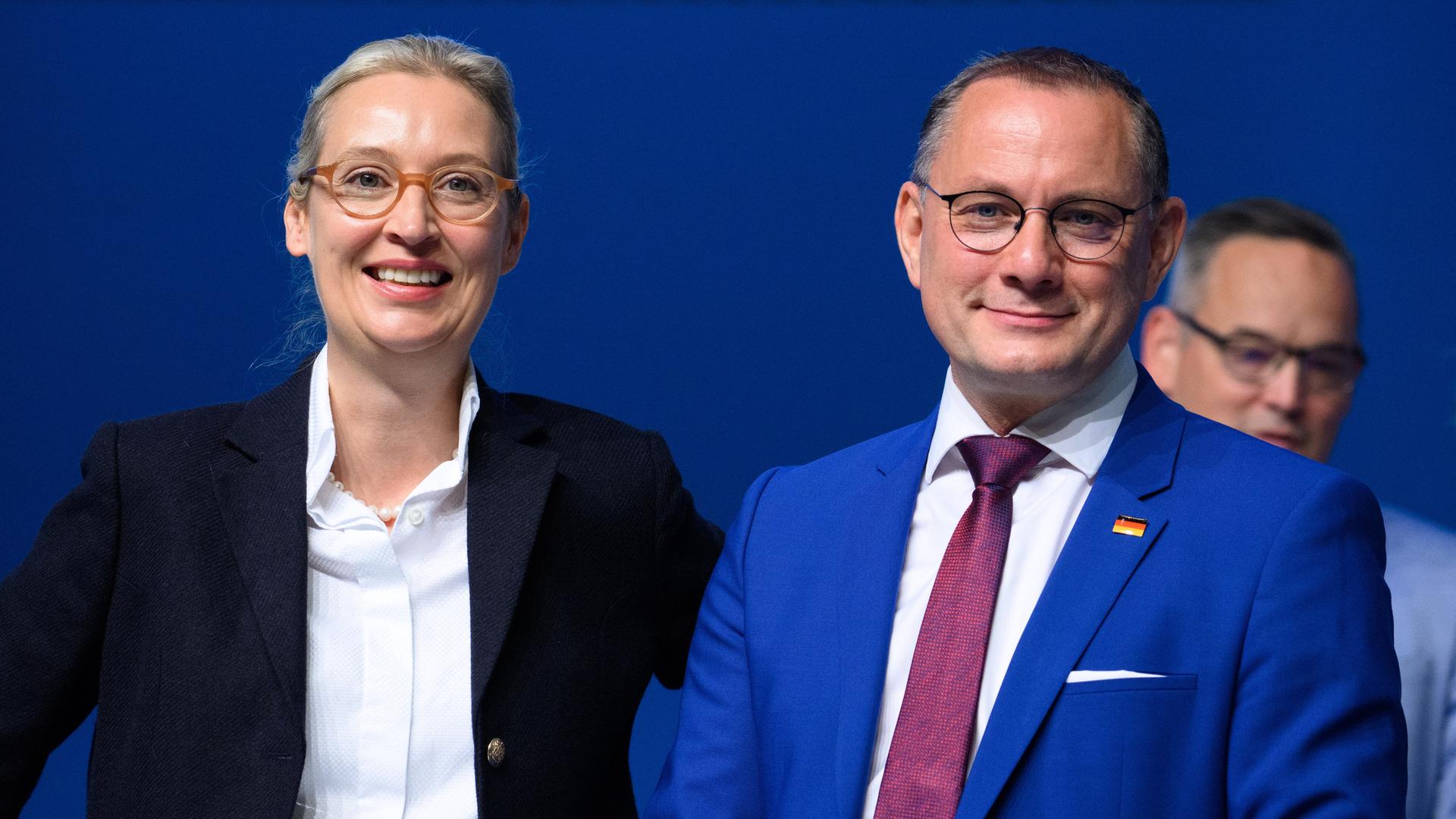
Delegates of the Alternative for Germany (AfD) party re-elected Alice Weidel and Tino Chrupalla as their federal leaders during a party congress held in Erfurt, Thuringia, over the weekend. The re-election occurred amidst a backdrop of significant public protests and heightened security measures in the city.
The leadership vote confirms a continuation of the party’s current political trajectory. The AfD, which currently holds seats in the Bundestag and several state parliaments, remains a polarizing force in German politics, consistently drawing both significant electoral support and widespread organized opposition.
Public Dissent and Security Operations in Erfurt
The party congress was met with large-scale demonstrations, with 30,000 protesters gathering in Erfurt to voice opposition to the party’s presence. Police officials stated that while the protests were extensive, the authorities were satisfied with the course of events, though they were required to intervene in several instances to maintain order and separate opposing groups, as reported by BNR Nieuwsradio.

The scale of the mobilization underscores the ongoing tension surrounding the AfD’s public events. Activists utilized various forms of protest, ranging from traditional marches to creative disruptions. In one reported incident, demonstrators attempted to disrupt the atmosphere near the congress venue by playing a discordant rendition of a Star Wars musical theme on recorders, a tactic aimed at creating a disruptive auditory environment for the attendees.
Leadership Continuity and Party Strategy
By retaining Weidel and Chrupalla, the AfD signals a commitment to the model that has characterized its administration. Alice Weidel and Tino Chrupalla have been instrumental in pushing the party’s platform.
The congress in Erfurt serves as a key strategic moment for the party. The leadership sought to project unity and resolve.
The Broader Political Context
The atmosphere in Erfurt reflects a broader trend of political contention across Germany. This has been accompanied by a surge in civic activity aimed at countering the party’s influence, with civil society groups, labor unions, and local leaders frequently organizing counter-protests.
The legal and political status of the AfD continues to be a subject of intense debate in Germany. The party has consistently challenged these classifications in court, arguing that they are politically motivated attempts to disadvantage a legitimate opposition party.
As the AfD moves past the Erfurt congress, the party is expected to shift its focus toward finalizing candidates for upcoming legislative sessions. The next major checkpoint for the party will be the regional elections, where its performance will serve as a bellwether for its national prospects. Observers are also monitoring potential further legal challenges regarding the party’s surveillance status, which remain pending before the administrative courts.
Readers interested in tracking the official proceedings of the Bundestag or upcoming election schedules can find further information through the official portal of the German Bundestag. We invite our readers to share their perspectives on the evolving political landscape in Germany in the comments section below.