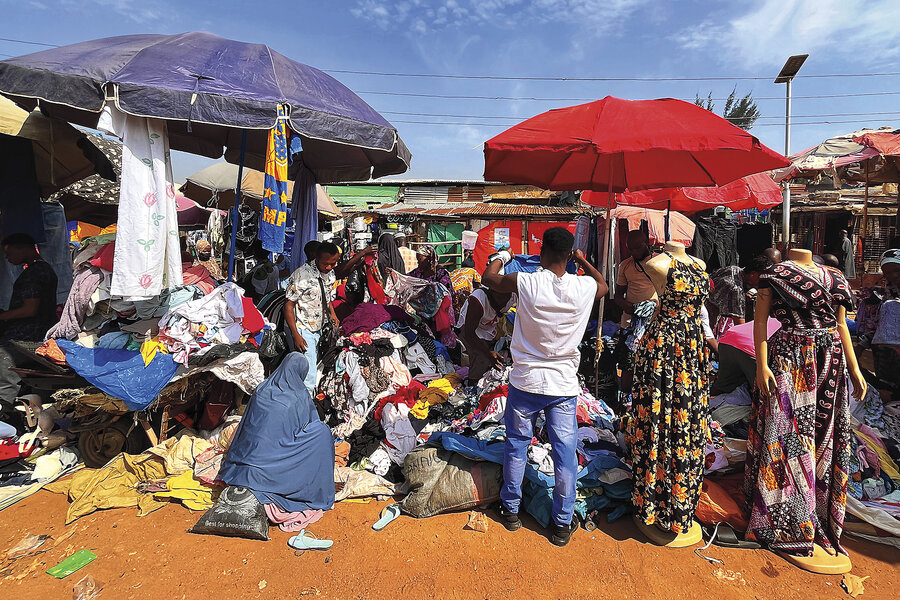
In the heart of the Nyanya market in Abuja, Nigeria, the air is thick with the sounds of commerce and the rhythmic ringing of a small bell. Aondofa Iornenge stands beside a sprawling heap of clothing spread across a tarpaulin, calling out prices to a passing crowd. “Four hundred naira!” he shouts, gesturing to the colorful array of garments. For many shoppers, This represents no longer a last resort, but a strategic choice in the face of a mounting global affordability crunch.
The shift in consumer behavior is a visible symptom of a deeper economic malaise. Across the globe, households are grappling with skyrocketing costs of living, driven by a combination of currency volatility and geopolitical instability. In Nigeria, the pressure is particularly acute; since 2023, the naira has lost more than half its value against the U.S. Dollar, a devaluation that has sent the price of basic essentials soaring Central Bank of Nigeria. As the purchasing power of the average citizen erodes, the traditional boundaries of social class and shopping habits are dissolving.
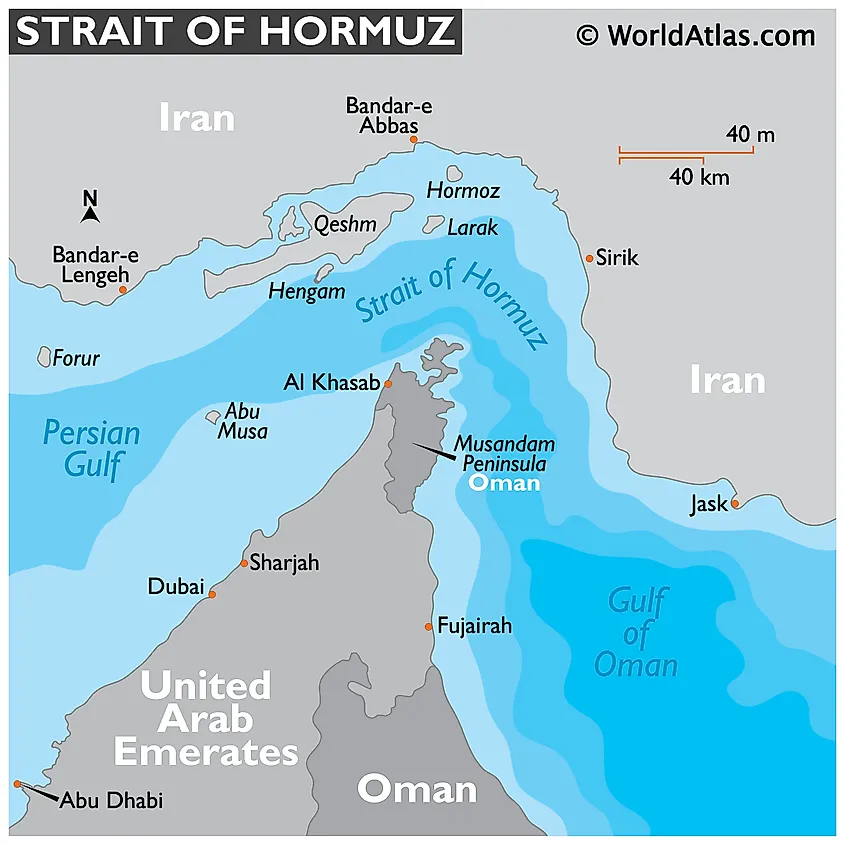
This economic squeeze is not isolated to West Africa. From the Middle East to Europe and the Americas, a pattern of resilience is emerging. Consumers are increasingly abandoning luxury brands in favor of creative, budget-friendly alternatives and community-led support systems. While the drivers are often systemic—ranging from inflation to the prolonged closure of the Strait of Hormuz, which has disrupted global trade and energy costs—the responses are intensely personal and local.
For many, the solution lies in the “okrika” economy—the local term for secondhand clothing. Once viewed with significant social stigma and associated strictly with extreme poverty, the act of buying used clothes is now being embraced by a broader demographic, including professionals who once shopped at global retail giants like Zara and H&M.
Breaking the Stigma: The Rise of ‘Okrika’ in Nigeria
The transition toward secondhand markets reflects a pragmatic adaptation to a harsh financial reality. Olagoke Precious, a banker based in Port Harcourt, describes the stark contrast in affordability. According to Precious, a single new outfit can now cost as much as 100,000 naira—approximately $72—a price point that has become prohibitive for many International Monetary Fund. By turning to the secondhand market, Precious notes that the same amount of money can now secure five different looks, with little discernible difference in quality or style.
This shift is fundamentally altering the customer base of vendors like Aondofa Iornenge. The clientele at the Nyanya market now includes doctors, lawyers and government employees. Iornenge observes that the stigma previously attached to okrika is fading, replaced by a sense of practical necessity. “Na mumu dey go boutique,” Iornenge remarks, using a local phrase to suggest that only fools continue to buy new clothes when affordable, high-quality alternatives are available.
The growth of the secondhand sector does more than just provide cheap clothing; it creates a secondary economy of resellers who purchase items in bulk to sell within government offices and professional circles. This grassroots redistribution of goods allows middle-class workers to maintain a professional appearance while shielding their dwindling savings from the effects of inflation.
Geopolitical Pressures and the Cost of Living
The affordability crisis is fueled by a complex web of global events that ripple through local markets. One of the primary catalysts mentioned by observers is the prolonged closure of the Strait of Hormuz. As a critical chokepoint for global oil and gas shipments, any disruption in this region leads to immediate spikes in energy prices and shipping costs worldwide. These overheads are eventually passed down to the consumer, manifesting as higher prices for everything from fuel to imported textiles.
When combined with local currency crashes, the result is a “double squeeze.” In Nigeria, the devaluation of the naira means that imports are more expensive to acquire, while the global supply chain disruptions ensure that the base cost of those imports remains high. This environment forces consumers to rethink their relationship with ownership and consumption, moving away from the “fast fashion” model toward a more circular, sustainable approach to wardrobe management.
This trend is mirroring developments in other regions where economic instability has forced a return to traditional methods of frugality. The global affordability crunch is effectively decentralizing the retail experience, moving it away from corporate malls and back into open-air markets and community exchange hubs.
From Survival to Solidarity: Community Responses
While the shift to secondhand markets is a matter of individual survival, the economic crisis has also sparked waves of collective generosity. In areas where the cost of food has become unsustainable, community-led initiatives are filling the gap left by failing state supports or unaffordable market prices.
In Amman, Jordan, this spirit of solidarity is exemplified by a not-for-profit restaurant dedicated to fighting food insecurity. The establishment currently provides meals to between 200 and 250 people, offering a critical safety net for those pushed to the brink by inflation World Food Programme. Such initiatives demonstrate that the affordability crunch is not only driving consumers toward cheaper goods but is also fostering a culture of mutual aid.
These acts of generosity often begin as temporary measures during acute crises but frequently evolve into permanent community fixtures. By removing the profit motive from essential services like food and clothing, these initiatives provide a buffer against the volatility of the global market, ensuring that the most vulnerable populations are not entirely left behind by economic shifts.
Key Takeaways: Adapting to Global Inflation
- Shift in Consumer Psychology: Secondhand shopping (okrika) is losing its social stigma in Nigeria, becoming a preferred choice for professionals including lawyers and doctors.
- Currency Impact: The devaluation of the naira by more than 50% since 2023 has made new clothing prohibitively expensive, with single outfits reaching 100,000 naira.
- Geopolitical Drivers: The closure of the Strait of Hormuz has contributed to global price increases by disrupting energy and trade routes.
- Community Resilience: Non-profit efforts, such as the community restaurant in Amman feeding up to 250 people, highlight a rise in global generosity as a response to economic hardship.
What In other words for the Future of Global Retail
The current trend suggests a long-term shift in how consumers in emerging markets interact with global brands. The move toward secondhand clothing is not merely a temporary reaction to a dip in currency value; This proves a fundamental reassessment of value. When a consumer can acquire five outfits for the price of one, the psychological appeal of “new” is outweighed by the utility of “more.”
the rise of these alternative markets challenges the dominance of traditional retail. As professional classes integrate okrika into their daily lives, the demand for mid-tier luxury and fast fashion may permanently decline in favor of curated secondhand experiences. This could lead to a broader adoption of circular economy principles, where the lifespan of a garment is extended through multiple owners, reducing both economic waste and environmental impact.
The resilience seen in Abuja and Amman serves as a blueprint for other regions facing similar pressures. By combining individual creativity—such as the strategic use of secondhand markets—with community generosity, populations are finding ways to maintain dignity and quality of life despite systemic economic failures.
As global monitors continue to track the volatility of the naira and the status of international trade routes, the focus remains on whether these grassroots solutions can be scaled or if they will remain isolated pockets of resilience. For now, the ringing bell in the Nyanya market signals more than just a sale; it signals a global shift in how the world survives an era of unaffordability.
Economic analysts and international bodies continue to monitor the stability of the naira and the reopening of critical trade corridors. Further updates on currency interventions and trade status are expected in upcoming quarterly economic reviews.
Do you see similar shifts in your local community? Share your experiences with budget-friendly alternatives and community support in the comments below.
Related reading