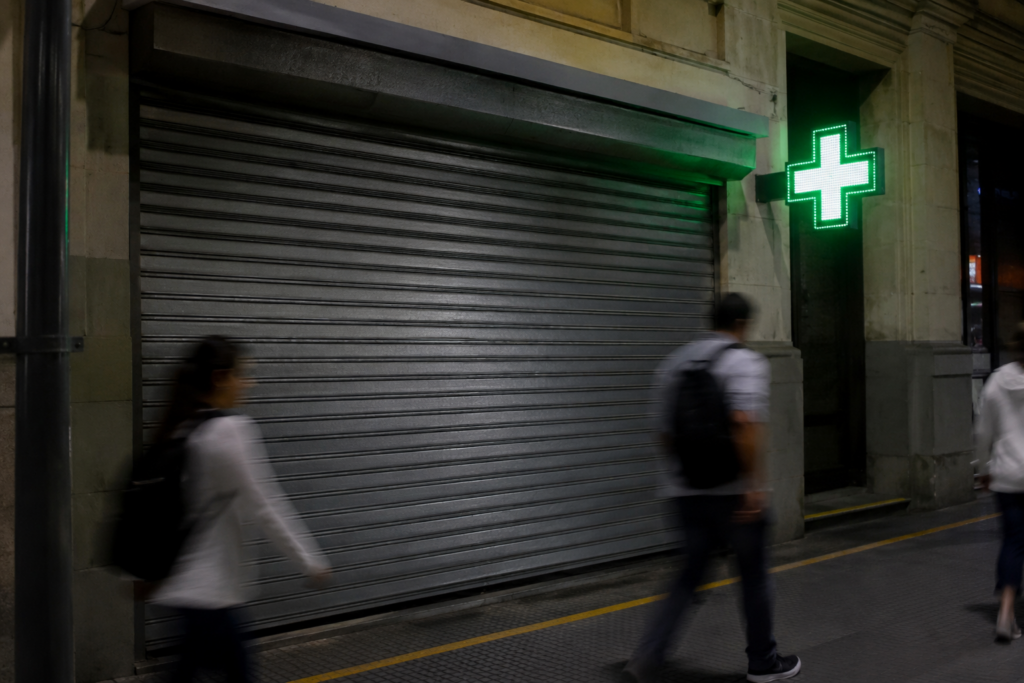
For two decades, a specific neon sign served as a beacon of hope for thousands of Argentines who found themselves caught in the precarious gap of the national healthcare system. Farmacias Low Cost was more than a retail chain; it was a critical infrastructure for the “desamparados”—those without medical insurance or the means to afford the escalating costs of essential medicine. Now, that beacon has gone dark.
The sudden closure of all 33 branches of Farmacias Low Cost marks a sobering milestone in Argentina’s ongoing economic struggle. For twenty years, the chain specialized in providing affordable medications to individuals lacking obra social (social security health insurance) or private prepaid plans. Its disappearance is not merely a business failure but a public health signal, highlighting the fragility of low-margin healthcare models in the face of hyperinflation.
As a physician and health journalist, I have seen how the collapse of a single “safety net” provider can trigger a domino effect of untreated chronic conditions. When a patient loses access to affordable insulin, antihypertensives, or asthma medication, the cost is shifted from the pharmacy counter to the emergency room. In the case of Farmacias Low Cost, the closure leaves a void that the state-run health system, already strained to its limits, may struggle to fill.
The closure comes at a time when Argentina is grappling with one of the most volatile economic environments in the world. The intersection of pharmaceutical supply chain disruptions and a plummeting purchasing power has made the “low cost” business model mathematically impossible to sustain. This development serves as a stark case study in how macroeconomic instability directly translates into a medical crisis for the most vulnerable populations.
The End of an Era for Affordable Access
Farmacias Low Cost built its reputation on a simple but vital premise: high volume and low margins. By focusing on generic medications and essential drugs, the chain provided a lifeline to the uninsured. In Argentina, the healthcare system is fragmented into three sectors—public, social security (obra social), and private. Those who fall through the cracks of the first two often find the private pharmacy market prohibitively expensive.
The closure of 33 branches across the country represents a massive loss of physical access points. For many patients, these pharmacies were not just the cheapest option, but the only option within a reachable distance. The loss of these locations means that patients must now navigate a market dominated by larger chains that often prioritize high-margin branded drugs over the low-cost generics that the “Low Cost” chain championed.
The operational collapse of the chain is a direct reflection of the “price-cost squeeze.” In a stable economy, a low-cost provider can survive on slim margins by moving large quantities of product. However, when the cost of acquiring medications from wholesalers rises daily—driven by currency devaluation and inflation—but the retail price cannot be raised without alienating the very customers the business serves, the model breaks. Here’s the reality of the current Argentine crisis, where inflation rates tracked by the International Monetary Fund have reached levels that erase capital reserves in a matter of weeks.
The Economic Engine of a Health Crisis
To understand why a 20-year-old institution vanished, one must look at the pharmaceutical supply chain in Argentina. Most essential medications are either imported or rely on imported active pharmaceutical ingredients (APIs). When the Argentine peso loses value against the dollar, the cost of these imports spikes instantly. For a standard pharmacy, these costs are passed on to the consumer or the insurance provider.

Farmacias Low Cost, however, operated on a social-commercial hybrid logic. Their target demographic—the uninsured—could not absorb these price hikes. If the pharmacy raised prices to match the inflation of the API imports, they would no longer be “low cost,” effectively destroying their brand identity and pricing their customers out of their own health. If they kept prices low, they were selling medications at a loss.
This systemic failure is compounded by the volatility of drug pricing regulations. In many instances, the lag between a wholesale price increase and the permitted retail adjustment creates a window of loss that can bankrupt a small or mid-sized chain. The closure of these 33 branches is a symptom of a broader trend where the “middle ground” of healthcare retail is disappearing, leaving only the elite private clinics and the overburdened public hospitals.
The ‘Obra Social’ Gap and the Uninsured
The Argentine healthcare model is designed around the obra social—insurance funds managed by trade unions. While this system provides extensive coverage for many, it leaves a significant portion of the population, particularly informal workers and the unemployed, in a state of medical vulnerability. For these individuals, the public health system is the primary recourse, but public pharmacies often suffer from chronic stockouts of essential medicines.
Farmacias Low Cost filled this specific gap. By leveraging generic drug procurement, they allowed the uninsured to maintain their treatment regimens without relying solely on the unpredictable inventory of state clinics. The Pan American Health Organization (PAHO) has long emphasized the importance of universal access to essential medicines as a cornerstone of public health. When a private entity that provides this access closes, the burden shifts back to the public sector, which is often ill-equipped to handle the surge.
The human impact is profound. For a patient with hypertension, the inability to afford a daily pill is not a financial inconvenience; it is a risk factor for a stroke. For a diabetic, it is a risk of ketoacidosis. The “low cost” model was a pragmatic solution to a systemic failure in insurance coverage. Its collapse suggests that the gap in the Argentine health safety net is widening, leaving more people exposed to preventable health catastrophes.
Global Implications for Low-Cost Healthcare
While this event is centered in Argentina, it mirrors a global struggle. From the United States to Southeast Asia, the “pharmacy desert” is becoming a recognized public health phenomenon. This occurs when pharmacies in low-income areas close because the profit margins are too low to sustain the operational costs, particularly when the patient population relies heavily on government subsidies or generics.
The Argentine experience provides a warning about the danger of relying on private-sector “low cost” models to solve public-sector coverage gaps. When the market becomes too volatile, the private sector will always prioritize solvency over social utility. True healthcare security requires a robust, state-guaranteed supply of essential generics that does not fluctuate based on the daily exchange rate of the local currency.
From a medical perspective, the closure of Farmacias Low Cost underscores the need for “therapeutic continuity.” The most dangerous moment for a chronic patient is the transition between providers or the sudden loss of a provider. The disruption of medication schedules leads to poor health outcomes, increased hospitalizations, and higher long-term costs for the state. The disappearance of 33 branches is not just a loss of stores; it is a disruption of thousands of individual treatment plans.
Key Takeaways: The Impact of the Closure
- Loss of Access: 33 branches that specialized in affordable medications for the uninsured have ceased operations.
- Target Population: The closure most heavily affects those without obra social or private health insurance.
- Economic Cause: Hyperinflation and currency devaluation made the low-margin, high-volume business model unsustainable.
- Public Health Risk: Increased pressure on already strained public hospitals as patients lose their primary source of affordable medication.
- Systemic Warning: The event highlights the danger of relying on private retail to fill gaps in universal healthcare coverage.
What Happens Next?
The immediate concern for patients who relied on Farmacias Low Cost is finding alternative sources for their medications. Health advocates in Argentina are calling for an emergency expansion of the public pharmacy network to absorb the displaced patient load. However, given the current austerity measures and economic constraints facing the government, such an expansion is unlikely to happen overnight.
Patients are currently advised to visit their nearest public health center (Centro de Salud) to register for state-provided medication programs. Those with chronic conditions are urged to seek medical consultations immediately to ensure their prescriptions are updated and that they are routed toward the available public alternatives to avoid dangerous gaps in their treatment.
The next critical checkpoint will be the upcoming quarterly reports from the Ministry of Health, which will likely reveal the impact of this closure on hospital admission rates for preventable complications. As the economic situation in Argentina continues to evolve, the fate of the remaining affordable healthcare providers will be a key indicator of the country’s social stability.
Do you or your loved ones rely on affordable pharmacy networks in your region? How has the rising cost of medication affected your healthcare choices? Share your experiences in the comments below to help us highlight these critical public health challenges.
Keep reading
- New CDC Director Dr. Erica Schwartz Resigns from Aveanna Healthcare Board
- Nouveaux dentistes à Port-Sainte-Marie : qui remplace le Dr Didier Laurent ?
- Mount Nittany Health Warns of Potential Measles Exposure at Pennsylvania Locations (newsdirectory3.com)
- Pharmacy Jobs in Dover, NH | Apply Online at UNFI (news-usa.today)