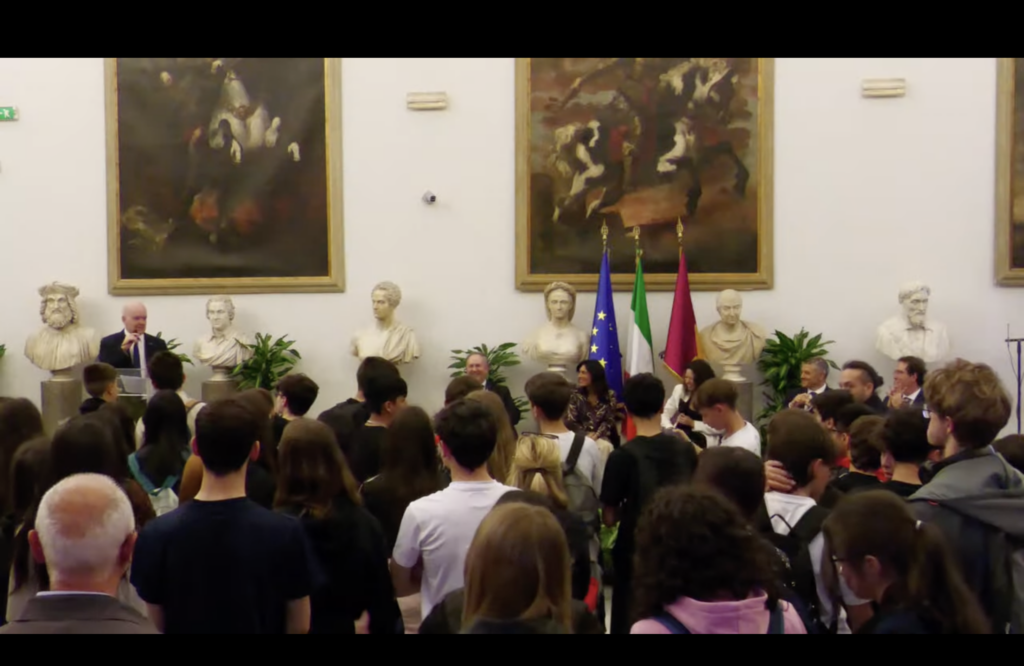
In an era often defined by political fragmentation and generational anxiety, a new vision of the European project is emerging—not from the halls of Brussels or the corridors of national parliaments, but through the lenses of the youth. The “Dream for Europe” photo contest, a signature initiative organized by Fondazione Articolo 49, has culminated in the recognition of young artists who have captured their aspirations for the continent’s future.
Timed to coincide with the annual celebrations of Europe Day, the competition serves as more than a mere artistic showcase. It is a deliberate exercise in civic imagination, challenging young people to move beyond the prevailing narratives of crisis and bureaucracy to visualize a Europe that reflects their values, hopes, and requirements for a sustainable future. By blending artistic expression with political reflection, the initiative transforms the act of photography into a tool for active citizenship.
The winners of the “Dream for Europe” photo contest represent a diverse cross-section of youth perspectives, each offering a unique visual interpretation of what a “dream” for the European Union entails. From images evoking environmental harmony and social solidarity to those highlighting the erasure of borders and the celebration of multiculturalism, the submissions underscore a persistent desire among the younger generation to remain invested in the European idea, provided that idea evolves to meet contemporary challenges.
This initiative arrives at a critical juncture for the European Union, as it seeks to bridge the gap between institutional governance and the lived experiences of its youngest citizens. By centering the voices of the youth, Fondazione Articolo 49 is facilitating a dialogue that prioritizes empathy and creativity over partisan rhetoric, suggesting that the path toward a more integrated Europe may be found in the shared dreams of those who will inherit it.
Visualizing a Borderless Future: The Philosophy of “Dream for Europe”
The core objective of the “Dream for Europe” photo contest is to stimulate a proactive reflection on European identity. Rather than asking participants to document the Europe that exists today, the contest asks them to imagine the Europe of tomorrow. This shift from documentation to aspiration is central to the project’s goal: encouraging youth to transition from passive observers of political processes to active architects of their social environment.
For many participants, the “dream” is not a utopia, but a series of tangible improvements. The winning entries often touch upon themes of sustainability, digital equity, and the protection of human rights. By capturing these themes through photography, the participants are forced to synthesize complex geopolitical concepts into a single, poignant image. This process of distillation helps young people clarify their own priorities and communicate them to a wider audience in a language that transcends linguistic barriers.
the contest emphasizes the concept of “active citizenship.” In the context of the European Union, this means moving beyond the act of voting every few years and engaging in a continuous process of community building and value-definition. The act of submitting a photo—of searching for a visual metaphor for a better Europe—is in itself an act of civic engagement. It requires the individual to ask: “What is missing from my community?” and “How can the European framework help solve this?”
Fondazione Articolo 49: Cultivating Civic Engagement
The driving force behind this initiative is Fondazione Articolo 49, an Italian organization dedicated to promoting civic participation and the empowerment of young people. The foundation’s name is a nod to the Italian Constitution, reflecting a commitment to the fundamental rights and duties that underpin a democratic society. By focusing on the intersection of education, art, and politics, the foundation seeks to provide youth with the tools necessary to navigate and influence the complex structures of modern governance.
Fondazione Articolo 49 operates on the premise that youth apathy is rarely a result of lack of interest, but rather a result of a lack of accessible channels for participation. The “Dream for Europe” contest is a prime example of creating such a channel. By utilizing a medium as accessible as photography, the foundation lowers the barrier to entry for political expression, allowing those who may feel intimidated by formal political discourse to contribute their perspectives.
The foundation’s work extends beyond a single contest. It encompasses a broader strategy of “civic education,” which aims to transform the way young people interact with the state and the European Union. This involves promoting critical thinking, encouraging cross-cultural dialogue, and fostering a sense of shared responsibility for the common good. Through initiatives like “Dream for Europe,” the foundation helps students and young professionals see themselves not as subjects of European policy, but as stakeholders in its creation.
The Significance of Europe Day and the Schuman Legacy
The timing of the awards is inextricably linked to Europe Day, celebrated every May 9th. This date commemorates the anniversary of the Schuman Declaration of 1950, when French Foreign Minister Robert Schuman proposed the creation of a European Coal and Steel Community. The goal was to make war between historic rivals—specifically France and Germany—not only unthinkable but materially impossible by pooling the resources necessary for war.
According to the official European Union records, Europe Day serves as a reminder of the peace and stability that the EU has fostered over the decades. However, for the participants of “Dream for Europe,” the legacy of Robert Schuman is not just a historical fact, but a blueprint for future cooperation. The “dream” is essentially an extension of the Schuman Declaration: the belief that shared interests and shared visions can overcome deep-seated divisions.
In the current geopolitical climate, the symbolism of Europe Day has taken on renewed urgency. The challenges of the 21st century—climate change, migratory pressures, and the rise of digital authoritarianism—cannot be solved by individual nation-states acting in isolation. The “Dream for Europe” contest mirrors this reality, as the winning photographs often depict scenes of collaboration and unity, suggesting that the only viable future for the continent is one characterized by deeper solidarity and mutual support.
From Artistic Expression to Political Action
While the “Dream for Europe” contest begins with art, its ultimate goal is to catalyze action. The transition from a “dream” (a visual representation) to a “project” (a political or social action) is the critical step in the foundation’s methodology. By awarding winners and showcasing their work, the initiative validates the perspectives of the youth, giving them the confidence to engage in more formal political arenas.
The impact of such projects is seen in the way they reshape the identity of the participants. When a young person sees their vision of Europe recognized and celebrated, it reinforces the idea that their voice matters. This psychological shift is essential for combating the “democratic deficit” often cited by critics of the European Union. By fostering a sense of ownership over the European project, these initiatives help build a more resilient and legitimate union.
the contest encourages a form of “empathetic diplomacy.” As images from different regions and backgrounds are displayed together, participants and viewers are reminded of the shared aspirations that unite Europeans across borders. A dream for a cleaner environment in Italy is often mirrored by a dream for sustainable cities in Poland or social justice in Spain. These visual parallels create a shared emotional vocabulary that can be used to build coalitions and drive policy changes at the EU level.
Key Takeaways: The Impact of “Dream for Europe”
- Youth Agency: The contest shifts the role of young people from passive recipients of policy to active visionaries of the EU’s future.
- Civic Tooling: By using photography, Fondazione Articolo 49 provides an accessible entry point for civic engagement and political expression.
- Value Alignment: Winning entries highlight a generational priority for sustainability, human rights, and borderless cooperation.
- Historical Continuity: The event links the modern aspirations of youth to the founding peace-building principles of the Schuman Declaration.
- Identity Formation: The initiative helps foster a positive, proactive European identity among a demographic often characterized by skepticism.
The Path Forward: Beyond the Lens
The conclusion of the “Dream for Europe” awards is not an end, but a beginning. The images captured by the winners serve as a visual manifesto for a generation that refuses to be sidelined in the conversation about the continent’s trajectory. The challenge now lies in translating these visual dreams into concrete policy goals. Whether through youth councils, electoral participation, or grassroots activism, the energy generated by the contest provides a foundation for real-world change.

As the European Union continues to navigate the complexities of the mid-2020s, the insights gleaned from “Dream for Europe” offer a vital roadmap. The desire for a more inclusive, green, and human-centric Europe is not merely a youthful fantasy; it is a requirement for the survival and prosperity of the union. By listening to the “dreams” of its youth, the EU can ensure that its evolution is aligned with the needs of those who will lead it in the decades to come.
The next confirmed checkpoint for those following the intersection of youth and European policy is the official Europe Day commemorations on May 9, where the spirit of the “Dream for Europe” will be integrated into broader discussions on the future of the union. These events typically feature panels on youth employment, climate action, and the strengthening of democratic institutions across member states.
Do you believe art is an effective tool for political change? How should the European Union better integrate the visions of its youth into official policy? Share your thoughts in the comments below.
Keep reading