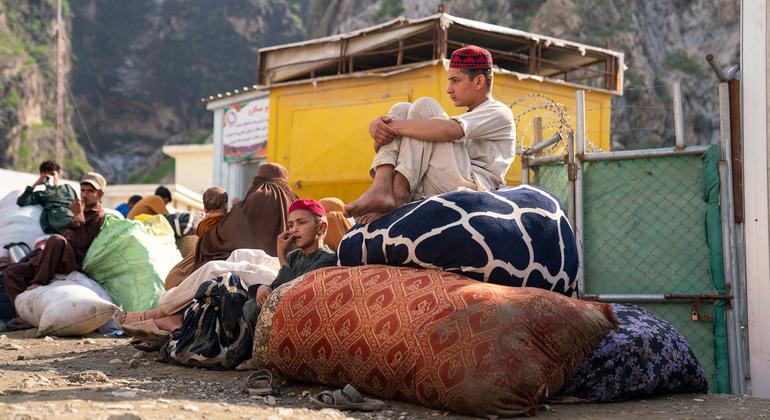
Kabul, Afghanistan – Fears are mounting for the safety and well-being of ordinary Afghans as clashes between Afghanistan and Pakistan escalate, raising concerns about a further deterioration of an already dire humanitarian situation. Recent Pakistani airstrikes within Afghanistan, described by Islamabad as a response to attacks originating from Afghan soil, have prompted international calls for de-escalation and a return to diplomatic solutions. The escalating conflict threatens to exacerbate the challenges faced by a population already struggling under the rule of the Taliban and grappling with widespread poverty and limited access to essential services.
The United Nations Secretary-General António Guterres has expressed “deep concern” over the escalating violence and its impact on civilian populations, urging an immediate cessation of hostilities. Guterres reiterated the require for both Kabul and Islamabad to resolve their differences through diplomacy, a sentiment echoed by Richard Bennett, the independent expert on Afghanistan from the UN Human Rights Council. The situation is particularly worrying for Afghan refugees in Pakistan, many of whom fear being forced to return to a country facing increased instability and potential retribution.
The recent escalation follows months of sporadic clashes across the border, despite a ceasefire declared last October. Pakistan’s defence minister stated on Friday that the nation is now engaged in “open war” with Afghanistan, marking a significant deterioration in relations between the two countries. The strikes reportedly targeted major cities including Kabul and Kandahar, raising the specter of widespread civilian casualties and displacement. This conflict unfolds against a backdrop of a significant return of Afghan nationals – an estimated 2.7 million in 2025 – from neighboring countries, including Pakistan, adding to the strain on Afghanistan’s already limited resources.
Growing Fears for Returning Afghans
Richard Bennett, the UN Human Rights Council independent expert, highlighted the increased dangers faced by Afghans compelled to return to their homeland. “I was recently in Pakistan, I spoke to Afghans there, who are extremely fearful of their futures,” he said. These fears are rooted in the belief that returning to Afghanistan will mean not only a life of poverty but also a real risk of violent retaliatory attacks, particularly for those perceived as having affiliations with the previous government, security forces, journalists, or human rights defenders. Bennett noted an “uptick” in such attacks in recent months, underscoring the precarious situation facing returnees.
The independent Special Rapporteur on Afghanistan called for “cool heads” amid rising regional and geopolitical tensions, hoping that “third parties will be listened to.” This plea for mediation reflects the broader international concern that the conflict could destabilize the region further and exacerbate existing humanitarian crises. The situation is complicated by the Taliban’s return to power in August 2021, which has led to a significant deterioration in human rights and a deepening humanitarian crisis.
Humanitarian Crisis Deepens
The escalating conflict is expected to worsen the already dire humanitarian conditions in Afghanistan. Bennett stressed the disastrous situation confronting the Afghan people, linked directly to the Taliban’s policies. Healthcare, in particular, has been severely impacted by decrees purportedly aimed at promoting virtue and tackling vice, which have been widely condemned internationally as a form of gender apartheid impacting women and girls.
These decrees have led to the segregation of medical treatment, with women being treated by female doctors and men by male doctors. This, coupled with an overall reduction in medical personnel – including doctors, midwives, and nurses – is creating a critical shortage of healthcare providers. While there is some evidence that these restrictive decrees are not universally enforced, access to treatment remains a significant challenge due to restrictions on freedom of movement. Afghanistan’s healthcare system was already fragile before the Taliban takeover, weakened by decades of conflict, poverty, and underinvestment, raising the risk of a “full scale health catastrophe, especially for women and girls.”
Pakistan’s Stance and Regional Implications
The Pakistani government has justified its recent actions as a necessary response to cross-border attacks carried out by groups operating within Afghanistan. Islamabad alleges that these groups are responsible for a surge in terrorist activity within Pakistan, and that the Afghan Taliban have failed to adequately address the issue. However, the Taliban have condemned the Pakistani airstrikes as a violation of Afghanistan’s sovereignty and a threat to regional stability. This reciprocal blame and escalating rhetoric raise concerns about a prolonged conflict with potentially far-reaching consequences.
The situation is further complicated by the complex geopolitical dynamics of the region. Afghanistan shares borders with several countries, including Pakistan, Iran, and Tajikistan, and is a key transit route for trade and energy. A prolonged conflict could disrupt these vital economic links and exacerbate regional instability. The involvement of external actors, such as the United States, China, and Russia, could also further complicate the situation.
International Response and Calls for Dialogue
The international community has largely condemned the violence and called for restraint from both sides. The United Nations has been actively engaged in diplomatic efforts to de-escalate the situation and facilitate dialogue between Afghanistan and Pakistan. However, these efforts have been hampered by the deep-seated mistrust and animosity between the two countries. The UN Secretary-General’s call for an immediate ceasefire and a return to diplomacy is seen as a crucial step towards preventing a further escalation of the conflict.
Several countries have also offered to mediate between Afghanistan and Pakistan, but their efforts have yet to yield significant results. The lack of a unified international approach and the complex geopolitical dynamics of the region pose significant challenges to resolving the conflict. The international community must prioritize humanitarian assistance to Afghanistan and work to address the root causes of the conflict, including poverty, inequality, and political instability.
Key Takeaways
- Escalating clashes between Afghanistan and Pakistan are raising fears for civilians and exacerbating an already dire humanitarian situation.
- The UN Secretary-General and the UN Human Rights Council have called for an immediate ceasefire and a return to diplomatic solutions.
- Afghan refugees in Pakistan are particularly vulnerable, fearing forced return to a country facing increased instability and potential retribution.
- The Taliban’s policies are severely impacting healthcare access, particularly for women and girls, contributing to a potential health catastrophe.
- A prolonged conflict could destabilize the region and disrupt vital economic links.
The situation remains fluid and highly volatile. Further developments are expected in the coming days as diplomatic efforts continue and the security situation on the ground evolves. The international community will be closely monitoring the situation and seeking ways to prevent a further escalation of the conflict and mitigate its devastating impact on the Afghan people. The next key development to watch will be the outcome of ongoing diplomatic efforts led by the UN and regional powers, with a focus on securing a lasting ceasefire and initiating meaningful dialogue between Kabul and Islamabad.
World Today Journal will continue to provide updates on this developing story. We encourage readers to share their thoughts and perspectives in the comments section below.
- Seattle Food Festival Shooting: 3 Dead, Multiple Injured at Seattle Center
- Javier Milei at Exposición Rural: President Promises Deregulation for Argentina’s Agricultural Sector
- Gold Price Outlook: Fed Rates, Geopolitical Tensions, and Market Trends (world-today-news.com)
- South Africa Faces R467 Billion Municipal Debt Crisis Amid Rising Xenophobia (time.news)