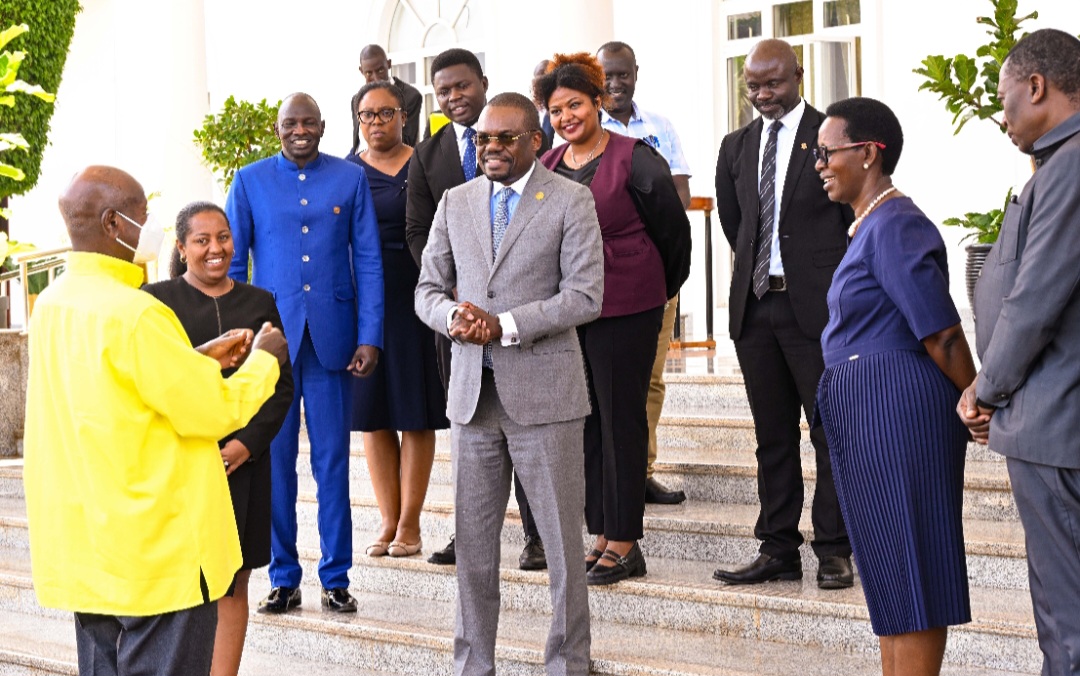
Ugandan President Yoweri Kaguta Museveni met with a delegation from the Africa Centres for Disease Control and Prevention (Africa CDC) at State House in Entebbe this week to assess the current status of the Ebola outbreak. The high-level consultation focused on regional health security and the strategies necessary to contain the virus through enhanced collaboration between the Ugandan government and the continental public health agency.
The Africa CDC delegation, led by Director General Dr. Jean Kaseya, provided a briefing on the epidemiological situation. During the meeting, Dr. Kaseya emphasized the urgency of establishing a continental Incident Management Support Team for Ebola, which would be based in Kampala. According to the proposal, this team would serve as a centralized hub to strengthen coordination, resource mobilization, and real-time monitoring efforts across the region.
President Museveni expressed his support for the establishment of the support team, pledging the full cooperation of the Ugandan government. Reflecting on the nature of the virus and the importance of vigilance, the President stated, “Ebola only becomes deadly when there is lack of attention. Otherwise, it is very manageable.”
The meeting was attended by key health officials, including Dr. Diana Atwine, the Permanent Secretary of the Ministry of Health, who participated in the discussions alongside other representatives from the Ministry. The session underscored the ongoing commitment of both national and continental health authorities to maintain rigorous public health standards.
Strengthening Regional Health Coordination
The initiative to form a continental Incident Management Support Team reflects a broader push by the Africa CDC to bolster the continent’s response to infectious disease threats. By concentrating technical expertise in Kampala, the agency aims to streamline decision-making processes and ensure that data-driven interventions can be deployed rapidly. The Africa CDC, which is a specialized technical institution of the African Union, supports member states in their efforts to strengthen health systems and respond effectively to public health emergencies, as outlined in their official organizational mandate.
For Uganda, the collaboration is part of a sustained effort to maintain surveillance, and preparedness. The Ministry of Health remains at the forefront of these activities, working closely with international partners to ensure that health infrastructure is capable of identifying and isolating potential cases before they escalate into widespread outbreaks.
The Role of Public Health Vigilance
As noted by President Museveni, the management of Ebola relies heavily on public awareness and the rapid deployment of resources to affected areas. The approach advocated by the Africa CDC involves not only clinical management but also community engagement and the strengthening of laboratory diagnostic capabilities. These pillars are essential for maintaining the “manageability” of the virus, a sentiment that aligns with the World Health Organization’s guidance on the importance of early detection and supportive care in improving patient outcomes.
The Ministry of Health continues to provide updates and guidance to the public regarding health safety protocols. Citizens are encouraged to monitor official government channels for the most accurate and up-to-date information regarding health advisories. Consistent adherence to these protocols remains a cornerstone of the national strategy to prevent the spread of the virus.
Next Steps in the Response
The proposal for the Incident Management Support Team marks a new phase in the partnership between Uganda and the Africa CDC. While the immediate situation is described as being under control, officials are focused on the operationalization of this new team to ensure long-term resilience. Further details regarding the timeline for the team’s deployment and the specific resources allocated to the Kampala hub are expected to be released by the Ministry of Health in subsequent official communications.

As the situation develops, the global health community continues to watch the region’s progress in managing these challenges. The collaboration between Kampala and the Africa CDC serves as a critical model for how regional bodies can support sovereign nations in maintaining public health security.
What are your thoughts on the role of regional health alliances in managing infectious disease outbreaks? Join the conversation by sharing your perspective in the comments section below.
Related reading