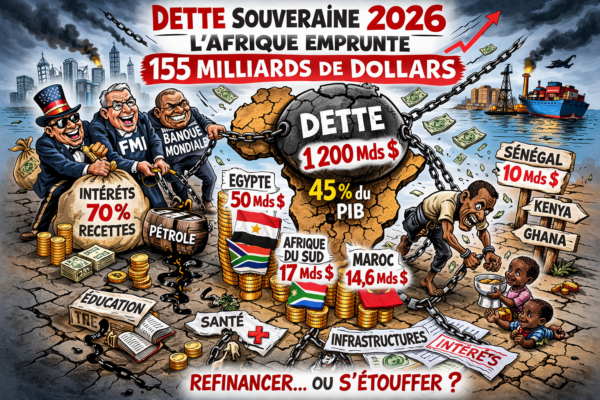
African nations are poised to raise approximately $155 billion through commercial markets in 2026, a slight increase from the $140 billion seen in 2025. However, this figure reveals a more complex reality: a significant portion of these funds will be dedicated to refinancing existing debt rather than fueling new economic growth. The continent faces a critical juncture, balancing the require for capital with the increasing burden of debt servicing, a situation that demands careful attention from investors and policymakers alike.
The pressure to refinance is substantial. Nearly $80 billion of the projected $155 billion in new debt issuance will be allocated solely to repaying maturing obligations – representing over half of all funds raised. This dynamic underscores a persistent challenge for many African economies: the struggle to break free from a cycle of debt and invest in sustainable development. The total outstanding commercial sovereign debt is expected to surpass $1.2 trillion by the end of 2026, equivalent to roughly 45% of the continent’s combined GDP. While this level remains manageable compared to some international benchmarks, it masks underlying vulnerabilities, including weak tax revenues, reliance on commodity exports, and limited access to domestic savings.
Debt Concentration and Regional Disparities
The African debt market remains heavily concentrated, with Egypt, South Africa, and Morocco expected to absorb the majority of new emissions. Egypt alone is projected to mobilize nearly $50 billion, accounting for over 30% of the continental total. South Africa and Morocco are forecast to follow with approximately $17 billion and $14.6 billion, respectively. Financial Afrik reports this concentration reflects the relative depth of their financial markets and established access to international investors. This creates a disparity, as many other African nations struggle to access sufficient capital.
The median debt issuance for African states is around $1.5 billion, highlighting limited market access for a large number of countries. However, economies like Senegal, Kenya, and Ghana are experiencing growing funding needs. Senegal, for example, is anticipated to raise around $10 billion in 2026, with a significant reliance on domestic and short-term financing, which increases refinancing risks. This reliance on short-term financing can exacerbate vulnerabilities, particularly in a volatile global economic environment.
Debt Quality and Rising Interest Costs
Beyond the sheer volume of debt, the quality of that debt is a growing concern. A substantial portion – nearly 50% – is classified as “B” rated, considered speculative. Only 10% is classified as “investment grade.” This impacts borrowing costs, exposing African states to abrupt market shifts. Rising interest rates are a critical factor, exceeding international standards in several countries. In Egypt, interest payments could consume up to 70% of public revenues, placing immense strain on sovereign finances. Financial Afrik highlights this as a particularly acute problem.
The sustainability of this debt trajectory is heavily reliant on favorable global conditions – including accommodative monetary policy, a weaker dollar, and renewed risk appetite among investors. However, these conditions are fragile. Prolonged tensions in the Middle East, particularly disruptions to energy routes, could drive up import costs, widen deficits, and restrict market access. Geopolitical instability remains a significant external risk factor for African economies.
Infrastructure Investment: A Potential Catalyst for Growth
Despite the debt challenges, significant investment is needed to unlock Africa’s economic potential. A recent joint report by the OECD and the African Union Commission suggests that doubling annual infrastructure investment to $155 billion by 2040 could double the continent’s GDP. The OECD estimates this level of investment is crucial for transforming African economies and accommodating population growth. Currently, only $83 billion is being invested annually, creating a substantial deficit that hinders industrialization, logistical competitiveness, and digital transformation.
The report emphasizes that strategic infrastructure projects, such as regional corridors (roads, railways, solar energy, fiber optics), offer the highest returns. Examples like the Lobito Corridor and the Abidjan-Lagos corridor have already demonstrated export gains exceeding 11% and a positive ripple effect on regional value chains. However, the current trajectory is unsustainable. African states currently allocate seven times more resources to debt servicing than to infrastructure financing. The cost of capital also remains high, averaging 13% compared to 8% in OECD countries, with commercial borrowing sometimes reaching 18%.
Governance and Efficiency in Infrastructure Spending
Increasing budgets alone are insufficient. The report stresses the importance of good governance to maximize the impact of infrastructure investments. Currently, up to 53% of invested resources are lost due to inefficiencies in planning, coordination, or maintenance. Improving governance structures and streamlining project implementation are essential to ensure that infrastructure investments translate into tangible economic benefits. Africa-Press details these concerns.
A Paradox of Moderate Debt and High Vulnerability
Africa presents a paradox: relatively moderate levels of debt, but high vulnerability. A significant portion of the debt is denominated in foreign currencies – around 64% – and the limited depth of domestic markets amplifies external shocks. This currency mismatch creates a significant risk, as devaluation can dramatically increase the debt burden. The continent’s reliance on commodity exports also makes it susceptible to fluctuations in global commodity prices.
The year 2026 doesn’t represent a fundamental shift, but rather a continuation of existing trends. Africa continues to borrow out of necessity rather than choice, and its financial sustainability will depend on restoring investor confidence, extending debt maturities, and strengthening macroeconomic fundamentals. Addressing these challenges requires a multifaceted approach, including fiscal consolidation, structural reforms, and improved governance.
Looking Ahead: Key Considerations for 2026
The ability of African nations to navigate the debt landscape in 2026 will be heavily influenced by external factors. Global economic growth, interest rate movements, and geopolitical stability will all play a crucial role. The implementation of the African Continental Free Trade Area (AfCFTA) could provide a boost to intra-African trade and economic diversification, potentially reducing reliance on external financing. The AfCFTA, launched in 2019, aims to create a single market for goods and services across the continent, but its full potential remains to be realized.
The focus must shift towards attracting long-term investment, diversifying economies, and strengthening domestic revenue mobilization. This requires creating a more favorable investment climate, improving the ease of doing business, and investing in education and skills development. Sustainable debt management requires a holistic approach that addresses both the supply and demand sides of financing.
Key Takeaways:
- African nations are projected to raise $155 billion in commercial debt in 2026, largely to refinance existing obligations.
- Over half of new debt issuance will be used for debt repayment, highlighting a persistent challenge for many economies.
- Infrastructure investment is crucial for long-term growth, requiring an additional $72 billion annually to reach the $155 billion target.
- Debt quality is a concern, with a significant portion classified as speculative, leading to higher borrowing costs.
- Good governance and efficient project implementation are essential to maximize the impact of infrastructure investments.
The next key development to watch will be the release of the International Monetary Fund’s (IMF) Regional Economic Outlook for Sub-Saharan Africa, expected in early 2027, which will provide a comprehensive assessment of the region’s economic performance and debt sustainability. We encourage readers to share their perspectives on these critical issues in the comments below.
Worth a look