
The African Union (AU) Peace and Security Council (PSC) is convening a critical session to address the intensifying intersection of environmental degradation and regional instability. The 1344th meeting of the Council, scheduled for May 4, 2026, will focus specifically on the impact of climate change on the crisis situations unfolding in the Sahel and the Lake Chad Basin.
While the African Union has long recognized the growing threat that environmental shifts pose to continental stability, this upcoming session represents a significant strategic shift. For the first time, the Council is dedicating a specific engagement to the unique vulnerabilities of the Sahel and Lake Chad regions, moving beyond broader, generalized discussions of the climate-security nexus to address the immediate needs of these highly volatile areas.
A Targeted Approach to Regional Instability
The decision to focus on the Sahel and the Lake Chad Basin underscores the urgency of the situation. These regions have become flashpoints where environmental stressors—such as desertification, erratic rainfall, and water scarcity—directly exacerbate existing socio-political tensions, resource competition, and humanitarian crises.
The session is expected to feature high-level deliberations from key African Union leadership. Nasir Aminu, the Permanent Representative of Nigeria to the AU and the current Chair of the PSC for May, will open the proceedings. Following the opening remarks, Bankole Adeoye, the Commissioner for Political Affairs, Peace and Security (PAPS), is slated to deliver a statement regarding the security implications of the climate crisis.

The technical and regional dimensions of the crisis will be addressed by several specialized AU officials, including:
- Moses Vilakati, Commissioner for Agriculture, Rural Development, Blue Economy and Sustainable Environment (ARBE);
- Mamadou Tangara, High Representative and Special Representative of the Chairperson of the Commission and Head of the AU Liaison Office in Mali/Sahel;
- Marie Jose Samba Ovono Obono, Special Representative of the Chairperson of the Commission and Head of the AU Liaison Office in Chad.
Recognizing that security solutions must be integrated with regional governance, the Council also expects to hear from representatives of the Lake Chad Basin Commission and the Economic Community of West African States (ECOWAS), both of which are central to managing the stability of the affected zones.
The Evolution of the Climate-Security Agenda
The focus on climate change is not a new development for the Peace and Security Council, but rather the culmination of a decade of intensifying institutional concern. The “climate, peace and security” agenda has been a permanent fixture on the PSC’s programme since March 2016, following the Council’s 585th session.
At that time, the Council made a landmark commitment to hold annual deliberations on the nexus between climate change and security. As the complexity of environmental threats has grown, so too has the frequency of these discussions. The PSC has transitioned from annual reviews to holding two dedicated sessions every year. To date, the Council has held over 18 sessions on this theme, reflecting a growing consensus that environmental policy is inseparable from peace and security policy in Africa.
Understanding the Climate-Security Nexus
The “climate-security nexus” refers to the complex way in which environmental changes act as “threat multipliers.” In the Sahel and the Lake Chad Basin, What we have is not a theoretical concept but a daily reality. When traditional water sources dry up or arable land disappears, the competition for remaining resources often triggers communal violence between pastoralists and farmers. These localized conflicts can then be exploited by non-state armed groups, further destabilizing the region and creating cycles of displacement and radicalization.
Key Details of the 1344th PSC Session
| Feature | Details |
|---|---|
| Meeting Number | 1344th Session of the Peace and Security Council |
| Primary Focus | Climate change impact on the Sahel and Lake Chad Basin |
| Key Date | May 4, 2026 |
| Chairmanship | Nigeria (represented by Nasir Aminu) |
| Participating Bodies | AU Commission, ECOWAS, Lake Chad Basin Commission |
By bringing together agricultural, environmental, and political commissioners alongside regional economic blocs, the AU is attempting to build a holistic framework for addressing the root causes of conflict in these zones. The involvement of the Commissioner for Agriculture, Rural Development, Blue Economy and Sustainable Environment suggests that the Council is looking toward long-term resilience and sustainable resource management as essential components of peacebuilding.
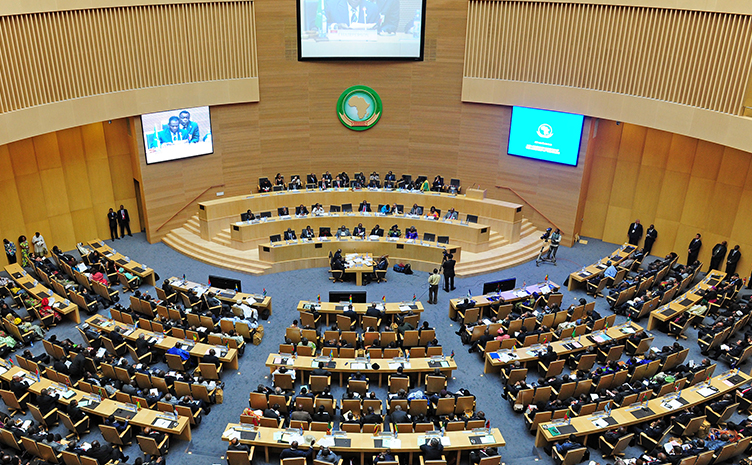
As the session progresses, the international community will be watching to see if the AU can translate these high-level deliberations into actionable policies that provide both immediate security interventions and long-term environmental adaptation strategies for the millions of people living in the Sahel and the Lake Chad Basin.
The next official updates regarding the outcomes of the 1344th meeting are expected to be released following the conclusion of the session on May 4, 2026.
What are your thoughts on the African Union’s approach to the climate-security nexus? Should environmental policy be more central to peacekeeping efforts? Share your views in the comments below and share this article with your network.
Keep reading