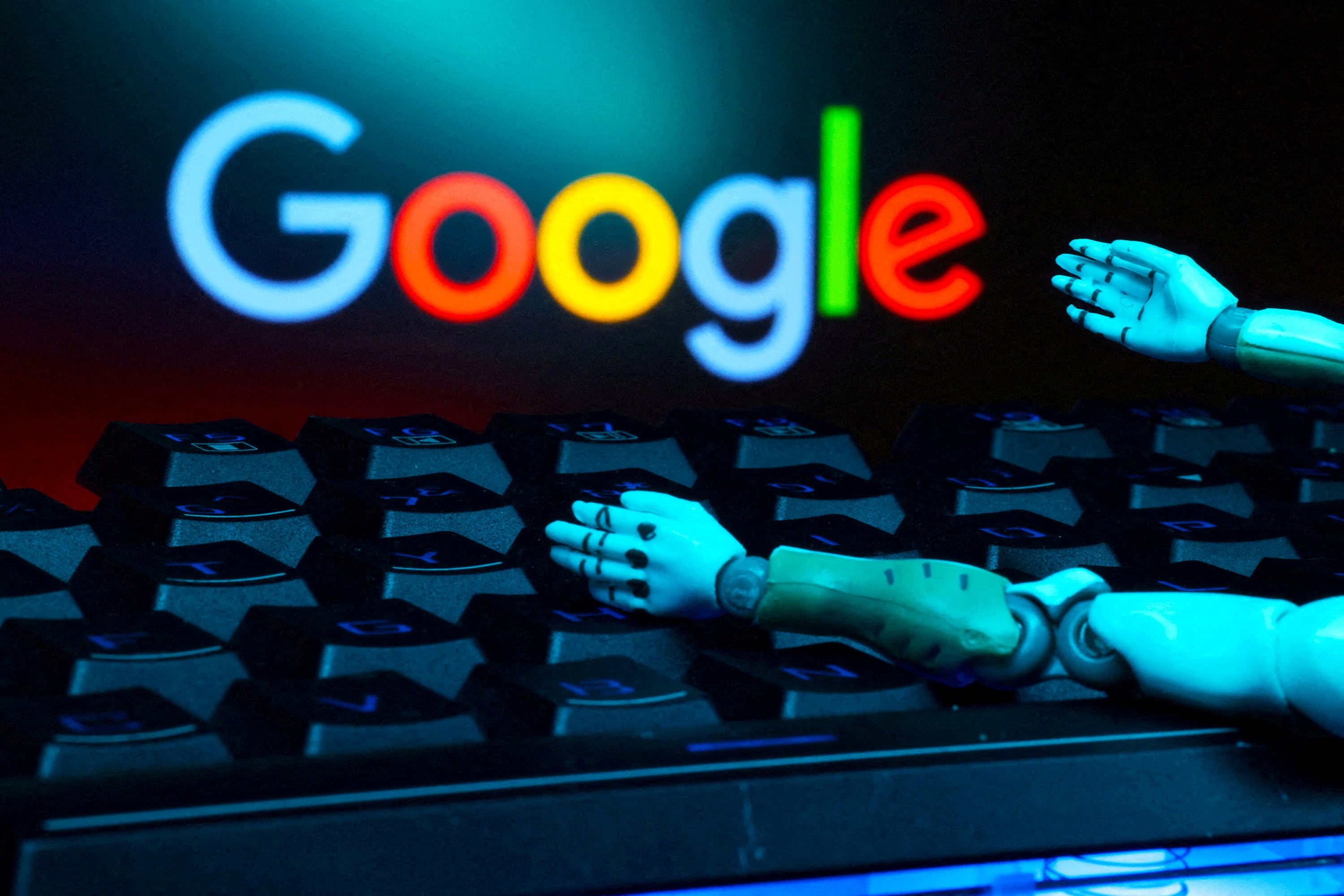
In the rapidly evolving landscape of artificial intelligence, Google has signaled a decisive shift in its competitive strategy. At the company’s recent developer event, Google I/O 2026, the tech giant unveiled its latest model family, “Gemini 3.5,” marking a significant evolution in its pursuit of more capable and intelligent AI agents. The introduction of Gemini 3.5 Flash serves as a direct challenge to the current industry leaders, aiming to reshape how users and developers interact with complex, agent-based workflows.
As we navigate this new chapter in the AI arms race, the focus has moved beyond simple conversational chatbots toward “agentic” capabilities—systems designed to execute multi-step, long-horizon tasks autonomously. With this release, Google is attempting to bridge the gap between high-level intelligence and practical, real-world execution, a move that tech analysts suggest is aimed squarely at reclaiming momentum in the enterprise and developer sectors.
Understanding Gemini 3.5 Flash: Intelligence Meets Execution
At the heart of this announcement is the Gemini 3.5 Flash, the first model in the new series to reach the public. According to Google DeepMind, the model is architected specifically to support users in running complex, agent-based workflows. Unlike its predecessors, which primarily focused on generative capabilities, this version is engineered for performance in coding and agentic tasks, where reliability and long-term planning are essential.

Koray Kavukcuoglu, Google DeepMind CTO and Google’s lead AI architect, emphasized that the 3.5 series represents a “significant leap” in the development of more useful, intelligent agents. For the average user, this means the model is now integrated into the Gemini app and the AI-powered search modes. For the developer community, the model is accessible through the Google Gemini API, supported by platforms such as Google Antigravity, Google AI Studio and Android Studio.
Why the Shift Toward “Agentic” AI Matters
The industry pivot toward agentic workflows is not merely a branding exercise; it reflects a fundamental change in how software interacts with the digital world. Agents are designed to function as digital assistants that can navigate software interfaces, retrieve information, and perform sequences of actions to achieve a goal—rather than simply providing a textual response.
For enterprises, this capability is transformative. By utilizing the Gemini Enterprise Agent Platform, businesses can theoretically automate complex internal processes that previously required human intervention. This move is designed to provide businesses with a scalable, reliable way to integrate AI into their existing infrastructure. The goal is to provide a “long-horizon” capability, allowing the AI to maintain context over extended periods and across multiple interconnected tasks.
Key Deployment Channels
- General Users: Access via the Gemini app and AI-enhanced Google Search.
- Developers: Integration through Google AI Studio and Android Studio using the Gemini API.
- Enterprise: Deployment via the Gemini Enterprise Agent Platform and Gemini Enterprise services.
What Happens Next: The Road to 3.5 Pro
While Gemini 3.5 Flash is now available to billions of users globally, the company is already looking toward the next iteration. Google confirmed that This proves currently finalizing Gemini 3.5 Pro, which is already being utilized in internal testing. The official release for the Pro model is scheduled for next month, which will likely introduce even greater processing power and complex reasoning capabilities to the suite.
For those watching the AI market, the coming weeks will be critical. The competition to provide the most reliable, efficient, and “agentic” model is intensifying, and Google’s focus on integrating these tools directly into its massive ecosystem—from Android to its enterprise cloud offerings—is a clear strategy to lock in both consumer and developer loyalty.
As we monitor these developments, it remains clear that the definition of an “advanced AI” is shifting from a static knowledge base to an active, task-oriented collaborator. We will continue to track the performance of these models as they roll out to broader enterprise environments and see how the developer community utilizes these new APIs to build the next generation of applications.
What are your thoughts on the shift toward agent-based AI? Are you testing the new Gemini 3.5 Flash in your own workflows? Share your experiences in the comments below or join the conversation on our social channels.
Keep reading