TriVerity Bacterial Score: A New Tool for Smarter Antibiotic Stewardship in Emergency Care
The challenge of rapidly and accurately identifying bacterial infections in the emergency department (ED) is a critical one. Over-prescription of antibiotics fuels antibiotic resistance, while under-treatment can lead to devastating consequences for patients. Now, a novel tool – the TriVerity Bacterial score – offers a promising approach to improve diagnostic accuracy and guide more informed antibiotic decisions. This article will delve into how this score works and its potential to revolutionize infection management in your ED.
Understanding the Need for a Better Approach
Currently, clinicians rely on a combination of clinical judgment, vital signs, and laboratory tests to assess the likelihood of bacterial infection.However, these methods can be subjective and often lack the precision needed for optimal patient care. The TriVerity Bacterial score aims to provide a more objective and data-driven assessment, helping you confidently navigate these complex cases.
How the TriVerity Bacterial Score Works
The TriVerity platform analyzes patient data to generate a Bacterial score, categorized into four bands: Very Low, Low, High, and Very High.This score isn’t meant to replace clinical judgment, but rather to augment it, providing an additional layer of details to support your decision-making.
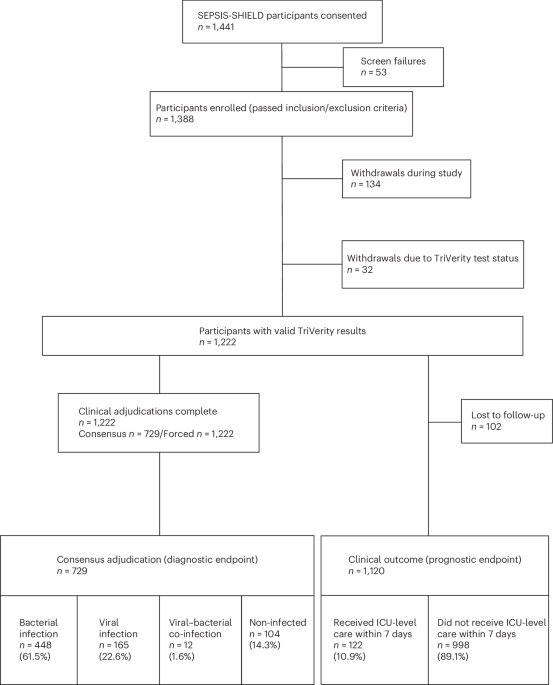
We recently conducted a study to understand how this score performs in real-world clinical scenarios.Here’s what we found:
* Calculating Post-Test Probability: We used likelihood ratios from the TriVerity Bacterial bands to determine how the score impacts the probability of bacterial infection, considering a range of initial clinical suspicions (pre-test probability). This is crucial because you’ll encounter patients with varying levels of suspected infection.
* Defining a Treatment Threshold: We utilized a 69% probability threshold for antibiotic prescription, aligning with established guidelines23. This means antibiotics are considered when the likelihood of bacterial infection reaches this level.
* Score Impact on Probability:
* Very High Bacterial Score: Even with a relatively low initial suspicion of infection (30%), a ‘Very High’ score pushes the post-test probability above the 69% threshold.
* high Bacterial Score: A ‘High’ score elevates the post-test probability to 69% in patients where you already suspect infection is likely (greater than 50% pre-test probability).
* Low & Very Low Bacterial Scores: These scores significantly reduce the post-test probability, suggesting antibiotics may not be necessary in patients with lower initial suspicion (below 90% and 80% respectively).
In essence, the TriVerity Bacterial score helps you confidently identify patients who are most likely to benefit from antibiotics and those who can safely avoid them. (See Figure 3b in the original publication for a visual portrayal of these probabilities).
Identifying Sepsis Risk
Beyond simply identifying bacterial infection, we also investigated the score’s ability to flag patients at risk for bacterial sepsis – a life-threatening condition. Using a surrogate definition of sepsis (adjudicated bacterial infection and a significant change in SOFA score or need for ICU care), we observed:
* High Correlation with sepsis: 68% of patients with a ‘Very High’ bacterial score and a ‘Very High’ Severity score met our definition of sepsis.
* Significant Risk with Combined Scores: 33% of patients with a ‘High’ Bacterial score combined with a ‘Very High’ Severity score (or vice versa) also met the sepsis criteria.
* Low Risk with Low Scores: Critically, no patients with ‘Very Low’ Bacterial and ‘low’ or ‘Very Low’ Severity scores developed sepsis. Less than 3% of those with ‘Low’ scores experienced sepsis. (See Figure 3c in the original publication).
The Power of Data: TriVerity as a Key Predictor
Our logistic regression analysis, which included traditional vital signs and lab values, revealed that the TriVerity Bacterial score was the most significant variable associated with infection status. This was followed by white blood cell (WBC) count and procalcitonin levels (Supplementary Table 7).
What This Means for You and Your Patients
The TriVerity Bacterial score represents a significant step forward in diagnostic accuracy and antibiotic stewardship. By integrating this tool into
Worth a look