
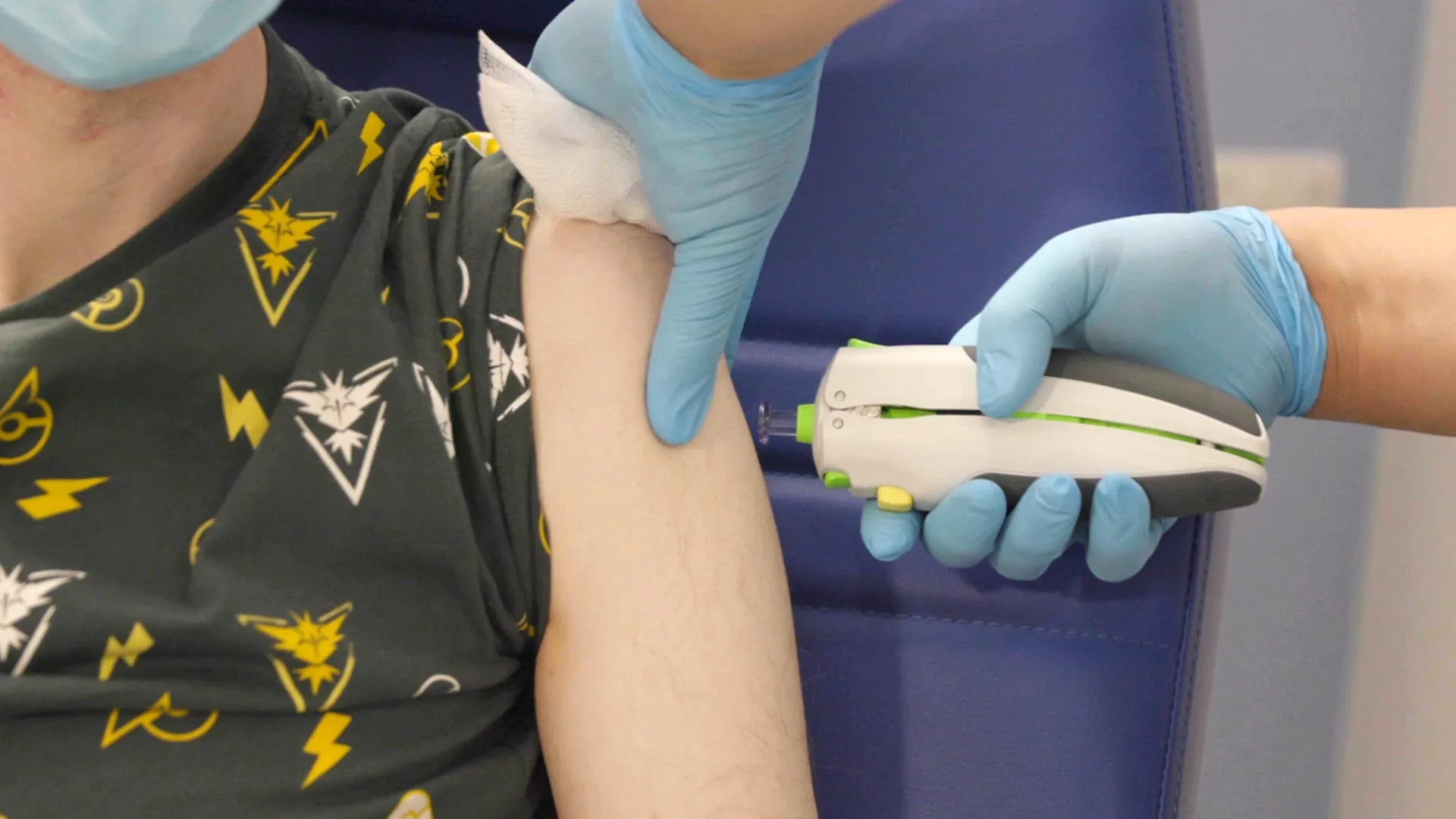
An AI-designed universal coronavirus vaccine has successfully completed its first human clinical trials, demonstrating that it is safe and capable of triggering immune responses against multiple strains of the virus. By utilizing artificial intelligence to identify and target conserved features shared across the coronavirus family, the vaccine aims to provide broad protection against SARS-CoV-2, SARS, and potentially emerging bat-borne viruses. This development marks a significant shift from current reactive vaccine strategies toward a proactive model of pandemic preparedness.
The trial results indicate that the vaccine was well tolerated by participants, with no significant safety concerns reported by investigators. Beyond safety, the primary objective—inducing a robust immune response—was met. The vaccine generated antibodies capable of recognizing not just the current variants of SARS-CoV-2, but also older strains and related viruses within the Sarbecovirus subgenus. This capability suggests the vaccine could remain effective even as the virus continues to mutate, a persistent challenge for traditional vaccine technologies.
The implementation of computational biology in vaccine design represents a departure from traditional methods that rely on isolating a specific virus and studying its surface proteins manually. Instead, researchers used machine learning algorithms to scan the genetic and structural data of various coronaviruses to find “conserved epitopes.” These are specific parts of the virus that remain unchanged across different strains because they are essential to the virus’s ability to function or infect cells. By training the immune system to recognize these unchanging features, the vaccine seeks to create a shield that is difficult for the virus to bypass through mutation.
How AI-designed vaccines target multiple coronavirus strains
The core innovation behind this universal vaccine lies in its use of artificial intelligence to solve the “moving target” problem. Most current vaccines, including those used to combat COVID-19, focus on the spike protein of a specific variant. While effective against that variant, the spike protein is highly prone to mutation, which is why scientists must frequently update booster shots to match new lineages like Omicron.
In this new approach, AI models—similar to the protein-folding technologies developed by systems like AlphaFold—were used to map the structural landscape of the entire coronavirus family. The AI identified regions of the virus that are functionally indispensable. Because these regions are critical to the virus’s survival, they cannot easily mutate without the virus losing its ability to infect hosts. By designing an immunogen that focuses on these highly stable regions, the vaccine provides a broader “umbrella” of protection.
This method targets the Sarbecovirus subgenus, which includes the viruses responsible for the original SARS outbreak and the ongoing COVID-19 pandemic. The goal is to create a “pan-sarbecovirus” vaccine. If a new virus jumps from animals to humans, a vaccine targeting these conserved sites could theoretically be deployed immediately, rather than waiting months to develop a strain-specific formula.
Why a universal vaccine could prevent future pandemics
The ability to provide protection against multiple coronaviruses simultaneously has profound implications for global health security. The World Health Organization (WHO) has long emphasized the need for “prototype pathogen” approaches to pandemic preparedness, which involve developing vaccines for entire families of viruses before a specific outbreak occurs. The WHO’s response to COVID-19 highlighted how the speed of viral evolution can outpace the speed of vaccine manufacturing.

A universal vaccine changes the timeline of pandemic response in several ways:
- Reduced Variant Lag: Because the vaccine targets parts of the virus that do not change, the need for seasonal or variant-specific updates is significantly diminished.
- Pre-emptive Defense: If a new coronavirus emerges in a zoonotic setting (animal-to-human jump), a population already vaccinated with a pan-coronavirus agent would have a baseline level of immunity.
- Streamlined Manufacturing: Instead of pivoting production lines to new mRNA sequences for every new variant, manufacturers can maintain a consistent production standard for a single universal dose.
This shift could prevent the cyclical “boom and bust” of infection waves that characterized the early years of the COVID-19 pandemic. By stabilizing the level of population immunity, the burden on healthcare systems could be significantly reduced during future viral emergence events.
The difference between traditional and AI-driven vaccine design
To understand the impact of this breakthrough, it is necessary to compare the traditional vaccine development lifecycle with the new AI-integrated workflow. The following table outlines the fundamental differences in how these two approaches handle viral evolution.
| Feature | Traditional Vaccine Design | AI-Driven Universal Design |
|---|---|---|
| Primary Target | Specific viral variant (e.g., Omicron) | Conserved viral epitopes (unchanging parts) |
| Adaptability | Low; requires new formulations for mutations | High; designed to resist mutation bypass |
| Development Focus | Reactive (responding to current strains) | Proactive (targeting viral families) |
| Design Process | Biological isolation and testing | Computational modeling and protein design |
While traditional vaccines remain highly effective for immediate protection against dominant strains, they act as a “chase” mechanism. The AI-driven approach acts as a “blockade,” attempting to close the doors that the virus uses to enter human cells, regardless of which specific version of the virus is attempting the entry.
What happens next for pan-coronavirus immunization?
While the successful human trial is a major milestone, the vaccine is not yet ready for mass distribution. The next phase of research will involve larger, multi-center Phase II and Phase III clinical trials. These larger studies are required to confirm long-term efficacy and to observe how the vaccine performs across more diverse populations, including different age groups and individuals with varying underlying health conditions.

Regulatory bodies, such as the U.S. Food and Drug Administration (FDA) and the European Medicines Agency (EMA), will require extensive data on the durability of the immune response. Scientists need to determine how long the protection lasts and whether the “universal” nature of the vaccine holds up against highly divergent strains that may emerge in the coming decades.
Furthermore, the integration of AI into the pharmaceutical pipeline will likely accelerate. As computational models become more refined, the time between identifying a new viral threat and designing a candidate vaccine could shrink from months to weeks. This synergy between biotechnology and artificial intelligence is expected to become the standard for infectious disease management.
Next Milestone: Researchers are expected to release detailed data from the Phase I trial participants in the coming months, which will provide more granular information on the specific types of T-cell and B-cell responses triggered by the vaccine.
What are your thoughts on the role of AI in medical breakthroughs? Do you believe universal vaccines are the key to ending pandemic cycles? Let us know in the comments below and share this article with your network.