
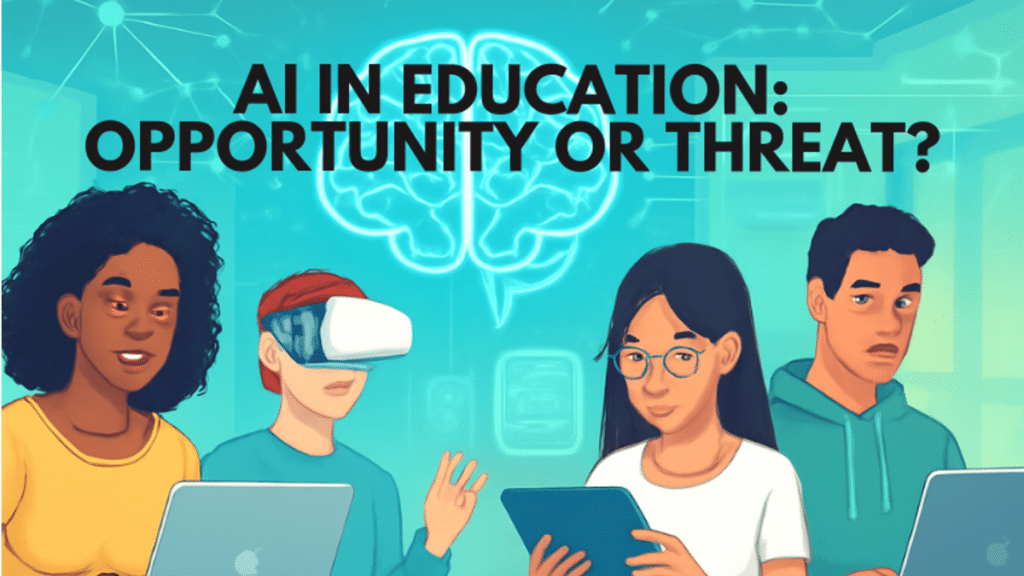
The intersection of artificial intelligence and the classroom has moved beyond the realm of science fiction, evolving into one of the most debated frontiers of modern pedagogy. For educators and policymakers, the central question is no longer whether AI will enter the school system, but whether it will serve as a powerful ally in democratizing knowledge or a threat to the fundamental cognitive skills of the next generation.
Artificial intelligence in education, often referred to as AIEd, is the strategic application of AI technologies within educational environments. Far from being a single tool, this field is a complex convergence of generative AI, automated decision-making based on data, AI ethics, and data privacy as detailed in comprehensive educational archives. As these systems—ranging from standalone software to integrated hardware—turn into more autonomous, they are fundamentally altering how students learn and how teachers instruct.
From a global perspective, the stakes are high. International bodies like UNESCO view AI as a catalyst that could accelerate progress toward Sustainable Development Goal 4 (SDG 4), which aims to ensure inclusive and equitable quality education for all. However, this potential is shadowed by rapid technological developments that have frequently outpaced the creation of necessary regulatory frameworks and political debates.
The Promise: AI as a Pedagogical Ally
When integrated thoughtfully, AI offers a level of personalization that was previously impossible in traditional classroom settings. One of the most significant breakthroughs is the creation of adaptive learning materials. These systems can analyze a student’s performance in real-time and adjust the difficulty or delivery of content to meet their specific needs, thereby improving student motivation and learning outcomes.
For educators, the benefits extend to the reduction of administrative burdens. Generative AI is increasingly used as a tool for teachers to:
- Generate source code for computer science curricula.
- Create diverse text-based content and multimedia materials.
- Optimize the digital production of educational resources.
- Automate repetitive tasks, allowing more time for direct student mentorship.
Research into generative AI’s impact on teaching-learning processes has highlighted these efficiencies, noting that the automation of routine tasks can free educators to focus on higher-order pedagogical challenges according to studies from the Universidad Nacional Autónoma de México (UNAM). This shift is already being documented in several nations, including Mexico, Brazil, Uruguay, South Korea, and China, where various levels of AI integration are being tested.
The Risks: Ethical Dilemmas and Cognitive Threats
Despite the efficiencies, the integration of AI is not without significant peril. A primary concern among psychologists and educators is the potential for a “loss of critical skills.” When students rely too heavily on AI for synthesis and problem-solving, there is a risk of non-reflective leverage, where the tool replaces the thinking process rather than augmenting it.
Beyond the cognitive impact, there are systemic risks associated with how AI is deployed. There is an ongoing debate regarding the “privatization” of higher education and public schools as they become more dependent on proprietary AI technologies. Some observers warn that governments could use AI as an ideological project to normalize centralized power and automated decision-making in the educational sphere.
The ethical landscape is further complicated by concerns over data privacy and the “digital divide.” If AI tools are only available to affluent institutions or nations, the technology could widen the existing gap in access to knowledge and research rather than closing it.
A Human-Centered Approach to Global Policy
To mitigate these risks, the international community is pushing for a “human-centered” approach to AI. UNESCO has emphasized that the goal of “AI for all” must ensure that the technological revolution does not amplify existing inequalities. This involves a commitment to inclusion and equity, ensuring that AI serves as a tool for diversity in cultural expression and knowledge access as outlined in UNESCO’s AI and Education initiatives.
A key milestone in this effort is the Beijing Consensus, under which UNESCO has developed specific guides for policymakers. These guidelines are designed to prepare educational leaders to handle the complexities of AI, focusing on:
- AI Literacy: Ensuring both teachers and students understand how AI works and its limitations.
- Regulatory Frameworks: Creating laws that protect student data and ensure algorithmic transparency.
- Ethical Integration: Moving AI from a “dominant paradigm” to one of many tools within a broader pedagogical approach.
Key Takeaways for the Future of AIEd
| Potential Benefits (Ally) | Potential Risks (Threat) |
|---|---|
| Personalized, adaptive learning materials | Erosion of critical thinking and reflection |
| Automation of administrative tasks for teachers | Increased privatization of public education |
| Accelerated progress toward SDG 4 (Equity) | Widening of the global technological gap |
| Enhanced content creation (code, multimedia) | Centralization of power via automated decisions |
What Happens Next?
The trajectory of AI in education will be largely defined by the implementation of the 2030 Education Agenda. As Member States work with UNESCO to integrate these technologies, the focus will remain on creating frameworks that prioritize human agency over algorithmic autonomy. The next critical phase involves the widespread adoption of AI literacy programs to ensure that the “AI for all” promise becomes a reality rather than a corporate slogan.
As we navigate this transition, the goal is clear: to utilize AI as a support system that enhances the human element of teaching, rather than replacing it. The ongoing dialogue between policymakers, ethicists, and educators will determine if AI becomes the ultimate equalizer or a new barrier to genuine learning.
Do you believe AI will eventually replace the role of the teacher, or will it simply change the nature of the job? Share your thoughts in the comments below.