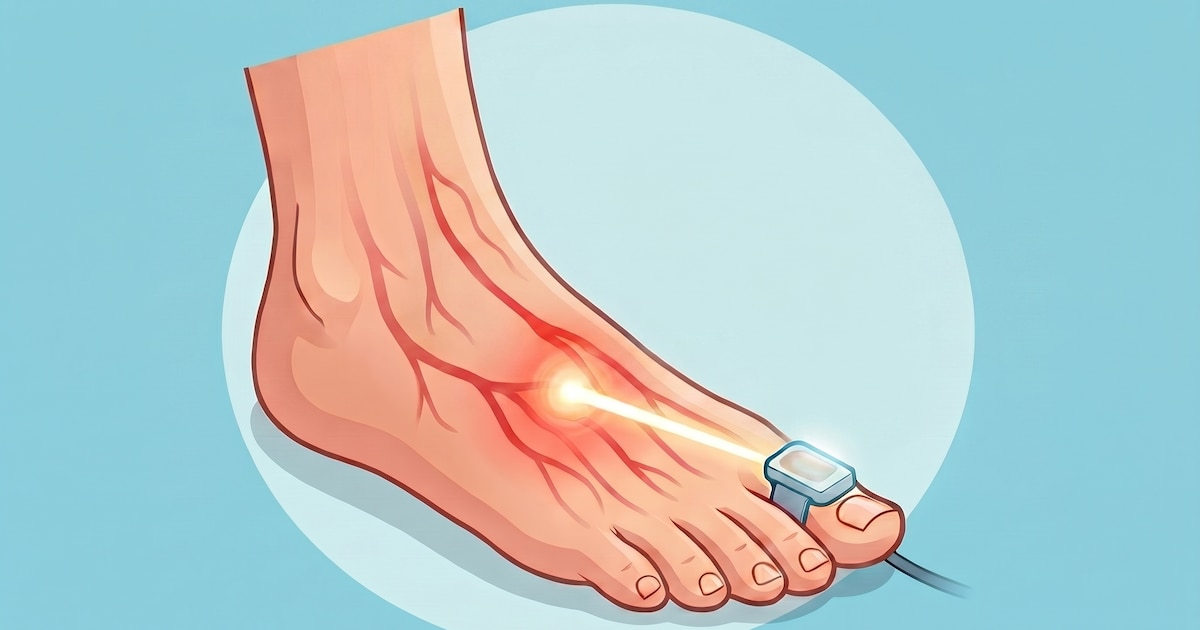
For millions of people living with cardiovascular issues, the difference between maintaining mobility and facing a life-altering surgery often comes down to a single factor: timing. Peripheral Artery Disease (PAD), a condition that restricts blood flow to the limbs, frequently remains a silent predator, progressing unnoticed until the damage becomes irreversible. However, a breakthrough in screening technology developed at the University of California San Diego is offering a new path toward early detection and the prevention of millions of avoidable amputations.
The innovation centers on the marriage of a simple, non-invasive measurement technique and the predictive power of artificial intelligence. By capturing subtle changes in blood volume in the toe, researchers have developed a method to identify PAD with a high degree of accuracy, potentially moving the diagnostic process out of specialized clinics and into the palms of patients’ hands via smartphone technology.
This shift in Peripheral Artery Disease screening is not merely a technical achievement. it is a critical intervention for public health. Because PAD often goes undetected until complications arise, many patients only seek help when they are already at high risk for limb loss. By lowering the barriers to diagnosis, this technology could fundamentally change the trajectory of care for those most vulnerable to the disease.
The Silent Threat of Peripheral Artery Disease
Peripheral Artery Disease occurs when plaque—a combination of cholesterol and other substances—builds up inside the blood vessels. This process, known as atherosclerosis, narrows the arteries and restricts the flow of oxygen-rich blood to the legs. When tissues are deprived of necessary nutrients and oxygen, the result can be chronic pain, non-healing wounds, and, in severe cases, tissue death (gangrene).
The scale of the crisis is significant. It is estimated that Peripheral Artery Disease affects eight to 12 million Americans. Despite its prevalence, PAD is notorious for its lack of early, obvious symptoms, meaning a vast number of individuals are living with the condition without knowing it. This delay in diagnosis is a primary driver of limb amputations, as the disease is often only caught once the blood flow is so severely restricted that the limb can no longer be saved.
the burden of PAD is not distributed evenly. The condition disproportionately impacts marginalized communities, where limited access to preventative healthcare and higher rates of underlying risk factors can accelerate the progression of the disease. For these populations, a cumbersome diagnostic process is not just an inconvenience—it is a barrier that often leads to worse clinical outcomes.
Overcoming the Barriers of Traditional Diagnosis
Until now, the gold standard for screening PAD has been the ankle-brachial index (ABI) test. While effective, the ABI test is far from streamlined. It requires a visit to a specialized clinic and involves a time-consuming process of comparing the blood pressure in the ankle to the blood pressure in the arm.
For many patients, the requirements of the ABI test create significant hurdles. The need for specialized equipment and clinical appointments means that those in rural areas or those with limited mobility may avoid screening until their symptoms become acute. This “diagnostic gap” is where the risk of amputation grows most rapidly.
The goal of the UC San Diego team was to replace this cumbersome process with something rapid and accessible. By focusing on a screening tool that does not require a specialized clinic, the researchers aim to catch the disease in its early stages, allowing for medical interventions—such as lifestyle changes or medication—that can stop the progression of plaque buildup before it leads to critical ischemia.
How AI and Photoplethysmography Transform Screening
The new screening method utilizes a technology called photoplethysmography, or PPG. While the name is complex, the mechanism is straightforward: PPG uses light to measure changes in blood volume in the microvasculature of the tissue. In this specific application, the technology is used on the toe to capture the nuances of blood flow.

While PPG has been used in various medical contexts for years, the real breakthrough comes from the integration of machine learning. The researchers at University of California San Diego coupled the blood-volume data with artificial intelligence to analyze patterns that a human clinician might miss. The AI can detect subtle irregularities in the blood flow waveforms that are indicative of PAD, providing a high degree of accuracy in identifying those who need further medical attention.
The ultimate vision for this technology is the development of a smartphone app. Because smartphones are already equipped with cameras and flashlights—the basic components needed for PPG—the AI could potentially analyze a simple scan of a patient’s toe. This would democratize access to screening, allowing patients to check their risk levels from home and providing a clear signal to seek professional care long before a wound develops or an amputation becomes necessary.
Addressing Health Disparities in Cardiovascular Care
One of the most vital aspects of this technological leap is its potential to reduce health inequities. Because PAD disproportionately affects marginalized communities, any tool that removes the need for a specialized clinic visit inherently increases equity in care. When diagnosis is tied to the ability to travel to a high-end medical facility, the most vulnerable populations are the most likely to be missed.
By shifting the point of care toward a more accessible, AI-driven model, the medical community can begin to close the gap in PAD outcomes. Early detection in these communities could lead to a drastic reduction in the rate of amputations, which often have a devastating impact on the quality of life, employment opportunities and mental health of the patient.
Key Takeaways for Patients and Providers
- What is PAD? A condition caused by plaque buildup in the arteries that restricts blood flow to the legs, potentially leading to amputation.
- The Innovation: UC San Diego researchers are using toe photoplethysmography (PPG) and AI to screen for the disease.
- The Advantage: Unlike the cumbersome ABI test, this method is rapid and could eventually be deployed via smartphone apps.
- The Impact: Early detection can prevent the progression of the disease and reduce the high rate of amputations, particularly in marginalized communities.
- Scale: The disease affects between 8 and 12 million people in the United States alone.
What Happens Next?
The integration of AI into cardiovascular screening represents a broader trend toward “proactive” rather than “reactive” medicine. As the UC San Diego team continues to refine the accuracy of their machine learning models, the focus will likely shift toward clinical validation and the regulatory hurdles required to bring a smartphone-based screening tool to the general public.

For those at risk—particularly individuals with diabetes, hypertension, or a history of smoking—the emergence of these tools provides a reason for optimism. The transition from a time-consuming clinic visit to a rapid digital scan could save millions of limbs and significantly improve the long-term health outcomes for patients worldwide.
The medical community now awaits further data on the scalability of this AI model and its performance across diverse patient populations to ensure that the tool is as effective for everyone as it is in a controlled research setting.
Do you believe AI-driven screening will become the standard for cardiovascular health? Share your thoughts in the comments below or share this article with someone who may be at risk for PAD.
Keep reading
- Taifun Bavi: 1,7 Millionen Menschen in China zur Flucht gezwungen – 20 Minuten
- Germany’s June Drownings Reach 23-Year High
- New Guidelines Issued for Alzheimer’s Disease Diagnosis and Detection (newsdirectory3.com)
- Columbia Study Links Serotonin Signaling to Mitral Valve Disease Progression (archyworldys.com)