
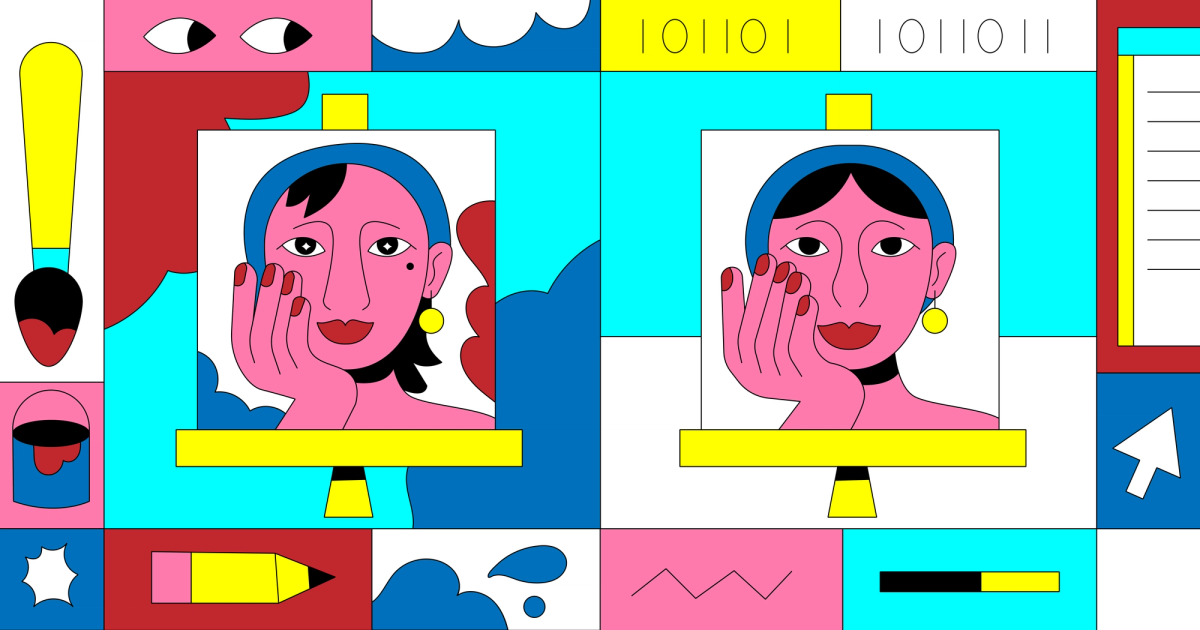
We instinctively shy away from anything that feels inauthentic. This is precisely why human creativity remains paramount. Artificial intelligence doesn’t experience the world through dreams or emotions; it simply compiles existing data, rather than truly creating something new.
The Ontological Threat to Human Creativity
Recent research indicates our negative reaction to AI-generated content extends beyond mere dislike. A growing concern is that art produced by AI challenges our basic belief in creativity as a uniquely human trait. Consequently, many creators are understandably protective of their work, viewing AI’s encroachment as an intrusion into a distinctly human domain.
You might be wondering if AI can still be a useful tool, even if it doesn’t create original art. Can it be incorporated into your marketing strategies?
Proceed with caution. Current data suggests consumers are increasingly averse to AI in marketing and advertising. A recent report revealed that consumer enthusiasm for AI-generated content has plummeted from 60% in 2023 to just 26% in 2025, with viewers dismissing it as AI slop
-content they perceive as uninspired, repetitive, and often lacking clear attribution.
It’s also true that many AI-generated advertisements are noticeably flawed or unsettling. A potential customer who feels uneasy upon recognizing AI-generated content-experiencing a sense of something unnatural
-is unlikely to engage further.
While advertising isn’t necessarily art, AI has yet to produce any ad campaigns that truly resonate with audiences, leave a lasting cultural impact, or fundamentally alter consumer behaviour. There hasn’t been a modern equivalent of Apple’s 1984 Super Bowl ad, Nike’s “Just Do It” campaign, the “Got Milk?” series, or coca-Cola’s “Hilltop” commercial. AI isn’t yet capable of replicating the brilliance of a Don Draper, though his copywriters might have appreciated the speed of AI-generated options.
Though, the rise of AI art could have a positive side effect: it may encourage us to appreciate the value of human artists. A Scientific Reports study found that comparing images labeled as human-made to those labeled as AI-made actually increases perceptions of human creativity, potentially boosting the perceived value of human effort.
Human creativity and dedication are qualities we’ll undoubtedly miss if they diminish. The question remains whether we’ll value these qualities enough to regulate AI’s ability to replicate and repurpose the work of human artists.It’s also uncertain if the economic benefits of cheap, rapidly generated content will outweigh the importance of supporting human creators.
Did You No? According to a recent survey by Statista (November 2024), 78% of consumers believe human-created content is more trustworthy than AI-generated content.
Leveraging Human Creativity in a digital Age
I’ve found that authenticity is the key differentiator in today’s crowded digital landscape. Consumers are increasingly discerning and can quickly identify content that lacks a genuine human touch. This presents a notable opportunity for brands and creators who prioritize originality and emotional connection.
Here’s what works best: focus on storytelling, personal experiences, and unique perspectives. Don’t try to compete with AI on speed or volume; instead, compete on quality, authenticity, and the ability to forge meaningful connections with your audience.
Consider these strategies:
- Invest in Human Talent: Prioritize hiring and supporting skilled writers,designers,and artists.
- Embrace Collaboration: Foster partnerships between humans and AI, using AI as a tool to enhance, not replace, human creativity.
- Transparency is Key: Be upfront with your audience about the use of AI in your content creation process.
- Focus on Emotional Resonance: Create content that evokes emotions, tells compelling stories, and connects with your audience on a personal level.
Pro Tip: Don’t be afraid to showcase the “human behind the brand.” Share stories about your team, your values, and your creative process. This builds trust and fosters a stronger connection with your audience.
The Power of Authentic Storytelling
Authentic storytelling is more crucial than ever. Consumers are craving genuine connections and are drawn to brands that share their values and tell compelling stories. AI can assist with research and data analysis, but it cannot replicate the human ability to craft narratives that resonate emotionally.
For example, Patagonia’s commitment to environmental activism isn’t just a marketing tactic; it’s deeply ingrained in their brand identity and resonates with their target audience. this authenticity builds trust and loyalty, something AI simply cannot replicate.
AI as a Creative Assistant, Not a Replacement
AI can be a valuable tool for creative professionals, but it should be viewed as an assistant, not a replacement. It can automate repetitive tasks, generate ideas, and provide insights, but it lacks the critical thinking, emotional intelligence, and nuanced understanding of human culture necessary to create truly impactful work.
Think of AI as a powerful paintbrush or a sophisticated editing tool. It can enhance your creative process, but it cannot replace the artist’s vision and skill.
The Future of Creativity: A Human-Centered Approach
The future of creativity lies in a human-centered approach that leverages the strengths of both humans and AI. We must prioritize authenticity, emotional connection, and the unique perspectives that only humans can offer. As AI becomes more prevalent, the value of human creativity will only continue to grow.
Ultimately, the success of any creative endeavor depends on its ability to connect with people on a human level.AI might potentially be able to generate content, but it cannot replicate the power of human emotion, imagination, and storytelling. The soul of it just leaves, and it feels unnatural
, as one observer aptly put it.
Are you prepared to champion human creativity in an increasingly automated world?
Here’s a quick comparison:
| Feature | Human creativity | AI-Generated Content |
|---|---|---|
| Originality | High | Low to moderate (based on existing data) |
| Emotional Connection | Strong | Weak |
| Authenticity | Genuine | Simulated |
| Critical Thinking | High | Limited |
The importance of human creativity will only increase as AI becomes more integrated into our lives. It’s a skill worth nurturing, celebrating, and protecting.
Evergreen Insights: Cultivating Your Creative Edge
Irrespective of technological advancements, certain principles of creativity remain timeless. Cultivate curiosity, embrace experimentation, and prioritize continuous learning. Seek inspiration from diverse sources, challenge your assumptions, and don’t be afraid to fail.Remember that creativity is a muscle that needs to be exercised regularly.
Frequently Asked Questions About AI and Creativity
- What is the biggest threat of AI to human creativity? The primary concern is the potential devaluation of human skill and effort, as AI-generated content becomes more prevalent and potentially cheaper.
- Can AI truly be creative? currently,AI lacks the consciousness,emotions,and lived experiences necessary for genuine creativity. It excels at pattern recognition and replication, but not at original thought.
- How can I use AI ethically in my creative work? Use AI as a tool to enhance your creativity, not replace it. be obvious about your use of AI and prioritize originality and authenticity.
- Will AI eventually replace human artists? While AI may automate certain tasks, it’s unlikely to fully replace human artists.The demand for authentic, emotionally resonant content will continue to drive the need for human creativity.
- How can I protect my creative work from AI replication? Explore options like watermarking, copyright registration, and advocating for stronger intellectual property laws.
- What role does storytelling play in differentiating human-created content? Storytelling allows for the conveyance of emotion, personal experience, and unique perspectives, elements AI struggles to replicate effectively.
- Is there a growing consumer preference for human-created content? Yes, recent data indicates a significant preference for content perceived as authentic and created by humans, driven by a desire for trust and emotional connection.

Ninajirachi Wins Australian Music Prize for I Love My Computer | 2025 AMP Winner
Pochettino Premier League Return: Manager Reveals Desire to Manage in England Again


Related Posts

Trump Revamps US Digital Services After Musk Firings | Tech Exper ...
December 24, 2025
Texas Age Verification Law Blocked: App Store Ruling Explained
December 24, 2025



![Season 1 Finale Review: [Show Name] Delivers a Stunning Conclusion](https://i0.wp.com/consequence.net/wp-content/uploads/2025/12/pluribus-episode-9-finale-rhea-seehorn-2.jpg?resize=150%2C100&ssl=1 "Season 1 Finale Review: [Show Name] Delivers a Stunning Conclusion")