Revolutionizing Hospital Efficiency: How AI-Powered Patient Throughput is Ending the Lag
Are you a hospital administrator grappling with persistent capacity constraints and frustrating patient flow bottlenecks? The customary methods of managing patient throughput – relying on retrospective data - are simply no longer sufficient in today’s dynamic healthcare landscape. It’s time to embrace a proactive approach, and a new generation of artificial intelligence (AI) solutions is leading the charge. This article dives deep into how AI is transforming hospital operations,focusing on innovative platforms like TeleTracking’s Decision IQ and its real-world impact on organizations like UofL Health.
The challenge is significant. According to a recent report by McKinsey, hospitals are facing a 1-2% increase in emergency department visits annually, exacerbating existing capacity issues. https://www.mckinsey.com/industries/healthcare/our-insights/the-future-of-us-hospital-operations This isn’t just about comfort; it directly impacts patient outcomes, staff burnout, and the financial health of healthcare systems. But what if you could predict these bottlenecks before they happen?
The Shift to Proactive Patient Flow Management
For decades, hospitals have operated on a reactive model. Analyzing past data to understand what happened is valuable, but it doesn’t prevent future issues. Artificial intelligence is changing this paradigm by enabling proactive, system-wide visibility. The key lies in creating a “digital twin” – a virtual replica of the hospital’s operations – powered by AI and real-time data.
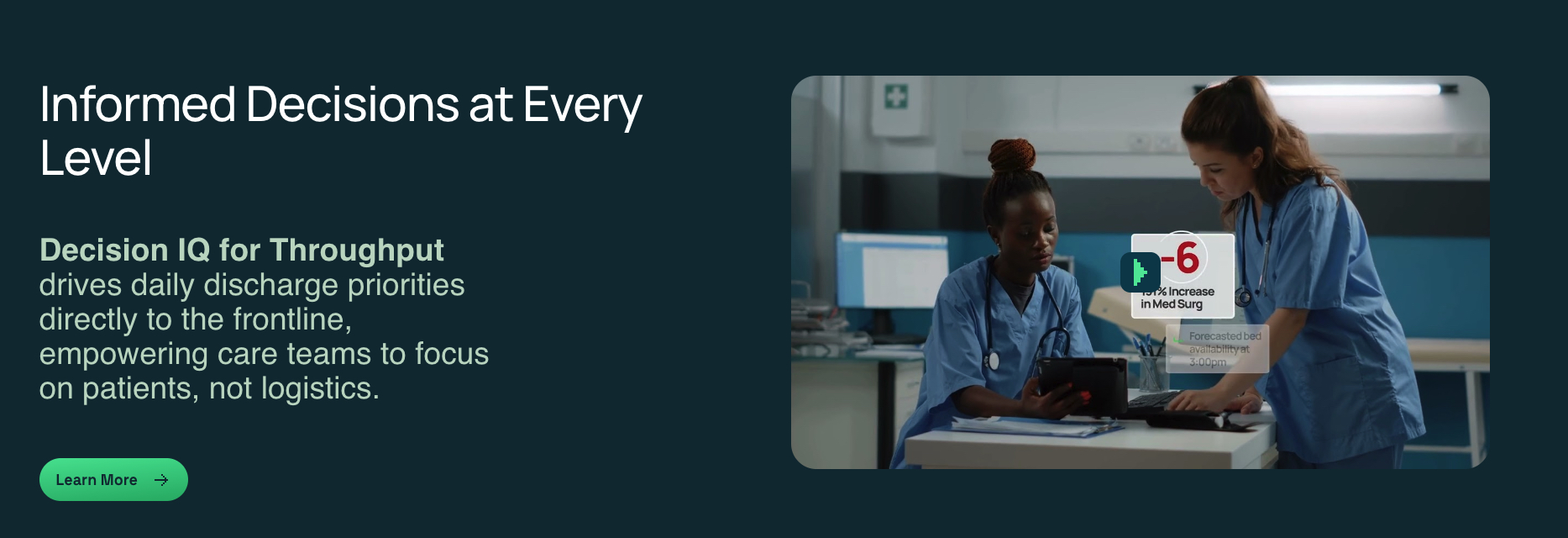
TeleTracking Technologies recently launched decision IQ, a groundbreaking platform designed to do just that. Decision IQ isn’t simply another data analytics tool; it’s an AI-driven computational twin that unifies data from every department and ancillary service within a hospital. This unified view allows care teams to anticipate challenges, optimize resource allocation, and ultimately, reduce manual coordination. This is a significant leap forward in healthcare information technology.
How does it work? Decision IQ leverages machine learning algorithms to analyze vast datasets, identifying patterns and predicting potential bottlenecks. It considers factors like patient acuity, staffing levels, bed availability, and scheduled procedures to provide real-time, proactive guidance. Think of it as a sophisticated early warning system for hospital operations.
UofL Health: A Real-World Success Story
The proof is in the implementation.University of Louisville Health (UofL Health) recognized the need for a more intelligent approach to capacity management and became an early adopter of Decision IQ. They were facing persistent challenges with patient flow, impacting access to care and straining resources.
Deanna Parker, VP and Chief Nurse Executive at Downtown UofL Health, highlighted the transformative impact of the platform: “Decision IQ gives us a forward-looking view of our operations, helping us anticipate were throughput challenges will occur and coordinate across departments before they impact patient care.”
This proactive approach is crucial. Instead of reacting to crises, UofL Health can now proactively adjust staffing levels, optimize bed assignments, and streamline processes to ensure patients receive timely and efficient care.The benefits extend beyond patient care, positively impacting staff morale and reducing operational costs.
Beyond Capacity: The Broader Implications of AI in Patient Flow
The application of AI in healthcare extends far beyond simply managing bed capacity. Consider these additional benefits:
* Reduced Wait Times: Predictive analytics can definitely help optimize scheduling and resource
Related reading