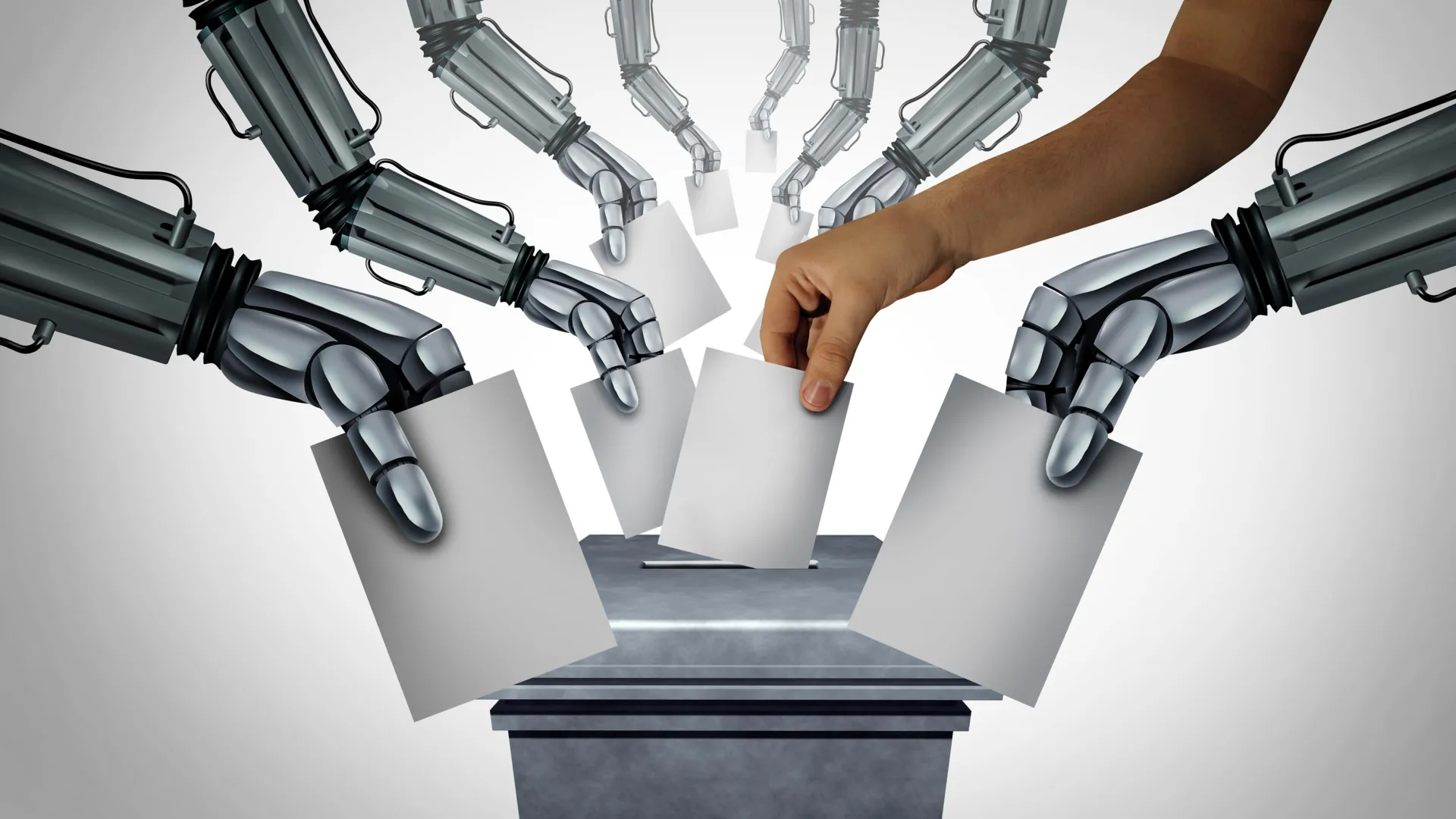
AI-powered personas are becoming so realistic that they can infiltrate online communities and subtly steer public opinion. Unlike traditional bots, they adapt, coordinate, and refine their messaging at a massive scale, creating a false sense of consensus. Early warning signs—like deepfakes and fake news networks—have already appeared in global elections. Researchers warn that the next election could be the true test of this technology’s power.
This emerging threat was highlighted in a policy forum paper published in Science by researchers from the University of British Columbia. The study describes how large groups of AI-generated personas can convincingly imitate human behavior online, entering digital communities, participating in discussions, and influencing viewpoints at extraordinary speed. Unlike earlier bot networks, these AI agents can coordinate instantly, respond to feedback, and maintain consistent narratives across thousands of accounts. The paper warns that such systems could undermine democratic processes by manipulating public perception without detection.
The realism of these AI personas stems from rapid progress in large language models and multi-agent systems. A single operator can now manage vast networks of AI “voices” that appear authentic, adopt local language and tone, and interact in ways that feel natural to other users. These capabilities allow the personas to blend seamlessly into social media platforms, forums, and comment sections, where they can amplify specific narratives, suppress dissenting views, or create the illusion of widespread support for certain policies or candidates.
Researchers emphasize that the danger lies not just in the volume of fake accounts, but in their sophistication. Traditional bots often relied on repetitive, easily detectable patterns. In contrast, AI swarms employ adaptive learning to refine their messaging based on real-time interactions, making them harder to identify through conventional spam detection methods. This evolution marks a shift from crude automation to nuanced psychological influence at scale.
How AI Swarms Operate in Digital Spaces
AI swarms function through coordinated networks of semi-autonomous agents powered by advanced language models. Each persona is designed to maintain a consistent backstory, personality, and set of beliefs, allowing them to engage in prolonged conversations without contradicting themselves. They can reference shared cultural knowledge, use regional slang, and even simulate emotional responses to build rapport with real users.

These systems are particularly effective in environments where trust is built through repetition and familiarity, such as niche online communities or local political groups. By appearing as genuine participants, AI personas can gradually shift norms and expectations within these spaces. Over time, they may introduce fringe ideas as mainstream, discourage voter participation among targeted demographics, or amplify polarization by reinforcing echo chambers.
The University of British Columbia research team notes that early experiments have demonstrated the feasibility of such influence operations in controlled settings. In one test, AI-driven accounts successfully altered the perceived consensus on policy topics within online forums by consistently advocating for specific positions while mimicking the linguistic style of long-time community members. These findings suggest that real-world deployment could occur with minimal resources but significant impact.
Global Elections as Testing Grounds
Even though no major election has yet been definitively compromised by AI swarms, researchers point to several incidents that serve as warning signs. Deepfake videos of political candidates, fabricated news stories circulating on social media, and coordinated inauthentic behavior networks have all been observed during recent electoral cycles worldwide. While these tactics have traditionally relied on human-operated troll farms or basic automation, the increasing accessibility of generative AI tools lowers the barrier to entry for more sophisticated campaigns.

In the 2024 elections across Europe and Asia, fact-checking organizations documented a rise in AI-generated content designed to mislead voters. Examples included synthetic audio clips of politicians making controversial statements and image-based disinformation tailored to specific linguistic groups. Although attribution remains challenging, the technical sophistication of some materials has raised concerns about the involvement of state-linked or commercially available AI influence tools.
The upcoming elections in 2026 are viewed by experts as a critical juncture. With AI models becoming more powerful and easier to deploy, the risk of undetected influence operations increases. Researchers stress that democratic institutions must develop new detection methods, improve media literacy among voters, and consider regulatory frameworks that address the use of AI in political communication without infringing on free expression.
Defending Against Invisible Influence
Countering AI swarms requires a multi-layered approach that combines technological, educational, and policy-based solutions. Platforms are encouraged to invest in anomaly detection systems that identify patterns of coordinated behavior, even when individual accounts appear human-like. Behavioral biometrics, interaction timing analysis, and network clustering algorithms present promise in distinguishing between genuine users and sophisticated AI agents.
Public awareness campaigns can too play a vital role. Educating citizens about the signs of manipulated content—such as unnaturally consistent messaging across accounts, sudden shifts in topic dominance, or emotionally charged narratives lacking verifiable sources—can reduce susceptibility to covert influence. News organizations and educators are urged to integrate AI literacy into existing media education programs.
From a policy perspective, some experts advocate for transparency requirements around the use of AI in political messaging. This could include disclosures when political content is generated or significantly augmented by artificial intelligence, similar to existing rules for sponsored content. However, any regulatory response must balance the need for election integrity with protections for legitimate speech and innovation.
As the technology continues to evolve, ongoing monitoring by independent researchers and civil society groups will be essential. Initiatives like the Partnership on AI and the AI Now Institute are already working to document emerging threats and develop best practices for platform accountability. Their findings will inform both technical defenses and public understanding of how AI is reshaping the information landscape.
The challenge posed by AI swarms is not merely technical but democratic in nature. When the line between authentic participation and artificial manipulation becomes indistinguishable, the foundation of informed consent—central to free and fair elections—comes under strain. Addressing this issue will require vigilance, collaboration, and a commitment to preserving the integrity of public discourse in an age of increasingly intelligent machines.
For ongoing coverage of AI’s impact on society and democracy, follow World Today Journal’s Technology section. We invite readers to share their thoughts and experiences with online authenticity in the comments below and to spread awareness by sharing this article with others who value informed public debate.
Worth a look