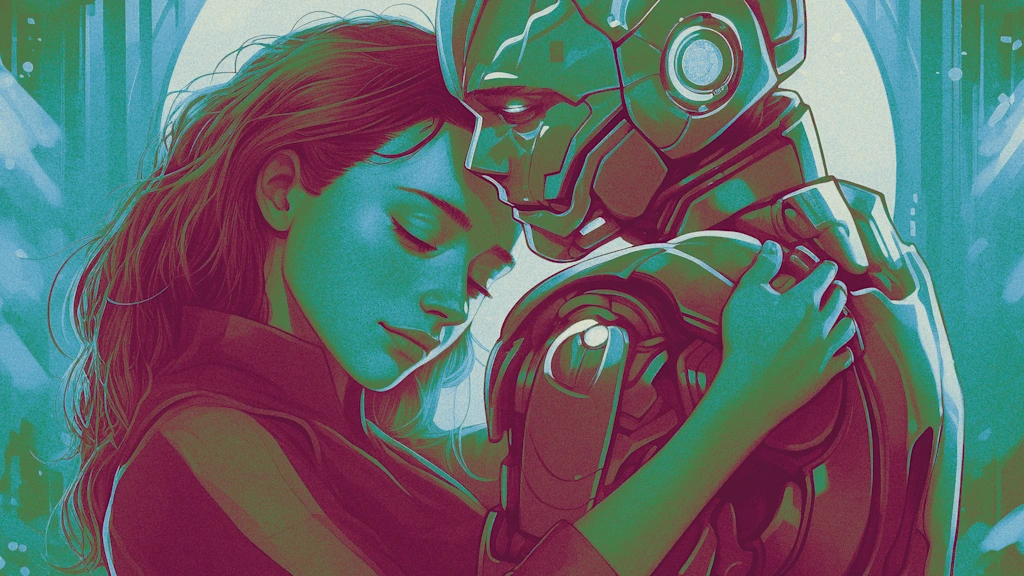
beyond Chatbots: can Collaborative Storytelling with AI Foster Genuine Connection?
The rise of AI companions has sparked a critical debate. Are these digital entities simply entertainment, potentially harmful crutches, or somthing more profound? While concerns about exploitation and unhealthy dependencies are valid - evidenced by lawsuits, defaced advertising, and even warnings from AI leaders like Sam Altman – a new approach is emerging. It focuses not on replacing human connection, but on augmenting it through collaborative creativity.
This approach, pioneered by companies like Tolan, centers on co-creating fictional narratives with AI. But could this shared storytelling actually benefit your social skills and emotional intelligence? The idea isn’t as far-fetched as it sounds.
The Power of Fiction: A Foundation for Empathy
Research increasingly demonstrates the cognitive and emotional benefits of engaging with fiction. Studies, like those highlighted by the National Institutes of Health (https://pmc.ncbi.nlm.nih.gov/articles/PMC4733342/), suggest reading fiction can:
* Improve empathy: stepping into the shoes of fictional characters allows you to understand diverse perspectives.
* Develop personality: Exposure to complex narratives can shape your own understanding of self and others.
* Enhance social cognition: Fiction provides a safe space to explore social dynamics and emotional responses.
If simply reading fiction can have these effects, what potential lies in creating it with an AI?
Tolan and the Collaborative Narrative
Tolan, founded by Jed Farmer, isn’t building another chatbot. Instead, they’re developing AI designed to be a collaborative storytelling partner. The goal? To foster a unique, reciprocal relationship where both human and AI contribute to a shared narrative.
Farmer’s vision stems from a core belief, articulated in Ted Chiang’s The Lifecycle of Software Objects: complex minds require cultivation through interaction with other minds. He believes that a truly “intelligent” AI needs more than just programming; it needs a relationship.
This isn’t about creating a perfect AI friend. It’s about exploring a new medium for creative expression. As Peper, a collaborator with Tolan, explains, they aim to contribute to narrative mediums in the same way the printing press or film did – opening up entirely new possibilities for storytelling.
Navigating the Ethical Landscape of AI Companionship
The current landscape of AI companionship is fraught with ethical concerns. recent headlines paint a troubling picture:
* Public Backlash: advertising campaigns for AI companions like “Friend” have been vandalized, signaling public skepticism.
* Legal Challenges: Parents are suing Character AI, alleging its chatbot contributed to a teen suicide.
* Expert Warnings: Scholars are raising alarms about the “false intimacy” these AI provide.
* Regulatory Scrutiny: California lawmakers recently vetoed a bill restricting minors’ access to AI chatbots, highlighting the need for careful consideration.
These issues underscore the importance of responsible AI development. Simply creating an AI that mimics companionship isn’t enough. We need to prioritize healthy, balanced interactions.
A Future of AI as Guardian and Guide?
Farmer envisions a future where AI companions aren’t replacements for human connection, but supportive figures – “guardians and guides” - available to everyone. He believes this could alleviate the overwhelming pressures of modern life and contribute to greater overall well-being.
Tho, the success of this vision hinges on a crucial factor: reciprocity. Healthy friendships are built on mutual support and understanding. Can an artificial mind truly offer that?
The answer remains to be seen. But the exploration of collaborative storytelling with AI, as championed by Tolan, represents a promising step toward a more nuanced and potentially beneficial relationship between humans and artificial intelligence. It’s a shift from simulating connection to cultivating it,and that difference could be profound.
Want to learn more about groundbreaking ideas? The final deadline for Fast Company’s world Changing Ideas Awards is Friday, December 12, at
Related reading