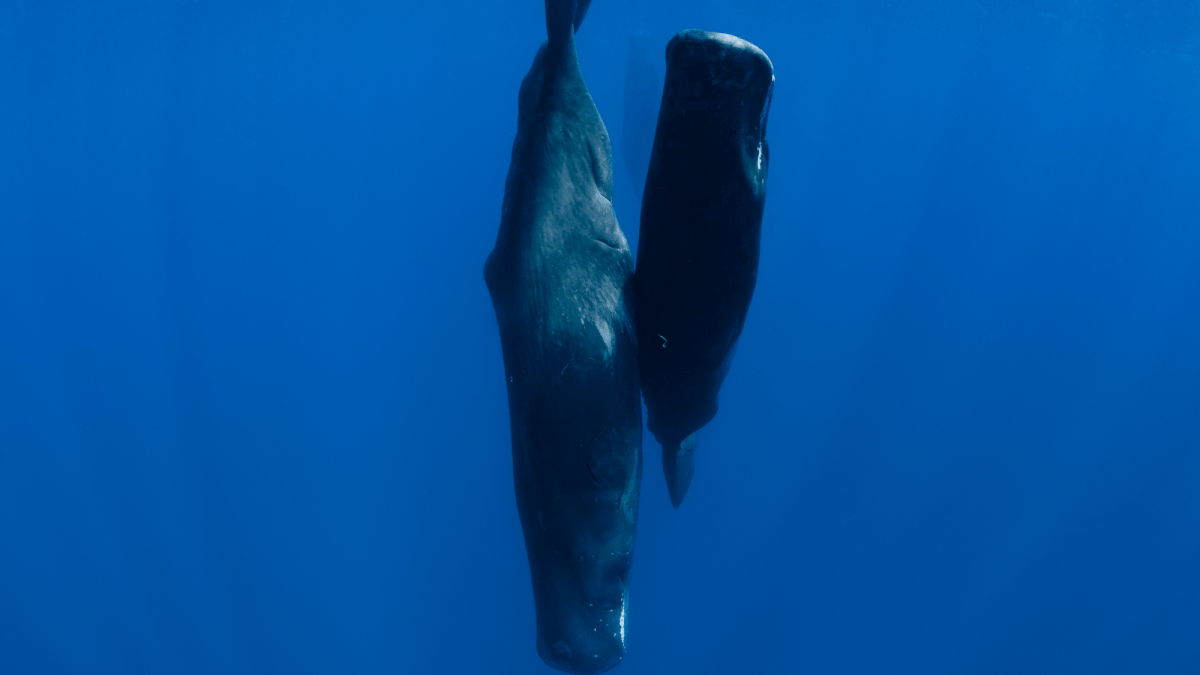
Scientists have discovered that sleeping sperm whales (Physeter macrocephalus) blow bubbles during their underwater power naps to regulate their buoyancy and prevent themselves from floating back up to the surface like a cork, according to research published in the Miragenews. A sperm whale’s head takes up nearly a third of its body and is filled with oil, wax, and air, which creates a significant challenge for the marine mammals when they attempt to rest underwater.
Sperm Whales Solve Underwater Buoyancy Puzzle by Blowing Bubbles
Researchers investigating this behavior included Noémie Freymond of the Université de Neuchâtel in Switzerland, alongside Alec Burslem and Patrick Miller of the University of St. Andrews in the UK. Freymond conducted her master’s thesis research on sperm whale resting behavior, while Miller provided the first detailed description of sperm whales releasing bubbles while sleeping, though why they did so had never been demonstrated prior to this research, as reported by Popular Science.
Tracking and Tagging Resting Whales
Observing whales blowing bubbles can be difficult, so the scientific team utilized state-of-the-art suction devices attached to the animals. These recorders tracked the depth of the whales, recorded whether their heads were facing up or down, and captured the sound of bubbles being released from the blowhole. The researchers affixed these recorders to 42 sperm whales in the Lofoten Islands off the coast of northern Norway before recovering the devices after they popped off and floated to the surface.
Sperm whales are the largest toothed whales on the planet and breathe air consciously, meaning they must think about taking every single breath. Because sleeping like a human would cause them to drown, scientists describe the animals as resting rather than sleeping, likely utilizing unihemispheric sleep where they switch off one half of their brain at a time like dolphins. During these rests, which typically last 10 to 15 minutes, the whales hover vertically several meters under the surface with their heads facing upwards to stay away from choppy surface waters while remaining close enough to breathe.
Depth Variations and Lung Pressure
The study established that sperm whales can rest in three different ways:
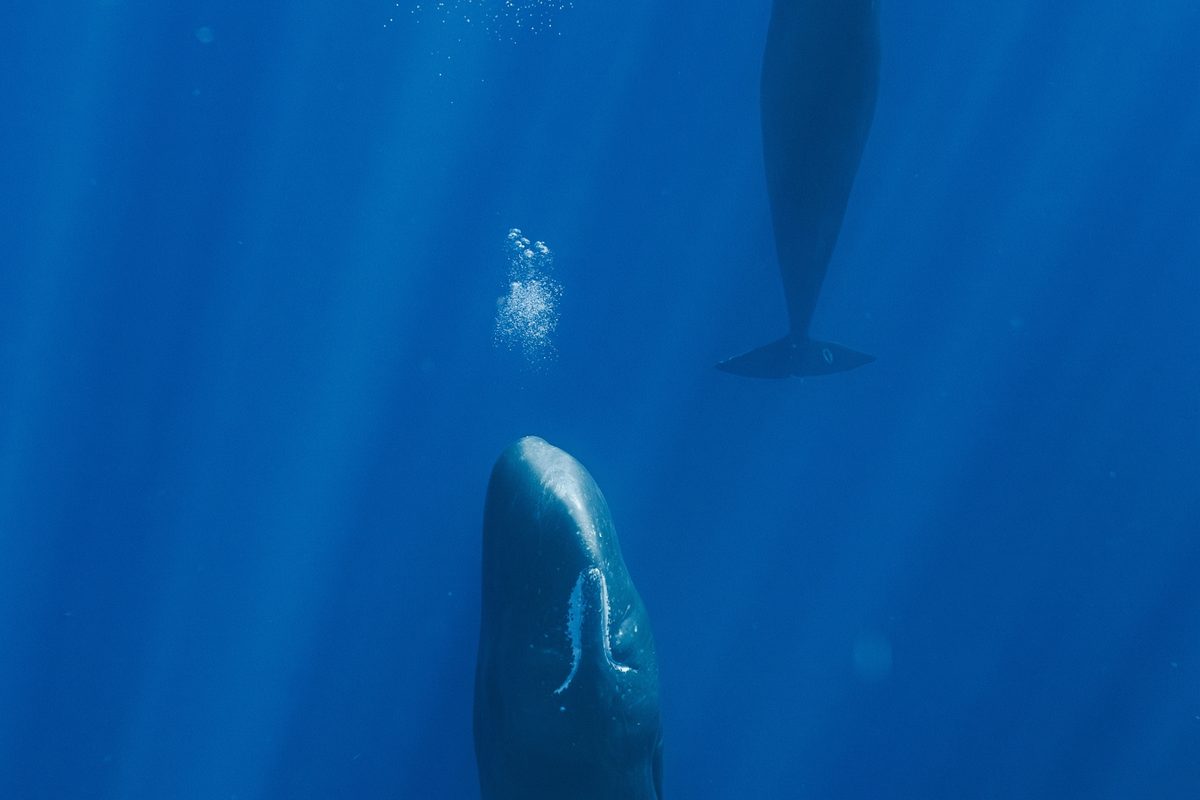
- Putting their head down and diving slightly before their buoyant heads turn up toward the surface
- Gently sinking tail-first about 8 meters (or roughly 26 feet) down
- Resting as they ascend from deep dives exceeding 200 meters (more than 656 feet)
The team discovered that whales resting closer to the surface blew significantly more bubbles, releasing them about 11 times per power nap. In contrast, whales drifting up from deep dives of over 200 meters only blew bubbles three or four times during their restful ascent. At greater water depths, high pressure compresses the air inside the whales’ lungs, making them less buoyant despite carrying more oxygen and larger amounts of trapped gas. When resting closer to the surface, however, the gas in their lungs slowly expands and causes them to rise, requiring them to blow out air to counteract the expanding gas and achieve neutral buoyancy.
Unanswered Questions About Sleep and Awareness
While the findings indicate that bubble releases are used to maintain neutral buoyancy, researchers note that this may not be their sole function, as the process could also relate to taking in oxygen and releasing excess carbon dioxide. A remaining mystery is whether the whales make a conscious decision to release air while sleeping. Because regulating buoyancy requires sensing the environment and realizing when they are drifting too close to the surface, the findings indicate that sperm whales are capable of fine positioning control even during rest, regardless of whether they remain partially awake or fully asleep.

Worth a look