The rapid integration of generative artificial intelligence into the daily lives of students has sparked a critical debate over the future of traditional education. In Germany, the AI’s impact on homework has reached a tipping point, leading the German Teachers’ Association (Deutscher Lehrerverband, or DL) to warn that current methods of assigning and grading work outside the classroom may no longer be viable.
The concern centers on the inability of educators to verify whether a student has personally completed an assignment or if the work was generated by an AI tool. This shift is not merely about cheating; it represents a fundamental challenge to how learning is measured and how academic integrity is maintained in an era where sophisticated language models can produce high-quality essays and solve complex problems in seconds.
As schools grapple with these changes, the conversation is shifting from how to block these tools to how to redefine the very concept of a “homework assignment.” From returning to handwriting to implementing AI-driven “writing coaches,” the educational landscape is undergoing a significant transformation to ensure that students continue to develop essential cognitive skills.
The Crisis of Verification: Why Traditional Homework is Under Threat
Stefan Düll, President of the German Teachers’ Association (DL), has voiced significant concerns regarding the controllability of student work. According to Düll, there is a tangible danger that homework, as it has been traditionally structured, can no longer be assigned because anything produced outside the physical classroom could theoretically be completed by an AI without the teacher’s ability to monitor the process.

This vulnerability extends beyond simple daily exercises to more extensive projects, such as term papers (Facharbeiten), which are often developed independently over several weeks. The ease with which AI can synthesize information and structure arguments makes it nearly impossible for teachers to distinguish between a student’s genuine intellectual effort and an AI-generated output.
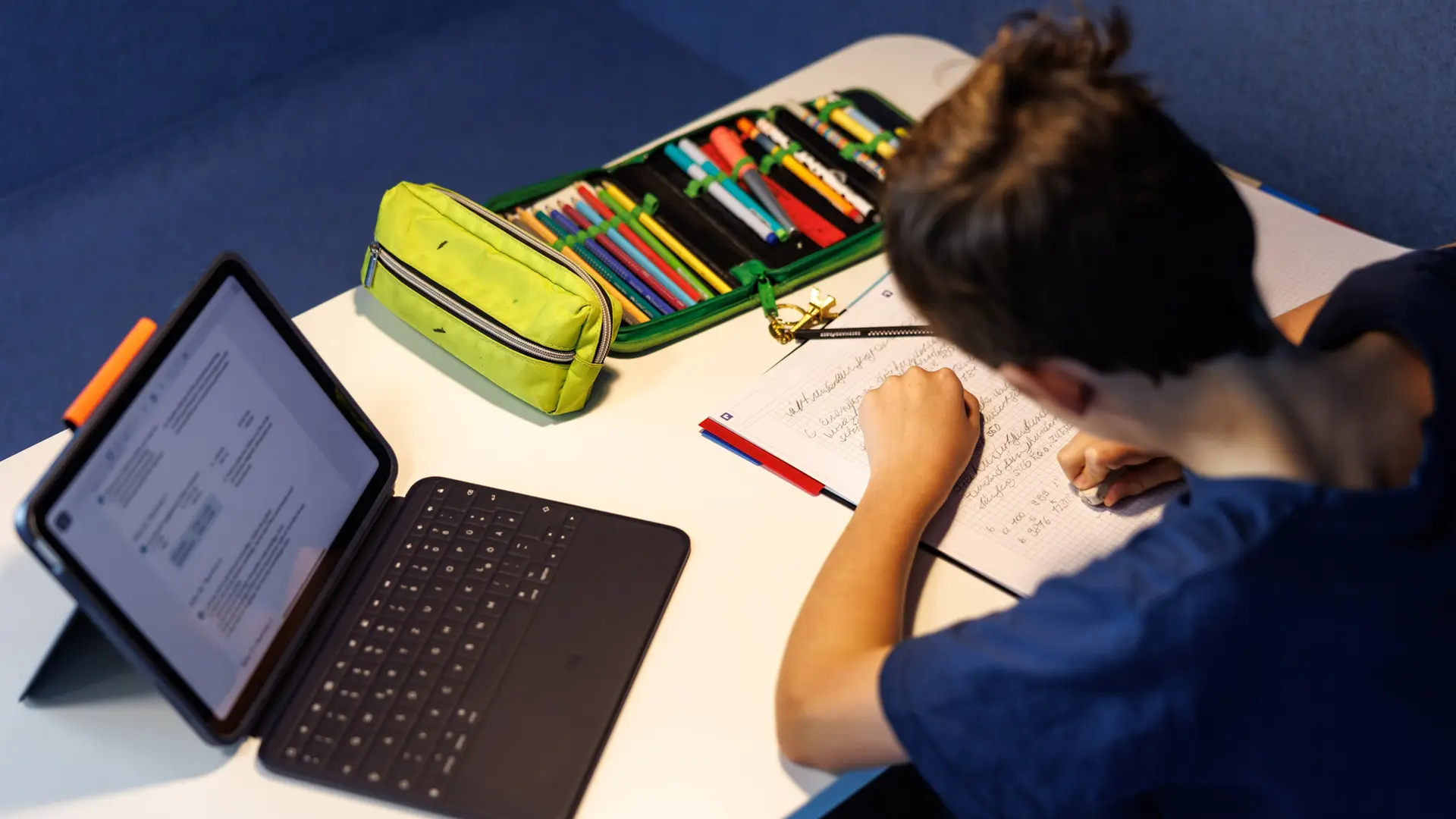
To combat this, Düll has suggested a return to analog methods in specific contexts. He argues that for homework and examinations in lower grade levels, teachers should require handwriting to prevent deception. By removing the digital intermediary, schools can create a more secure environment where the student’s own knowledge and effort are the primary drivers of the result.
From Results to Process: Redefining Educational Competencies
While the threat to traditional assignments is real, many educational experts argue that the solution lies in changing what is being assessed. The focus is shifting from the final product—the “result”—to the “process” of arriving at that result.
Stefan Düll suggests that instead of questioning the content of an assignment, teachers should begin asking students, “How did you arrive at this content?” This approach forces students to articulate their reasoning, research methods, and critical thinking steps, which are far more difficult for an AI to simulate convincingly in a live interaction.
This sentiment is echoed by Christoph Rabbow, chairman of the Philologenverband (Philologists’ Association). Rabbow asserts that the path to the result is now more important than the result itself. He identifies several “competencies of the 21st century” that must be prioritized in the modern curriculum:
- Creativity: The ability to generate original ideas and connections.
- Communication: Effectively conveying complex thoughts.
- Collaboration: Working with others to solve problems.
- Critical Thinking: The ability to analyze and critique information.
Yet, Rabbow maintains that not everything should be modernized. He emphasizes that traditional foundations, such as learning vocabulary or mastering mathematical term transformations, must remain central to the curriculum, as these core skills are prerequisites for higher-level thinking and cannot be outsourced to AI.
Institutional Responses and the “Stress Test” for Teachers
Governmental bodies are beginning to acknowledge the need for systemic adjustments. The Ministry of Education in Lower Saxony has stated that homework must be adapted to the new technological reality. Rather than banning AI, the Ministry suggests integrating it into the learning process. One proposed method is for students to use AI to generate a response to a topic and then critically evaluate whether the AI’s output is correct, thereby turning the AI into a tool for critical analysis.
To support this transition, the state is providing training for teachers to help them navigate the use of AI in the classroom. Despite these efforts, some educator groups believe the response is not yet sufficient. Torsten Neumann, chairman of the Verband Niedersächsischer Lehrkräfte (Association of Lower Saxony Teachers), has called for more concrete guidelines and statewide directives to provide teachers with clear “guardrails.”
Neumann describes the rise of AI as a “stress test” for educators. In his view, the current crisis is forcing teachers to re-examine how they design their tasks, pushing them to create assignments that are “AI-resistant” or that intentionally incorporate AI in a way that still requires human intellectual rigor.
Practical Integration: AI as a Coach, Not a Proxy
While some view AI as a threat, other schools are pioneering ways to use it as a pedagogical supplement. In Lower Saxony, the chatbot “Telli” has been introduced as a tool that can be used across all schools. In German language classes, for example, “Telli” serves as a “writing coach,” helping students refine their prose and structure their thoughts without simply writing the essay for them.
Beyond specialized software, some institutions are experimenting with more immersive AI applications. A school in Hannover has developed a concept where AI is used as a supplement or alternative in the classroom, including activities such as “chatting” with AI-simulated characters from novels to deepen literary understanding.
This approach aligns with Stefan Düll’s warning against a blanket condemnation of young people’s use of technology. Düll notes that students are often capable of using digital offers conscientiously. He argues that society and the school system must accept that competencies are shifting between generations, and that the skills valued today may differ from those of previous decades.
Key Takeaways: The Future of AI in the Classroom
| Stakeholder | Primary Concern/View | Proposed Solution |
|---|---|---|
| Deutscher Lehrerverband (DL) | Loss of control over out-of-class work | Focus on the creation process; return to handwriting in lower grades |
| Philologenverband | Erosion of core cognitive skills | Prioritize 21st-century skills (critical thinking, collaboration) while keeping basics |
| Lower Saxony Ministry | Need for systemic adaptation | Teacher training and integrating AI as a subject of critical review |
| Verband Niedersächsischer Lehrkräfte | Lack of clear operational standards | Implementation of statewide guidelines and “guardrails” |
The ongoing evolution of AI suggests that the tension between traditional academic standards and digital innovation will persist. The focus is now moving toward a hybrid model where AI handles routine synthesis while humans are tasked with the higher-order functions of verification, ethics, and creative application.
The next phase of this transition will likely involve the development of the concrete guidelines requested by the Verband Niedersächsischer Lehrkräfte, which will determine how AI is formally integrated into state curricula. We will continue to monitor official updates from the Lower Saxony Ministry of Education regarding these directives.
Do you believe handwriting should return to classrooms to prevent AI cheating, or is it time to abandon traditional homework entirely? Share your thoughts in the comments below.
Keep reading