
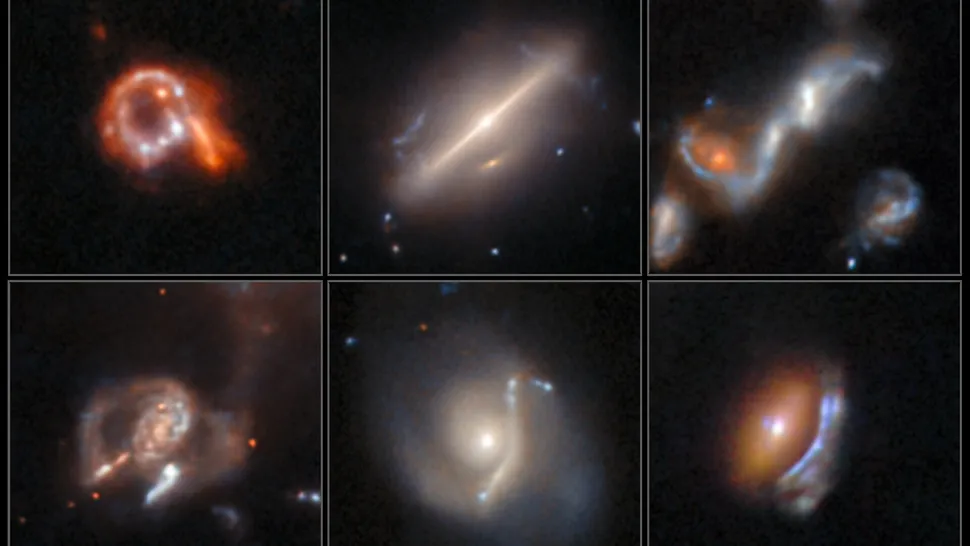
Artificial intelligence is uncovering hundreds of previously undetected cosmic phenomena in archival images from the Hubble Space Telescope, according to recent research. Scientists have applied machine learning algorithms to decades of Hubble data, revealing subtle patterns and anomalies that were missed in initial human analyses. This approach is transforming how astronomers extract novel knowledge from existing observational archives.
The Hubble Space Telescope, launched in 1990, has collected over 1.5 million observations during its operational lifetime, creating a vast repository of astronomical data. Whereas many discoveries have already been made from this archive, researchers believe that numerous faint or unusual objects remain hidden within the noise and complexity of the images. AI systems, particularly deep learning models, are now being trained to identify these elusive features by learning from known examples and scanning for deviations from expected patterns.
One study conducted by an international team of astronomers used a convolutional neural network to analyze Hubble’s Advanced Camera for Surveys archive, focusing on identifying gravitational lensing events and distant galaxy candidates. The AI flagged hundreds of potential strong lensing systems that had not been previously cataloged, significantly expanding the known sample of such phenomena. Gravitational lenses are crucial tools for studying dark matter and the early universe, as they magnify and distort light from background objects.
Another application of AI involved searching for rare types of galaxies, such as ultra-diffuse galaxies and low-surface-brightness objects, which are hard to detect using traditional methods due to their faint emissions. By processing Hubble’s deep-field images, the algorithm identified numerous candidates that fit these classifications, offering new insights into galaxy formation and evolution in low-density environments.
Researchers emphasize that AI does not replace human oversight but acts as a powerful filter, reducing the time required to sift through massive datasets. Astronomers then follow up on AI-generated candidates using additional observations from ground-based telescopes or other space observatories to confirm their nature. This collaborative approach increases efficiency while maintaining scientific rigor.
The success of these efforts highlights the growing role of artificial intelligence in astronomy, particularly in the era of massive data from telescopes like Hubble, the James Webb Space Telescope, and upcoming observatories such as the Vera C. Rubin Observatory. As data volumes continue to expand, AI-driven analysis will grow increasingly essential for making timely discoveries.
Moving forward, scientists plan to refine their models and apply them to other wavelengths and instruments within Hubble’s suite, including near-infrared and ultraviolet data. They also aim to release some of these AI-assisted findings to the public through citizen science platforms, enabling broader participation in astronomical discovery.
For updates on ongoing AI-assisted Hubble research and related astronomical discoveries, readers can follow official releases from NASA’s Hubble Mission website and peer-reviewed journals such as The Astrophysical Journal and Astronomy & Astrophysics.