
The AI Film Debate at Cannes: Where Creativity Meets Controversy
When the Cannes Film Festival drew its line in the sand earlier this month, banning films made with generative artificial intelligence from its official competition, the message was clear: the world’s most prestigious cinema showcase was not ready to embrace AI as a co-creator. Yet just a short walk from the Palais des Festivals, another story was unfolding. At the festival’s Marché du Film, a separate event dedicated to the business of cinema, AI-generated films were not only present—they were celebrated. The contrast laid bare a fundamental tension gripping the film industry: how to reconcile the creative potential of AI with the ethical, artistic, and economic concerns it raises.
For Sophia Martinez, Editor of Entertainment at World Today Journal and a veteran observer of global cinema trends, the debate is far from theoretical. “This isn’t just about technology,” she says. “It’s about what we value in storytelling, who gets to tell stories, and how those stories are made. Cannes’ decision to exclude AI films from competition while allowing them in the marketplace reflects a deeper uncertainty about where the industry is headed.” The festival’s stance, announced in early April, came as a surprise to many in the film community, particularly as AI-generated content has been gaining traction in other creative industries, from music to visual art.
The divide at Cannes mirrors a broader conversation playing out in film festivals and production studios worldwide. On one side, purists argue that AI-generated films lack the human touch that defines cinema as an art form. On the other, innovators see AI as a tool that can democratize filmmaking, allowing creators with limited resources to bring their visions to life. The debate is no longer confined to hypotheticals—it’s happening now, with real films, real audiences, and real consequences for the future of the industry.
The Rise of AI-Generated Cinema: A New Frontier or a Threat?
The controversy at Cannes was not without precedent. Just weeks before the festival’s opening, South Korean director Kim Il-dong premiered I Am Popo, a feature-length film created entirely using generative AI. The film, which explores a dystopian future where sentient AI infiltrates society, was produced in just over two months—an astonishing feat for a project of its scale. Kim, who wrote the screenplay and oversaw the AI’s creative output, described the process as “a one-person revolution.”

In an interview with Yonhap News Agency, Kim emphasized that I Am Popo was not just an experiment but a statement about the future of filmmaking. “What we have is the dawn of the ‘one-person film’ era,” he said. “With AI, a single creator can handle everything from visuals to editing, bypassing the need for large crews and budgets. It’s a game-changer for independent filmmakers.” The film’s characters, settings, and even camera movements were generated by AI, though human voice actors provided the dialogue.
Yet despite its groundbreaking production process, I Am Popo has faced criticism for its limitations. Film critic Jeon Chan-il, who reviewed the movie for a South Korean publication, noted that while the film’s premise was compelling, its visual and narrative execution fell short of traditional cinema standards. “It’s more of a curiosity than a fully realized film,” Jeon wrote. “The AI-generated imagery lacks the depth and nuance of human-created visuals, and the story feels constrained by the technology’s current capabilities.”
Kim’s film is not the only AI-generated project making waves. In China, the upcoming film Soul Wave: Dream of Rebirth (scheduled for a summer 2026 release) also relies heavily on generative AI for its production. Unlike I Am Popo, however, Soul Wave is a collaborative effort between human directors and AI tools, blending traditional filmmaking techniques with AI-assisted creativity. The film’s trailer, released in March, has already sparked debate about whether such hybrid approaches could bridge the gap between AI and human artistry.
Cannes’ Stance: A Line in the Sand
The Cannes Film Festival’s decision to exclude AI-generated films from its official competition was not made lightly. Festival organizers cited concerns about artistic integrity, labor rights, and the potential for AI to disrupt the traditional filmmaking process. In a statement released on April 10, festival director Thierry Frémaux emphasized that Cannes would remain a “celebration of human creativity.”
“The festival has always been a platform for films that reflect the vision of their creators,” Frémaux said. “While we recognize the potential of AI as a tool, we believe that the heart of cinema lies in the human experience—something that cannot be replicated by algorithms.” The statement went on to clarify that AI-assisted films (those using AI for specific elements like visual effects or sound design) would still be eligible for competition, provided the core creative decisions were made by humans.
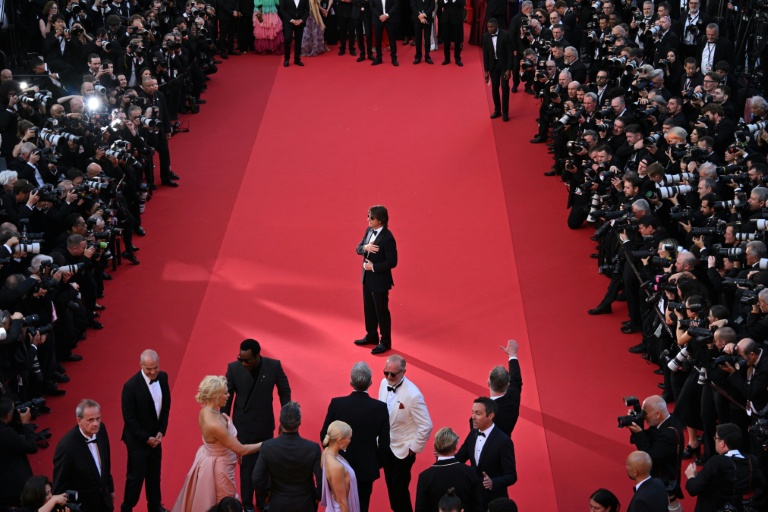
The decision was met with mixed reactions. Some filmmakers and industry professionals praised Cannes for taking a stand against what they see as a threat to traditional filmmaking. Others, however, argued that the festival was missing an opportunity to engage with the future of cinema. “By excluding AI-generated films entirely, Cannes is sending a message that it’s afraid of change,” said independent filmmaker and AI advocate Priya Kapoor. “Instead of shutting the door, they should be fostering a conversation about how AI can coexist with human creativity.”
Despite the ban, AI-generated films were not entirely absent from Cannes. At the Marché du Film, a parallel event focused on the business side of cinema, several AI-generated projects were showcased. One of the most talked-about was The Last Reel, a short film created by a team of AI developers and artists. The film, which tells the story of a filmmaker grappling with the ethics of AI in cinema, was presented as part of a panel discussion on the future of the industry. While it did not compete for awards, its inclusion in the marketplace signaled that AI-generated content is already carving out a space in the film world—whether festivals like Cannes are ready for it or not.
The Seoul AI Film Festa: A Festival Embracing the Future
While Cannes grappled with its stance on AI, another major event was taking a decidedly different approach. The Seoul Global AI Film Festa (SGAFF), held annually in South Korea, has positioned itself as a champion of AI-generated content. Now in its second year, the festival is organized by MBC, one of South Korea’s largest broadcasters, and is dedicated to showcasing films, music videos, and other creative works produced using generative AI.
The festival’s mission is clear: to explore the intersection of technology and art, and to provide a platform for creators who are pushing the boundaries of what AI can achieve. According to the festival’s official website, SGAFF is open to “curious, open-minded, and aesthetically driven creators” who are using AI to produce “philosophical and emotional” content. The festival’s categories include AI-generated films, music videos, and even K-brand content, reflecting the growing influence of AI in South Korea’s entertainment industry.
One of the festival’s key selling points is its “Broadcast-First” approach. Unlike traditional film festivals, SGAFF offers winners the opportunity to have their work aired on MBC’s television and OTT platforms, providing a direct pathway to mainstream audiences. This model has attracted a diverse range of submissions, from experimental short films to fully realized feature-length projects. “We’re not just celebrating AI as a tool,” said an MBC spokesperson. “We’re creating a new ecosystem where AI and human creativity can thrive together.”
The festival’s inclusive approach stands in stark contrast to Cannes’ more cautious stance. While Cannes has drawn a line between human and AI creativity, SGAFF is actively blurring that line, inviting creators to explore the possibilities of collaboration between humans and machines. This divergence highlights a broader question: should AI-generated content be treated as a separate category of art, or should it be integrated into the existing creative landscape?
The Ethical and Economic Debate: Who Benefits from AI in Film?
The rise of AI-generated films has sparked a heated debate about the ethical and economic implications of the technology. On one side, proponents argue that AI can democratize filmmaking, making it accessible to creators who lack the resources to produce traditional films. “AI levels the playing field,” said Kim Il-dong, the director of I Am Popo. “It allows independent filmmakers to compete with big studios, and it gives voice to stories that might otherwise go untold.”
This perspective is particularly resonant in regions where filmmaking infrastructure is less developed. In South Korea, for example, the rise of AI-generated content has been fueled by a combination of technological innovation and government support. The Gyeonggi Content Agency, a government-funded organization, has launched initiatives to support AI-generated content, including film screenings, project pitch sessions, and workshops. These efforts reflect a broader push to position South Korea as a leader in the AI-driven creative economy.
However, critics argue that AI-generated films pose significant risks to the industry, particularly for actors, writers, and other creative professionals. The use of AI to generate characters, scripts, and even entire films raises concerns about job displacement and the devaluation of human labor. In Hollywood, these concerns have already led to labor disputes, including the 2023 Writers Guild of America strike, which included demands for protections against AI-generated content.
“AI is not just a tool—it’s a competitor,” said SAG-AFTRA president Fran Drescher in a statement earlier this year. “If studios can use AI to create films without hiring actors, writers, or directors, what does that mean for the future of our industry? We need to ensure that human creativity remains at the heart of storytelling.”
The economic implications extend beyond labor concerns. AI-generated films also challenge traditional business models, particularly in the distribution and monetization of content. If AI can produce films faster and cheaper than human crews, will studios prioritize AI-generated projects over traditional ones? And if so, what does that mean for the diversity of stories being told?
These questions are not just theoretical. In March 2026, a major Hollywood studio announced plans to produce a slate of AI-generated films, sparking backlash from industry groups. While the studio has not disclosed details about the projects, the announcement has intensified the debate about the role of AI in cinema. “This is a wake-up call for the industry,” said film producer Ava DuVernay. “We need to have a serious conversation about how we want to integrate AI into filmmaking—before it’s too late.”
The Future of AI in Cinema: Collaboration or Competition?
As the debate over AI-generated films continues, one thing is clear: the technology is here to stay. The question is not whether AI will play a role in the future of cinema, but how that role will be defined. Will AI be a tool that enhances human creativity, or will it develop into a substitute for it? The answer may lie in how the industry chooses to regulate and integrate the technology.
Some filmmakers are already exploring hybrid approaches, using AI to assist with specific aspects of production while keeping creative control in human hands. For example, AI can be used to generate concept art, edit footage, or even compose music, freeing up filmmakers to focus on storytelling and character development. This model allows for the benefits of AI without completely replacing human input.
Others, however, are pushing for a more radical reimagining of cinema. At the Seoul Global AI Film Festa, several filmmakers presented projects that were entirely AI-generated, from script to screen. These works challenge traditional notions of authorship and creativity, raising questions about what it means to be a filmmaker in the age of AI. “If an AI can create a film that moves audiences, does it matter who—or what—made it?” asked one festival attendee. “Or is the emotional impact what truly defines art?”
The debate is likely to intensify in the coming months, as more AI-generated films enter the mainstream. In South Korea, Soul Wave: Dream of Rebirth is set to premiere in July, and its reception could shape the conversation about AI’s role in cinema. Meanwhile, in the United States, the Directors Guild of America is expected to release guidelines for the use of AI in filmmaking later this year, which could provide a framework for how the industry moves forward.
For now, the film industry remains at a crossroads. Cannes’ decision to exclude AI-generated films from competition may have drawn a line in the sand, but the marketplace is already proving that AI is not going away. The challenge for filmmakers, festivals, and audiences alike will be to find a way to embrace the possibilities of AI while preserving the human element that makes cinema so powerful.
Key Takeaways: What’s Next for AI in Film?
- Cannes vs. SGAFF: While Cannes banned AI-generated films from competition, the Seoul Global AI Film Festa actively celebrates them, highlighting the global divide over AI’s role in cinema.
- Labor Concerns: The rise of AI-generated films has sparked fears about job displacement for actors, writers, and other creative professionals, leading to calls for industry-wide regulations.
- Democratization of Filmmaking: AI tools are making filmmaking more accessible to independent creators, allowing them to produce content without large budgets or crews.
- Hybrid Approaches: Some filmmakers are using AI as a tool to assist with specific aspects of production, such as editing or visual effects, while maintaining human creative control.
- Ethical Questions: The use of AI in film raises complex ethical questions about authorship, creativity, and the value of human labor in the arts.
- Industry Response: Major studios and industry groups are beginning to develop guidelines for AI use, but the debate over its role in cinema is far from settled.
What Happens Next?
The next major milestone in the AI film debate will come in July 2026, when Soul Wave: Dream of Rebirth premieres in China. The film’s reception could provide valuable insights into how audiences respond to AI-generated content, particularly in a market where human-AI collaboration is becoming increasingly common. Meanwhile, the Directors Guild of America is expected to release its guidelines for AI use in filmmaking by the end of the year, which could set a precedent for how the industry regulates the technology.
For filmmakers, audiences, and industry professionals, the conversation about AI in cinema is just beginning. As Sophia Martinez puts it, “This is a pivotal moment for the film industry. The choices we produce now will shape the future of storytelling for decades to come. The question is: are we ready for the revolution?”
What do you think about AI-generated films? Should they be celebrated as a new form of art, or do they pose a threat to traditional filmmaking? Share your thoughts in the comments below, and don’t forget to follow World Today Journal for the latest updates on the intersection of technology and entertainment.
- ANOTR to Make India Debut with Headline Show in New Delhi this November
- Anghami Co-Founder Launches IPNation: $100M Investment Platform for Arabic Music and Entertainment IP
- NYC Mayor Zohran Mamdani’s Rich Tax Faces Hurdles and Lawsuits (news-usa.today)
- Theater Creates Hand-Drawn Movie Poster After Official Art Delays (world-today-news.com)