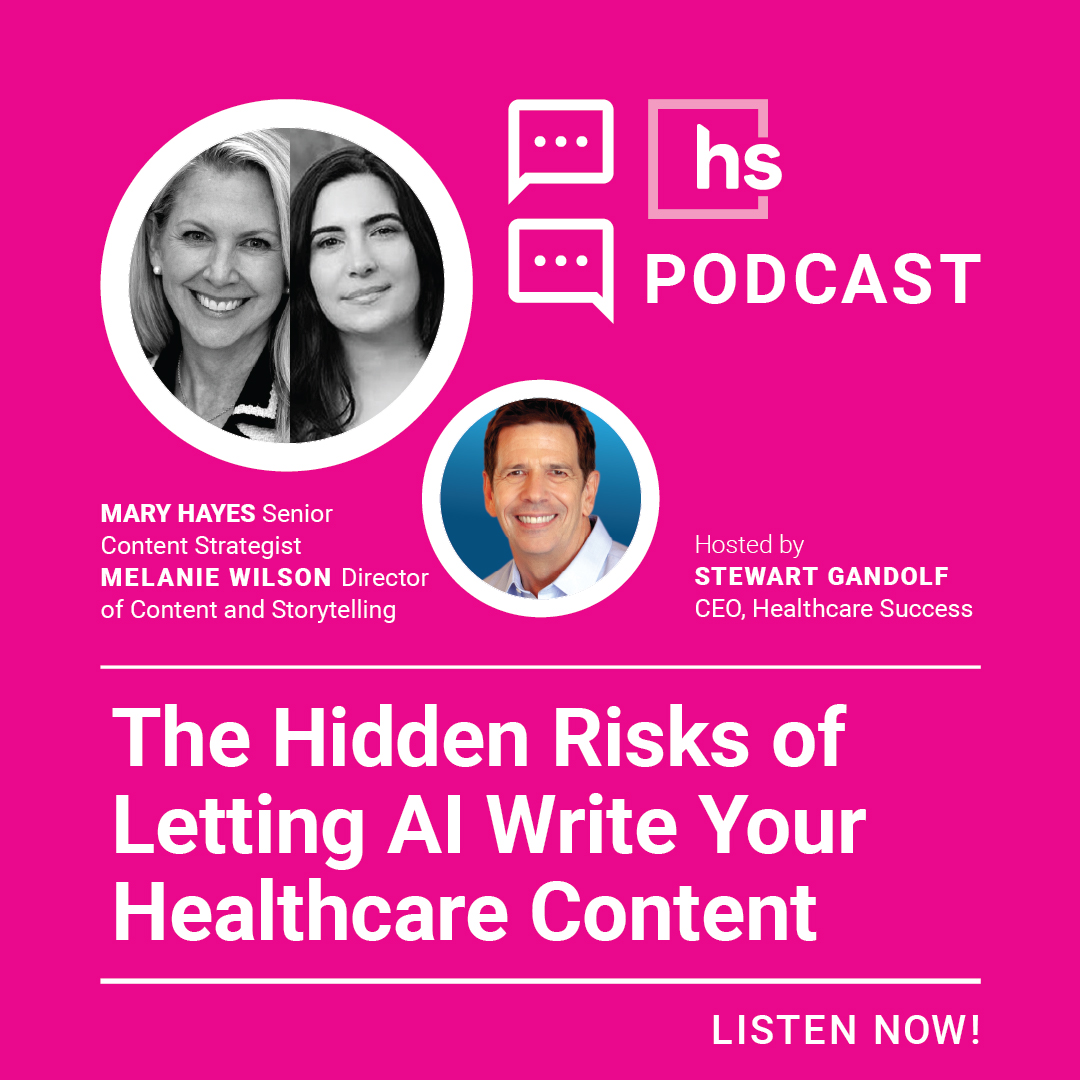
Healthcare organizations face a growing imperative to integrate artificial intelligence into their content strategies without compromising clinical accuracy, patient trust, or regulatory compliance. As search engines increasingly prioritize expertise and authority in “Your Money, Your Life” (YMYL) industries, relying on automated tools without human oversight poses significant risks to brand credibility and SEO performance. Industry experts emphasize that while AI serves as an effective accelerant for data synthesis and workflow efficiency, it cannot replace the nuanced judgment of experienced professionals in a sector where inaccuracies carry real-world consequences.
The integration of AI in healthcare marketing is no longer a matter of if, but how. According to the Mayo Clinic Health Information Policy, transparency regarding the use of generative technology is essential for maintaining ethical standards. By outlining clear processes for research, review, and the specific application of AI, organizations can better align with the expectations of both patients and search algorithms that scan for E-E-A-T (Experience, Expertise, Authoritativeness, and Trust). Proactive disclosure of these practices, as modeled by leading medical institutions, helps establish the necessary foundation of honesty in an era of automated content generation.
The Limits of Automation in High-Stakes Environments
The primary risk of relying on AI for healthcare content lies in the phenomenon of “hallucinations,” where large language models (LLMs) generate factually incorrect information, fabricated statistics, or non-existent quotes. In the context of medical information, such errors are not merely inconveniences; they can mislead patients, damage institutional reputation, and trigger legal or regulatory scrutiny. Because AI lacks a fundamental understanding of clinical nuance, business goals, or competitive positioning, it cannot serve as an autonomous replacement for a qualified content team.

While AI can efficiently summarize vast quantities of research or audit large datasets, it lacks the “human in the loop” required to verify claims against current medical guidelines. The distinction between “good” content and “done” content is the human layer. Experienced strategists provide the editorial judgment necessary to ensure that messaging remains consistent with brand voice and compliant with the stringent requirements of healthcare communication. Relying on AI to handle the full cycle of content production often leads to generic, undifferentiated output that fails to perform in competitive search environments.
Strategic Collaboration: AI as an Accelerant
When used thoughtfully, AI functions as a powerful tool for productivity rather than a substitute for creative strategy. Professional teams now utilize LLMs to compress time spent on repetitive tasks, such as cross-referencing technical audits, identifying content gaps, or synthesizing persona data. By offloading these time-intensive processes to AI, human strategists are freed to focus on high-value activities, such as developing unique messaging toolkits and refining the emotional resonance of patient-facing stories.
For example, custom GPT tools can be trained on decades of brand messaging experience to conduct internal audits or assist in the repurposing of content for different channels, such as converting a long-form article into benefit-driven ad copy. This approach ensures that the base information is verified by human expertise before the AI is tasked with stylistic adjustments or formatting. The key to successful implementation lies in maintaining strong internal guardrails and security protocols, ensuring that sensitive business data is never exposed to public models that train on user inputs.
Addressing Misconceptions in Client Expectations
A frequent point of friction in agency-client relationships is the assumption that AI-driven efficiency should automatically equate to lower costs and higher volume. While AI can accelerate specific workflows, it does not remove the necessity for briefing, fact-checking, and strategic review. In many cases, the push for increased volume at the expense of quality can lead to a “race to the bottom,” where generic content is churned out at a rate that search engines may eventually devalue.
Clients are often concerned that agencies will over-rely on automation, yet the most effective strategies involve a hybrid model where professional writers maintain control over the creative output. Brand voice is a strategic asset that requires intentional development; once established, AI can check for consistency across a project, but it cannot define the essence of a brand’s identity. As the healthcare search landscape continues to favor unique, expert-led content, institutions that invest in human-led, AI-supported strategies are better positioned to maintain their authority and patient loyalty over the long term.
Maintaining Clinical Integrity in Digital Communication
Healthcare content spans a wide range of formats, from service and treatment pages to social media and traditional advertising. Because these assets directly influence patient decision-making, the responsibility for accuracy remains non-negotiable. As organizations move forward, the focus must remain on the collaborative potential of human-AI partnerships. The most successful models are those that assign the “heavy lifting” of data processing to machines while reserving the “judgment” of clinical and strategic alignment for human experts.

Future developments in this space will likely involve more sophisticated regulatory frameworks and industry standards regarding AI disclosure. As state laws and institutional policies continue to evolve, healthcare marketers should monitor updates from professional bodies and regulatory agencies to ensure continued compliance. The next phase of this digital transformation will be defined not by the speed of content production, but by the ability to leverage technology to enhance, rather than replace, the essential human connection at the heart of patient care.
For ongoing updates on healthcare marketing strategies and the evolving role of AI in clinical communications, readers are encouraged to follow industry-leading discussions and participate in professional forums dedicated to medical content standards.