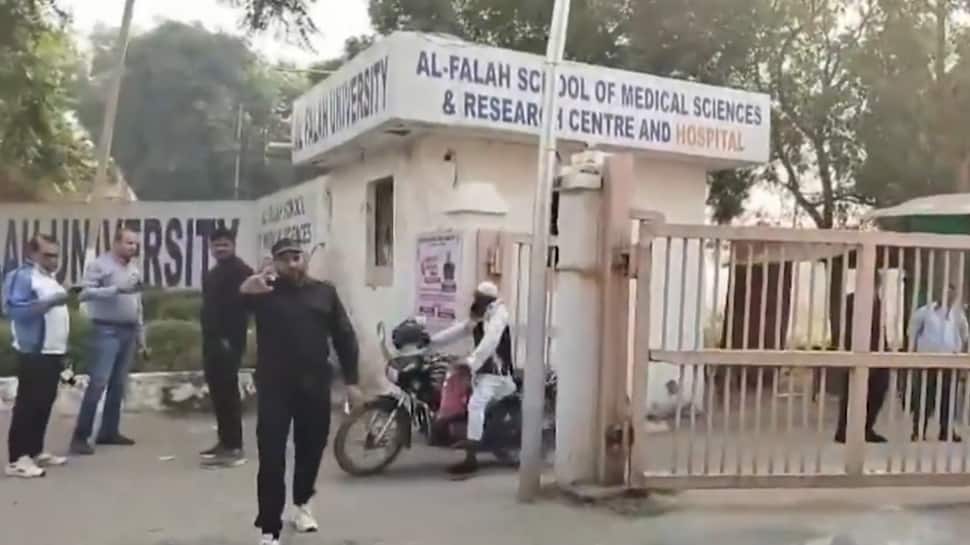
Al-Falah University: From Educational Aspirations to Extremism allegations – A Deep Dive
Al-Falah University, established in 1997, initially aimed to provide accessible, quality higher education in North India. It evolved from an engineering college to a multi-disciplinary university in 2014, offering programs spanning technology, medical sciences, education, and management. However, recent events have thrust this institution into the national spotlight, raising serious questions about security, oversight, and potential extremist ties.
This article provides a extensive overview of Al-Falah University,its history,structure,and the unfolding investigation that has shaken its foundations. We’ll examine the allegations, the university’s response, and the broader implications for educational institutions in the region.
A Vision for Minority Education
Founded as an alternative to established minority institutions like Aligarh Muslim University and Jamia millia Islamia, Al-Falah sought to address a critical need: affordable higher education for a wider student base. The university’s growth reflected this ambition, expanding its academic offerings and establishing several constituent colleges.
These include:
* Al-falah School of Engineering and Technology
* Brown Hill College of Engineering and Technology
* Al-Falah School of Education and Training
* Al-Falah School of Medical Sciences and Research Center – which operates a meaningful 650-bed hospital providing free care to local communities.
The university is governed by the Al-Falah Charitable Trust,led by Chairman Jawad Ahmad Siddiqui,Vice-Chairman Mufti Abdullah Qasimi,and secretary Mohammad Wajid. Dr. bhupinder Kaur Anand serves as Vice-Chancellor, with Prof. (Dr.) Mohammad Parvez as Registrar, overseeing the academic direction of the institution.
The Shadow of the Red Fort Blast
The university’s trajectory took a dramatic turn following a high-intensity blast near Delhi’s Red Fort Metro station. The explosion, which claimed 12 lives and injured numerous others, triggered a large-scale counterterrorism investigation. This investigation quickly focused on individuals linked to Al-Falah University.
Crucially, dr. Mohammad Umar Nabi, an assistant professor, was identified as the alleged driver of the explosive-laden vehicle. Another faculty member,Dr. Muzammil Ganaie,was also arrested during a massive operation that uncovered nearly 2,900 kilograms of explosives.
Authorities suspect connections to terrorist organizations Jaish-e-Mohammed and Ansar Ghazwat-ul-Hind, with networks extending across Kashmir, Haryana, and Uttar pradesh. The involvement of university personnel has prompted a critical examination of internal security protocols and the potential for extremist infiltration.
Scrutiny and Concerns Over Institutional Oversight
located just 30 kilometers from Jamia Millia Islamia, Al-Falah University’s proximity to the capital amplifies concerns about potential misuse. Investigators are now intensely focused on whether inadequate oversight allowed radical elements to operate within the university’s academic environment.
The core question is whether the institution inadvertently – or through negligence – became a breeding ground for extremist ideologies and activities. This scrutiny extends to the university’s vetting processes for faculty and staff, and also its monitoring of campus activities.
University’s Response: Denial and Condemnation
In the wake of the arrests, Al-Falah University issued a statement vehemently denying any institutional involvement in the alleged terrorist activities. vice-Chancellor Prof. Dr. Bhupinder Kaur Anand expressed anguish over the events and condemned them unequivocally.
The university clarified that the arrested individuals were employed in their official capacities and asserted no connection beyond that. Moreover, the statement categorically denied allegations of the storage or handling of any explosive materials on university premises, emphasizing that laboratories are solely used for academic purposes related to MBBS and other authorized courses.
Looking Ahead: Implications and the Path Forward
The Al-Falah University case presents a stark warning about the vulnerability of educational institutions to extremist influence. It underscores the critical need for robust security measures, thorough vetting procedures, and vigilant monitoring of campus activities.
This incident will likely lead to increased scrutiny of similar institutions,particularly those serving minority communities. the focus will be on strengthening internal controls and fostering a campus environment that actively counters radicalization.
The investigation is ongoing, and the full extent of any potential wrongdoing remains to be resolute. Though, the allegations have already severely damaged Al-Falah University’s reputation and raised fundamental questions about its future. Restoring trust will require complete transparency, full cooperation with authorities, and
Worth a look